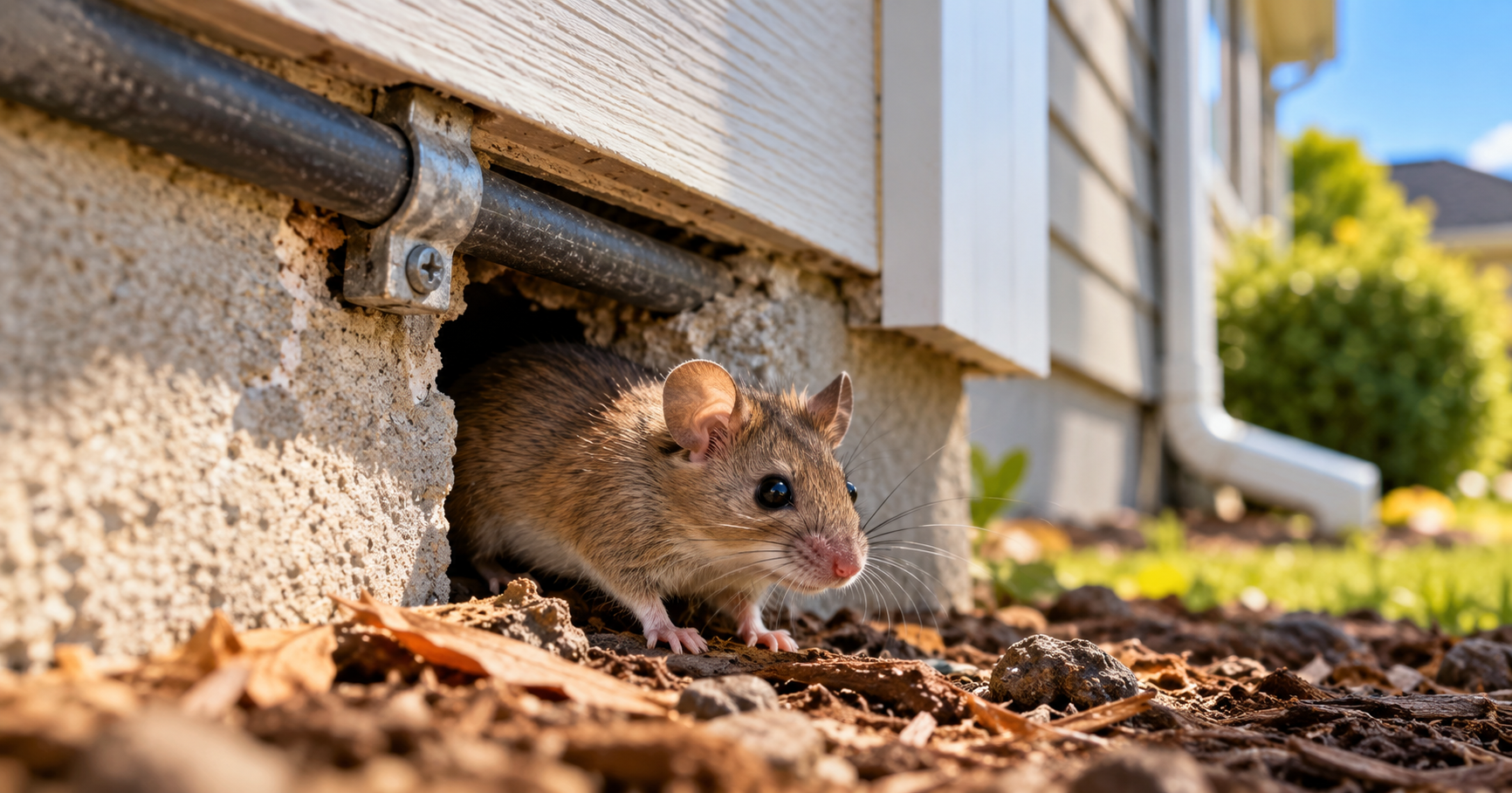
For homeowners in Greenville, North Carolina, and Pitt County, finding and correcting mouse entry points is one of the most important parts of solving a recurring rodent problem. Catching the mice already inside can reduce current activity, but if the openings they used remain accessible, additional mice may simply enter the home.
And those openings may be much smaller than you expect.
According to the Centers for Disease Control and Prevention (CDC), a mouse can fit through an opening approximately 1/4 inch (6 mm) wide — about the width of a pencil.
That means a Greenville home does not need a large hole in the foundation to have a mouse problem. Small gaps around pipes, doors, crawlspace vents, siding, utility penetrations and roof components may provide enough room for mice to enter.
If you suspect mice are getting into your home, here are the places we recommend checking first.
Why Mice Enter Greenville, NC Homes
Mice are primarily looking for three things:
- Food
- Water
- Shelter
A house can provide all three.
Kitchens, pantries, garages, crawlspaces, attics and wall voids can provide protected areas where mice can travel or nest. Pet food, bird seed, garbage, spilled food and improperly stored dry goods can provide dependable food sources.
Rodent activity may become especially noticeable when outdoor conditions change and mice begin searching for protected shelter.
The important thing to remember is that seeing a mouse inside does not necessarily tell you where it entered. A mouse found in your kitchen may have originally entered through the crawlspace, garage, attic or an opening around a utility line before traveling through hidden structural voids.
How Small of a Hole Can a Mouse Get Through?
This is one of the most important facts for homeowners performing their own rodent inspection.
Start paying attention to openings approximately 1/4 inch and larger.
The CDC states that mice can fit through a hole about the width of a pencil. NC State Extension likewise advises identifying potential building access points approximately 1/4 inch or larger when performing mouse exclusion.
Do not inspect your house looking only for an obvious “mouse hole.”
Instead, look for:
- Small construction gaps
- Openings around pipes
- Utility penetrations
- Damaged vent screens
- Door gaps
- Foundation cracks and openings
- Loose siding or trim
- Soffit and roofline openings
- Spaces where different building materials meet
A collection of seemingly insignificant gaps can create multiple opportunities for mice to enter.
1. Check Plumbing and Utility Lines First
One of the first places to inspect is anywhere a pipe, wire, cable or utility line enters the house.
Builders and contractors must create openings through walls, floors, foundations and siding for utilities. Sometimes the opening around the utility is larger than the pipe or wire itself.
Inspect around:
- Water supply lines
- Drainpipes
- Electrical service penetrations
- Cable and internet lines
- HVAC refrigerant lines
- Gas lines
- Outdoor faucets
- Washing-machine plumbing
- Water-heater pipes
- Kitchen and bathroom plumbing
Look at these penetrations from both sides whenever possible.
For example, an opening around a kitchen drainpipe may appear reasonably tight beneath the sink while the penetration underneath the house is considerably larger.
Look Under Your Kitchen and Bathroom Sinks
Open the cabinet doors and inspect where plumbing disappears through the wall or floor.
Look for:
- Droppings
- Gnaw marks
- Shredded material
- Dark rub marks
- Food debris
- Open gaps around pipes
These protected cabinet areas can provide mice with convenient access to food and water once they reach the interior of the home.
2. Inspect Exterior Doors and Door Thresholds
A door can look perfectly normal while still having enough clearance for a mouse.
Inspect the bottoms and corners of:
- Front and back doors
- Side-entry doors
- Garage entry doors
- Utility-room doors
- Crawlspace access doors
- Storage-room doors
Pay particular attention to worn or missing weather stripping and door sweeps.
Standing outside during daylight and looking toward the closed door can sometimes make gaps easier to identify. If you can see daylight beneath or around a closed exterior door, the opening deserves closer inspection.
3. Check the Garage Door
Garages are easy to overlook because homeowners often concentrate on kitchens and crawlspaces.
Check the bottom seal of the garage door and, especially, the lower corners where the door meets the frame and floor.
Also inspect:
- Weather seals
- Wall penetrations
- Utility lines
- Stored boxes
- Pet-food storage
- Bird seed
- Grass seed
- Garage-to-house doors
A mouse that gets into the garage has already crossed one major barrier. From there, another small opening may provide access to wall voids or the living area.
4. Inspect Your Crawlspace
For homes with crawlspaces, the crawlspace should be an important part of a mouse inspection.
Look closely at:
- Crawlspace access doors
- Foundation vents
- Damaged vent screens
- Plumbing penetrations
- HVAC penetrations
- Electrical penetrations
- Foundation openings
- Areas where additions connect to the original structure
- Gaps around ducts and utility chases
Once mice enter a crawlspace, openings around plumbing, wiring or framing may provide additional pathways into walls, cabinets and other interior spaces.
NC State Extension recommends screening attic and crawlspace openings appropriately and sealing gaps around pipes, conduits, ducts and other structural penetrations as part of rodent exclusion.
5. Check Crawlspace Vents and Screens
Do not assume a crawlspace vent is rodent-resistant simply because it has a screen.
Inspect every accessible vent for:
- Torn screening
- Missing screening
- Rust or deterioration
- Loose corners
- Gaps around the vent frame
- Damage around the surrounding foundation
A vent may appear intact from several feet away but have a small opening along an edge that is large enough to matter.
6. Inspect the Foundation and Sill Area
Walk slowly around the exterior perimeter of the home.
Look at the area where the foundation, framing, siding and other construction materials meet.
Pay particular attention to:
- Foundation cracks and penetrations
- Gaps beneath siding
- Openings near corners
- Damaged masonry
- Utility penetrations
- Spaces around additions or repairs
- Areas hidden behind vegetation
The goal is not simply to find one large opening. You are looking for every potential opening approximately 1/4 inch or larger that could provide access.
7. Check HVAC Lines and Equipment Penetrations
Heating and cooling equipment requires lines, wires and drains to pass through the building envelope.
Inspect around:
- Refrigerant lines
- Condensate drains
- Electrical wiring
- Duct penetrations
- Wall openings behind exterior HVAC equipment
Pay particular attention to older repairs where sealants have deteriorated or where an opening was never completely closed.
8. Check Dryer, Bathroom and Exhaust Vents
Exterior vents are another transition point between the outdoors and the building.
Inspect:
- Dryer vents
- Bathroom exhaust vents
- Kitchen exhaust penetrations
- Other exterior vent openings
Look for damaged covers, missing components or openings around the vent housing itself.
Important: Do not block a vent that requires airflow. Rodent exclusion around vents must preserve the vent’s intended function and comply with applicable equipment and building requirements.
9. Look Up: Inspect the Roofline, Eaves and Soffits
Mouse inspections should not stop at ground level.
The CDC recommends checking roof areas including rafters, gables, eaves and soffits for possible rodent openings.
From the ground, look for:
- Loose soffit panels
- Damaged fascia
- Gaps at roof intersections
- Openings around vents
- Damaged screening
- Construction gaps
If safely accessible, the attic can also be inspected for droppings, nesting material and possible daylight entering through openings.
Do not climb onto a roof or enter an unsafe attic simply to look for a mouse opening. Difficult or hazardous areas should be evaluated by an appropriate professional.
10. Check Around Windows
Windows are generally less obvious rodent entry locations than open utility penetrations, but deteriorated trim, damaged screens and construction gaps should still be inspected.
Look around:
- Window frames
- Exterior trim
- Damaged screening
- Foundation-level windows
- Areas where siding meets window trim
11. Inspect Behind Appliances
If mouse activity is concentrated in the kitchen or utility room, carefully inspect behind accessible appliances.
Common areas include:
- Refrigerators
- Stoves
- Dishwashers
- Washing machines
- Dryers
- Water heaters
These locations can offer darkness, warmth, food debris and nearby plumbing or utility penetrations.
The CDC specifically recommends checking behind appliances and around pipes leading to sinks, washing machines, water heaters and furnaces.
12. Do Not Forget Attached Additions and Renovations
Additions and remodeled areas deserve special attention because they create transitions between different stages of construction.
Check where:
- An addition joins the original house
- A porch connects to the structure
- A garage attaches to the house
- Different siding materials meet
- Old openings have been patched
- New plumbing or wiring was installed
A small unfinished opening hidden behind trim or equipment can become a rodent pathway.
13. Mobile and Manufactured Homes Need Special Attention Too
For manufactured and mobile homes, inspect the skirting carefully.
The CDC specifically recommends checking for gaps in trailer skirting and around utility lines, pipes, ducts and other penetrations.
Inspect:
- Loose or damaged skirting
- Utility penetrations
- Plumbing openings
- HVAC ducts
- Access panels
- Areas where skirting meets the ground
Signs That Can Help You Locate a Mouse Entry Route
You do not always have to find the mouse itself. Evidence can help narrow down where mice are traveling.
Look for:
- Droppings: especially beneath sinks, behind appliances, in cabinets, garages, attics and crawlspaces.
- Gnawing: damage to packaging, wood, plastic or other materials.
- Nesting material: shredded paper, insulation, fabric or similar material.
- Tracks: footprints may sometimes be visible in dusty areas.
- Repeated noises: scratching or movement in the same wall, ceiling or cabinet area.
- Food damage: holes or gnaw marks in stored-food packaging.
CDC guidance notes that droppings and gnaw marks are common indicators of rodent activity.
What Should You Use to Seal Mouse Entry Points?
The correct material depends on the size, location and construction of the opening.
For small openings, the CDC discusses using materials such as steel wool secured with caulk. For larger openings, recommended materials can include:
- Metal screening
- Hardware cloth
- Sheet metal
- Cement
- Other durable building materials appropriate for the opening
NC State Extension similarly emphasizes durable exclusion materials for openings around foundations, siding, plumbing, electrical lines, soffits, exhaust vents and roofs.
Do Not Depend on Expanding Foam Alone
Expanding foam can be useful as part of some repairs, but it should not automatically be considered a complete rodent barrier.
For rodent exclusion, durable materials such as metal mesh, hardware cloth or other appropriate construction materials may be necessary, depending on the opening.
The objective is to make the repair structurally appropriate and resistant to rodent entry, not simply make the hole disappear visually.
Should You Seal the Holes Before Catching the Mice?
Exclusion and population control need to be coordinated carefully.
If mice are already living inside a structure, simply sealing every opening without considering where the animals are located can potentially leave rodents trapped inside wall voids, attics or other inaccessible areas.
CDC guidance recommends inspecting for how rodents entered, sealing openings to prevent additional rodents from entering, and trapping rodents that remain inside.
If activity is substantial or you cannot determine the travel routes, a professional rodent inspection can help establish the appropriate sequence.
Removing Food Sources Is Part of Mouse Prevention
Closing entry points addresses access, but removing food and shelter makes the property less attractive to rodents.
Inside the home:
- Store food in tightly sealed containers.
- Clean spilled food promptly.
- Do not leave pet food out overnight.
- Keep garbage containers closed.
- Clean food debris beneath appliances.
- Reduce unnecessary clutter.
Outside:
- Keep garbage containers tightly closed.
- Clean around outdoor cooking areas.
- Store animal feed securely.
- Keep vegetation maintained around the structure.
- Reduce clutter and potential nesting areas.
- Keep bird seed and similar food sources from creating easy feeding areas next to the house.
For additional prevention guidance, see the CDC’s recommendations for sealing homes and reducing rodent attractants.
What If You Find Mouse Droppings?
Do not immediately sweep or vacuum dry rodent droppings.
Rodent-contaminated areas should be cleaned using appropriate precautions. If you discover significant droppings, nesting material or a heavily contaminated enclosed space, review the CDC’s current rodent cleanup recommendations before disturbing the material.
Visit the CDC’s rodent-control and cleanup resources for current health and cleanup guidance.
A Simple Greenville Home Mouse-Entry Checklist
If you want to perform a quick inspection before calling a pest-control company, walk around the house with this checklist:
- ☐ Exterior door sweeps and thresholds
- ☐ Garage-door bottom and corners
- ☐ Plumbing penetrations
- ☐ Electrical and cable penetrations
- ☐ HVAC lines and drains
- ☐ Foundation gaps and cracks
- ☐ Crawlspace access door
- ☐ Crawlspace vents and screening
- ☐ Dryer and exhaust vents
- ☐ Siding and trim transitions
- ☐ Soffits and fascia
- ☐ Roof and attic vents
- ☐ Areas behind appliances
- ☐ Kitchen and bathroom sink plumbing
- ☐ Attached garage-to-house penetrations
- ☐ Additions and remodeled areas
- ☐ Manufactured-home skirting, if applicable
Remember the 1/4-inch rule: if an opening looks approximately as wide as a pencil, do not automatically assume it is too small for a mouse.
Why Traps Alone May Not Solve a Recurring Mouse Problem
Trapping can remove mice already inside the home, but trapping does not physically close the route that allowed them to enter.
A more complete rodent-management approach combines:
- Inspection — determine where mice are active.
- Identification — determine what type of rodent is present.
- Exclusion — identify and correct accessible entry points.
- Population control — address rodents already inside.
- Sanitation — reduce food, water and nesting opportunities.
- Monitoring — watch for continuing or renewed activity.
This is why finding the entry point can be just as important as catching the mouse.
Professional Mouse and Rodent Control in Greenville, NC
If you are finding droppings, hearing scratching in the walls or repeatedly catching mice without solving the problem, it may be time for a more thorough inspection.
D & D Pest Control Co. provides professional rodent control in Greenville, North Carolina for homes and businesses. Our rodent-control process focuses on identifying activity, locating potential entry points, addressing the active rodent problem and recommending exclusion or sanitation improvements where appropriate.
You can also explore our Greenville pest control services for information about ongoing pest-management options in Greenville and Pitt County.
Homeowners outside Greenville can start at our Greenville and Pitt County pest control homepage to explore additional services and service-area information.
Frequently Asked Questions About Mice in Greenville Homes
How are mice getting into my Greenville home?
Mice commonly enter through small openings around plumbing, utility lines, doors, garage doors, foundations, crawlspace vents, siding, HVAC penetrations, soffits and roof components. Because mice can use openings approximately 1/4 inch wide, the entry point may be difficult to notice during a casual inspection.
Can a mouse really fit through a 1/4-inch hole?
Yes. The CDC states that mice can fit through a hole about 1/4 inch (6 mm) wide, approximately the width of a pencil.
Where should I check first if I find mice in my kitchen?
Start beneath sinks, behind appliances and around plumbing and utility penetrations. Then inspect the exterior, crawlspace or foundation beneath those areas because the interior location where you see a mouse may not be its original entry point.
Can mice enter through a crawlspace?
Yes. Damaged crawlspace screens, access doors and gaps around plumbing, HVAC lines, wiring and foundation penetrations can provide access. Once inside a crawlspace, mice may find additional openings into wall or floor cavities.
Will expanding foam keep mice out?
Foam can be useful as part of certain repairs, but it should not automatically be relied upon as the only rodent-resistant material. Depending on the opening, metal screening, hardware cloth, sheet metal, cement or another durable construction material may be more appropriate.
Why do I keep catching mice but continue seeing more?
One possibility is that an entry route remains open. Trapping addresses mice already inside, while exclusion addresses how additional rodents are entering. Food, water and nesting opportunities can also help sustain activity.
When should I call a pest-control professional?
Professional assistance may be appropriate when you continue seeing droppings or mice after trapping, hear activity inside inaccessible walls or ceilings, cannot locate the entry points, discover extensive contamination, or have multiple potential access areas around the structure.
Stop Looking Only for the Mouse — Look for the Opening
If mice are getting into your Greenville home, catching the animal you see is only part of the solution.
Find out how it got inside.
Begin with the most common trouble spots: utility penetrations, plumbing lines, doors, garage-door corners, crawlspace vents, foundations, HVAC openings, soffits and roofline components. Work systematically around the structure and remember that an opening does not have to look large to provide mouse access.
Finding and correcting those entry points — while addressing mice already inside and reducing available food and shelter — can help break the cycle of recurring rodent activity.
Need Help With Mice in Greenville, North Carolina?
If mice keep returning or you cannot determine where they are entering, D & D Pest Control Co. can inspect your property and develop a rodent-control plan based on the conditions found at your home.
Serving Greenville, Pitt County and surrounding Eastern North Carolina communities.
Call D & D Pest Control Co.: (252) 523-8255
Sources & Additional Resources:
#crawlspace pests #Eastern North Carolina pest control #Greenville NC pest control #Greenville NC Rodent Control #home pest prevention #Mice #Mice in Homes #Mouse Control #Mouse Entry Points #Pitt County pest control #rodent control #Rodent Exclusion
Related Posts
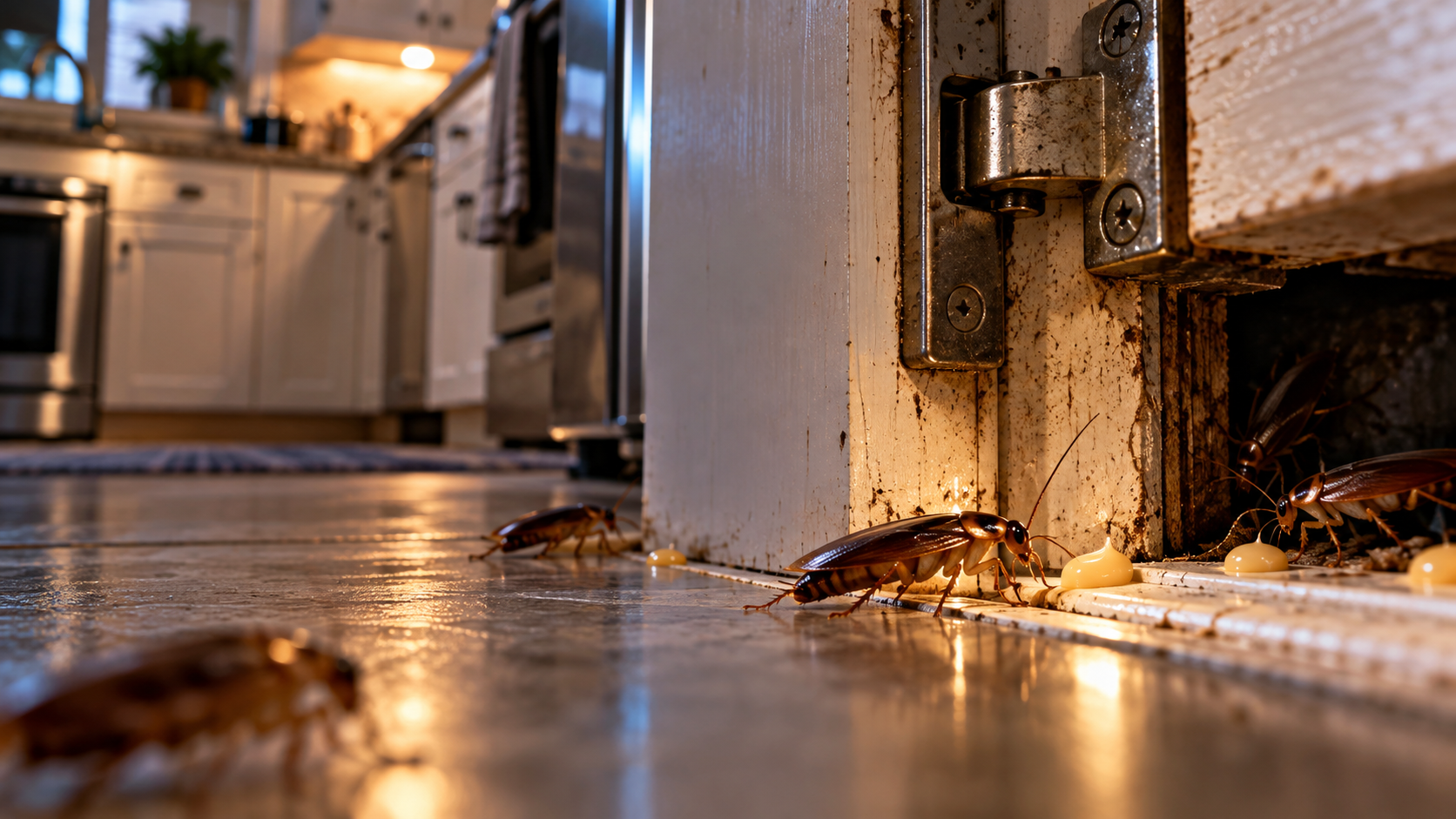 German Cockroach Gel Baiting: How It Works and Why It’s Effective
 VA & FHA Wood Destroying Insect Reports in Greenville, NC | Pitt County Termite Inspections
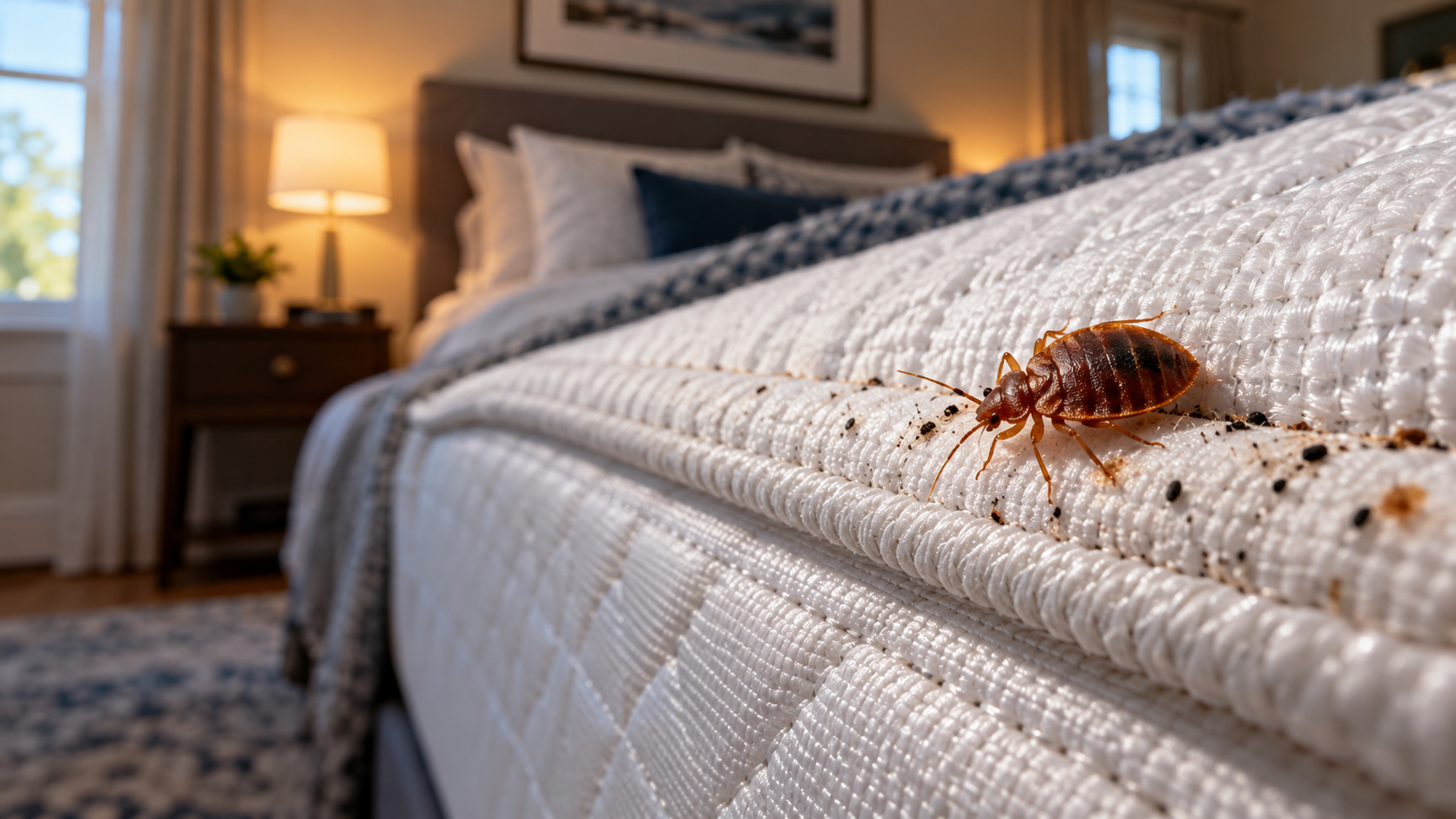 Bed Bugs on the Rise? What Greenville, NC Homeowners Need to Know in 2026