Before You Move In: Check the Rental for Pest Activity
Whether you’re considering an apartment, duplex, or house near ECU, take a few minutes to look beyond the freshly cleaned countertops. A clean appearance does not tell you everything about a property’s pest history or maintenance needs.
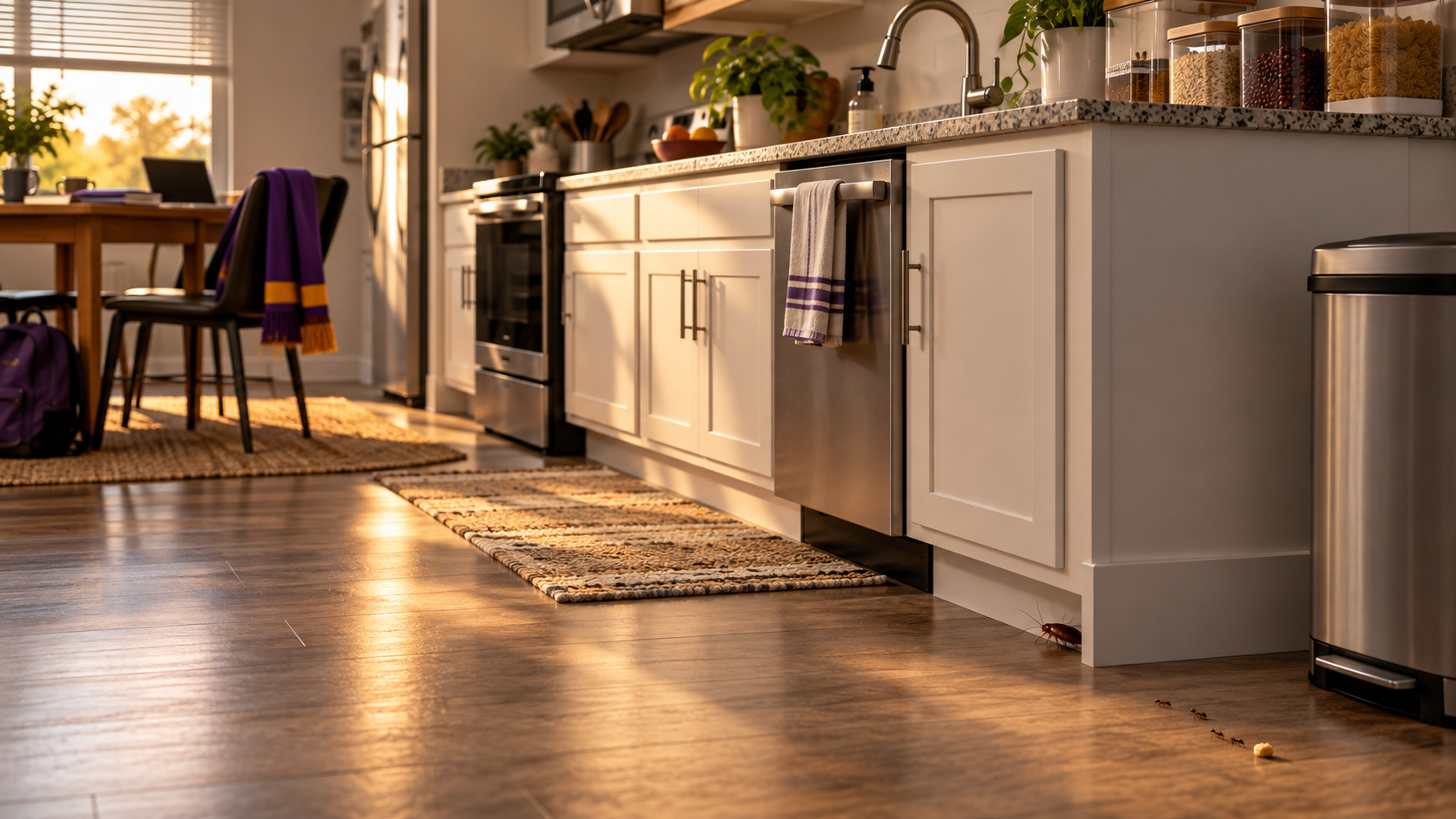
- Kitchen: Open cabinets and look under the sink, behind the refrigerator if accessible, and around the stove. Check for live insects, droppings, shed skins, or gaps around plumbing.
- Bathroom and laundry area: Look for leaks, damp cabinet floors, loose pipe openings, and signs of pests around drains.
- Bedrooms: Before placing your belongings on a bed or upholstered furniture supplied with the rental, inspect mattress seams, the bed frame, and nearby furniture for possible bed bug signs.
- Doors and windows: Look for damaged screens, worn door sweeps, and gaps that could allow insects or rodents inside.
- Outside: Notice overflowing dumpsters, trash stored against the building, standing water, and vegetation touching exterior walls.
Photograph concerns during move-in and report them through the property manager’s designated maintenance process. ECU’s Off-Campus Student Services encourages students to understand their lease and inspect housing carefully. Ask the landlord or manager how pest concerns are reported, who arranges treatment, and whether service covers individual units or the entire building.
Why Shared Kitchens Attract Pests
In a shared rental, prevention depends on everyone. One roommate can wipe the counters each night while another leaves takeout containers or an open bag of pet food in a bedroom. Roaches, ants, and rodents need relatively small amounts of food and water. Removing those sources is a core part of integrated pest management.
A realistic nightly kitchen routine
- Put leftovers in sealed containers and refrigerate them promptly.
- Wash dishes or load the dishwasher before going to bed; avoid leaving food-soaked pans overnight.
- Wipe crumbs and spills from counters, the dining table, and the area around small appliances.
- Empty food waste regularly and use a trash can with a fitted lid.
- Dry the sink area and report dripping faucets or leaking pipes.
Agree on a simple roommate schedule for sweeping, taking out trash, and cleaning beneath appliances. If no one owns those jobs, crumbs and moisture can accumulate in places that are easy to miss.
Store food and belongings with pests in mind
Close bags of cereal, rice, snacks, and pet food tightly; sturdy sealed containers are especially useful for food kept longer than a few days. Clear cardboard boxes and piles of paper from the kitchen and closets when you can. Clutter provides hiding places and makes inspections harder. Keep laundry and bags off the floor when there is an active pest concern, especially while the pest is being identified.
Common Pest Concerns in Off-Campus Housing Near ECU
Cockroaches
Roaches may appear around kitchens, bathrooms, utility areas, and shared walls. Identification matters: the response to small roaches reproducing indoors may differ from the response to a larger roach entering from outside. Record where and when you see them, and take a clear photo if possible. Learn more about our roach control service in Greenville.
What to do now: Clean up food residue, reduce clutter, report leaks, and notify management. If you live in a building with multiple units, tell management about recurring sightings so they can assess whether nearby areas also need attention.
Ants
Ants may follow food residue or enter through small openings around windows and doors. Wipe up spills and note the trail’s location. Avoid repeatedly spraying an unidentified trail without addressing the food source or entry point; the right response depends on the ant and where it is nesting.
Bed bugs
Bed bugs can be brought into a home with belongings and may hide near sleeping areas. Bites alone cannot confirm their presence. Look for the insects or other physical evidence, photograph what you find, and report the concern promptly. Avoid moving potentially infested furniture or bedding between rooms or apartments before getting instructions. See our bed bug treatment information.
Rodents
Scratching sounds, droppings, gnaw marks, and damaged food packaging deserve prompt attention. Store food securely and report holes around utility lines, damaged door sweeps, and other possible entry points. A lasting solution may require both control and repairs to the building.
What to Do When You Find Pests in Your Rental
- Document what you see. Take a photo or video, note the room and date, and save any maintenance correspondence.
- Notify the landlord or property manager. Use the process in your lease or resident portal. Describe the pest, where it appeared, and whether sightings are continuing.
- Handle the immediate sanitation issues. Secure food, remove trash, clean spills, and report water leaks. These steps support treatment but may not resolve an established infestation on their own.
- Ask about the inspection and treatment plan. Find out who will inspect, whether other units or common areas need evaluation, and what preparation residents must complete.
- Follow the professional’s preparation instructions. Preparation differs by pest and treatment method. Tell the provider about pets, aquariums, and any access needs before service.
Responsibility for arranging or paying for service depends on the lease, the property, and the circumstances. Read your agreement and communicate with management in writing. ECU’s off-campus housing resources can help students find general housing information.
Move-In and Move-Out Sanitation Checklist
Busy lease turnover periods can leave little time between one group of residents leaving and another moving in. A short inspection and cleaning routine makes it easier to spot a problem early.
Before unpacking
- Photograph the condition of cabinets, closets, bathrooms, and supplied furniture.
- Check under sinks for moisture and around doors and windows for visible gaps.
- Report signs of pests before covering the area with boxes or furniture.
- Dispose of moving boxes once you no longer need them, especially in food storage areas.
Before moving out
- Remove all food, trash, and pet food from the unit.
- Clean inside cabinets and beneath accessible appliances.
- Tell management about any continuing pest activity or leaks so the next occupants receive accurate information.
- Inspect furniture and belongings before transferring them to another home.
When Professional Pest Control Makes Sense
Request an inspection when pests keep appearing after cleaning, you find droppings or evidence of nesting, you suspect bed bugs, or multiple rooms or units may be affected. A professional can identify the pest, locate conditions supporting it, and recommend a plan suited to the property. The EPA advises housing managers to address pest access, food, water, and shelter as part of an effective program—not rely on treatment alone.
D & D Pest Control Co. serves Greenville and surrounding Pitt County communities. We work with homeowners, renters, and rental property decision-makers on pest concerns, including roaches and bed bugs. If you are a tenant, coordinate access and treatment authorization with your landlord or property manager before scheduling.
Need help with a pest problem near ECU? Contact D & D Pest Control Co. and tell us what you have seen, where it appeared, and whether you have already notified property management.
Frequently Asked Questions
Does a clean apartment mean I will not get pests?
No. Cleaning removes food and hiding places, but pests can also enter through gaps, arrive with belongings, or move through parts of a multi-unit building. Good sanitation makes prevention and treatment more effective.
Should I tell my property manager about one roach?
Yes. Send a photo and location if you can. An accurate identification and early report give management a better chance to investigate before sightings become frequent.
Can I schedule pest control myself if I rent near ECU?
Check your lease and contact your property manager first. They may have an existing provider, requirements for access, or a plan that includes adjacent units. You can still contact a pest professional to discuss the concern and the information needed for an inspection.
Do bed bugs mean an apartment is dirty?
No. Bed bug activity is not a reliable measure of cleanliness. If you suspect bed bugs, seek identification and report the evidence promptly rather than assuming ordinary cleaning will solve the problem.