
This guide explains what Greenville-area homeowners should look for, which questions to ask, which warning signs deserve caution, and how to compare pest-control companies without relying on price alone.
Start by Identifying the Pest Problem You Actually Have
Before comparing companies, start with the problem itself.
Pest control is not a single treatment that works equally well for every situation. Ants, German cockroaches, rodents, termites, fleas, bed bugs, spiders and occasional invading insects have different biology, nesting areas, food sources, entry points and treatment requirements.
A professional should therefore begin by asking questions or inspecting the property rather than automatically prescribing the same treatment for every customer.
Important questions include:
- What pest is actually present?
- Where is the activity occurring?
- How extensive does the problem appear to be?
- How may the pest be entering the structure?
- Are food, water, moisture or shelter contributing to the problem?
- Is this an isolated problem or a recurring infestation?
- Does the pest require specialized treatment?
- Will follow-up or monitoring likely be necessary?
Correct identification should come before treatment. If a company cannot explain what it is treating, that is a reasonable reason to ask additional questions.
1. Verify That the Pest Control Company Is Properly Licensed in North Carolina
This should be one of the first things you check.
Structural pest-control work performed for hire in North Carolina is regulated by the North Carolina Department of Agriculture & Consumer Services Structural Pest Control & Pesticides Division.
North Carolina divides structural pest-control work into specialized phases:
- P Phase – Household Pest Control: covers many common structural and household pest-control services.
- W Phase – Wood-Destroying Organisms: includes work involving termites and other wood-destroying organisms, including applicable inspections.
- F Phase – Fumigation: covers structural fumigation work.
The important point for the homeowner is simple: verify that the company has the appropriate credentials for the type of work you are hiring it to perform.
Do not hesitate to ask:
- What is your North Carolina structural pest-control license number?
- Which pest-control phases does your company hold?
- Who will perform or supervise my treatment?
- Can I verify your credentials with the state?
A professional company should not object to reasonable credential questions.
2. Do Not Choose a Pest Control Company on Price Alone
Price matters, but it should not be the only deciding factor.
Two quotes that appear to cover the same pest problem may involve very different levels of inspection, treatment, follow-up, products, monitoring and warranty coverage.
For example, one rodent quote may involve putting out a few traps. Another may include identifying entry points, trapping, exterior monitoring, sanitation recommendations and follow-up. Those are not necessarily equivalent services.
The same applies to cockroaches, termites, fleas and bed bugs.
When comparing pest-control prices, ask what the price includes.
| What to Compare | Questions to Ask |
|---|---|
| Inspection | Is an inspection included before treatment? |
| Target pest | Exactly which pest or pests are covered? |
| Treatment | What areas of the property will be treated? |
| Follow-up | Are return visits included or charged separately? |
| Prevention | Will entry points, sanitation or moisture conditions be discussed? |
| Warranty | What does the warranty actually cover and for how long? |
| Recurring service | Is this one-time, monthly, quarterly or another schedule? |
| Specialty pests | Are termites, bed bugs, fleas or rodents priced separately? |
The better question is usually not “Who is cheapest?” but “What am I receiving for the price?”
3. Look for a Company That Inspects Before It Treats
A pest-control professional should be interested in understanding the source of the problem.
An inspection may include looking for:
- Active pests or evidence of activity
- Droppings, nests, webs, mud tubes or damaged materials
- Cracks and pest entry points
- Food and water sources
- Plumbing leaks
- Crawlspace moisture
- Standing water
- Vegetation touching the structure
- Garbage or sanitation conditions
- Wood-to-soil contact
- Accessible attic, crawlspace or garage conditions
- Pest harborages around appliances, cabinets and utility penetrations
Not every property requires the same inspection procedure. The inspection should make sense for the pest being investigated.
4. Ask the Company to Explain the Treatment Plan
You should not have to accept a mysterious “we spray and leave” approach.
A qualified pest-control professional should be able to explain the proposed strategy in understandable language.
Depending on the pest, that may involve:
- Baits
- Crack-and-crevice treatments
- Exterior perimeter applications
- Trapping
- Rodent monitoring stations
- Exclusion recommendations
- Web removal
- Sanitation changes
- Moisture correction
- Habitat modification
- Termite soil treatment
- Specialized bed bug treatment
- Follow-up inspections
- Monitoring
Ask what is being done, why it is appropriate for the pest, what preparation is required, and what you should expect afterward.
5. Choose a Company That Uses an Integrated Approach to Pest Management
Professional pest control should involve more than simply applying pesticide wherever pests are seen.
Integrated Pest Management, commonly called IPM, combines pest identification, inspection, monitoring, prevention and appropriate control methods.
For a Greenville home, that might mean:
- Identifying a cockroach species before treatment
- Finding a plumbing leak contributing to roach activity
- Locating a gap rodents are using to enter a crawlspace
- Removing food and water sources
- Improving sanitation around garbage areas
- Reducing excessive crawlspace moisture
- Repairing damaged screens or door sweeps
- Using traps or baits where appropriate
- Applying pesticides selectively according to the product label
- Monitoring afterward to determine whether control measures worked
This approach addresses both the pest and the conditions that may be supporting it.
6. Ask What Products or Methods May Be Used
You do not need to become a pesticide expert before hiring a pest-control company, but reasonable questions about treatment are appropriate.
You can ask:
- What type of treatment do you recommend?
- Why was that treatment selected?
- Will pesticides be used indoors, outdoors or both?
- Are baits, traps or other non-spray methods appropriate?
- Are there preparation instructions?
- Do people or pets need to leave an area temporarily?
- When can treated areas be re-entered?
- Are there special precautions for aquariums or pets?
- Can you provide product-label information if requested?
Pesticide applications should follow the product label. A legitimate company should not promote an unregistered “secret formula” or claim that ordinary pesticide precautions do not matter.
7. Understand the Difference Between Routine Pest Control and Specialty Pest Services
Another important question is whether your pest is included in a general service plan.
Many general pest-control programs are designed for common household pests such as:
- Ants
- Spiders
- Crickets
- Silverfish
- Some cockroach problems
- Seasonal invading insects
Other pests often require a separate inspection, treatment program or agreement.
Termites
Subterranean termites involve specialized inspection and treatment techniques and fall under North Carolina’s wood-destroying organism licensing category. If termites are suspected, choose a company qualified to perform that work.
Learn more about our termite control services in Greenville, NC.
Rodents
Mouse and rat problems may require trapping, monitoring, sanitation recommendations and identification of structural entry points rather than ordinary insect treatment.
Learn more about our rodent control in Greenville, North Carolina.
Bed Bugs
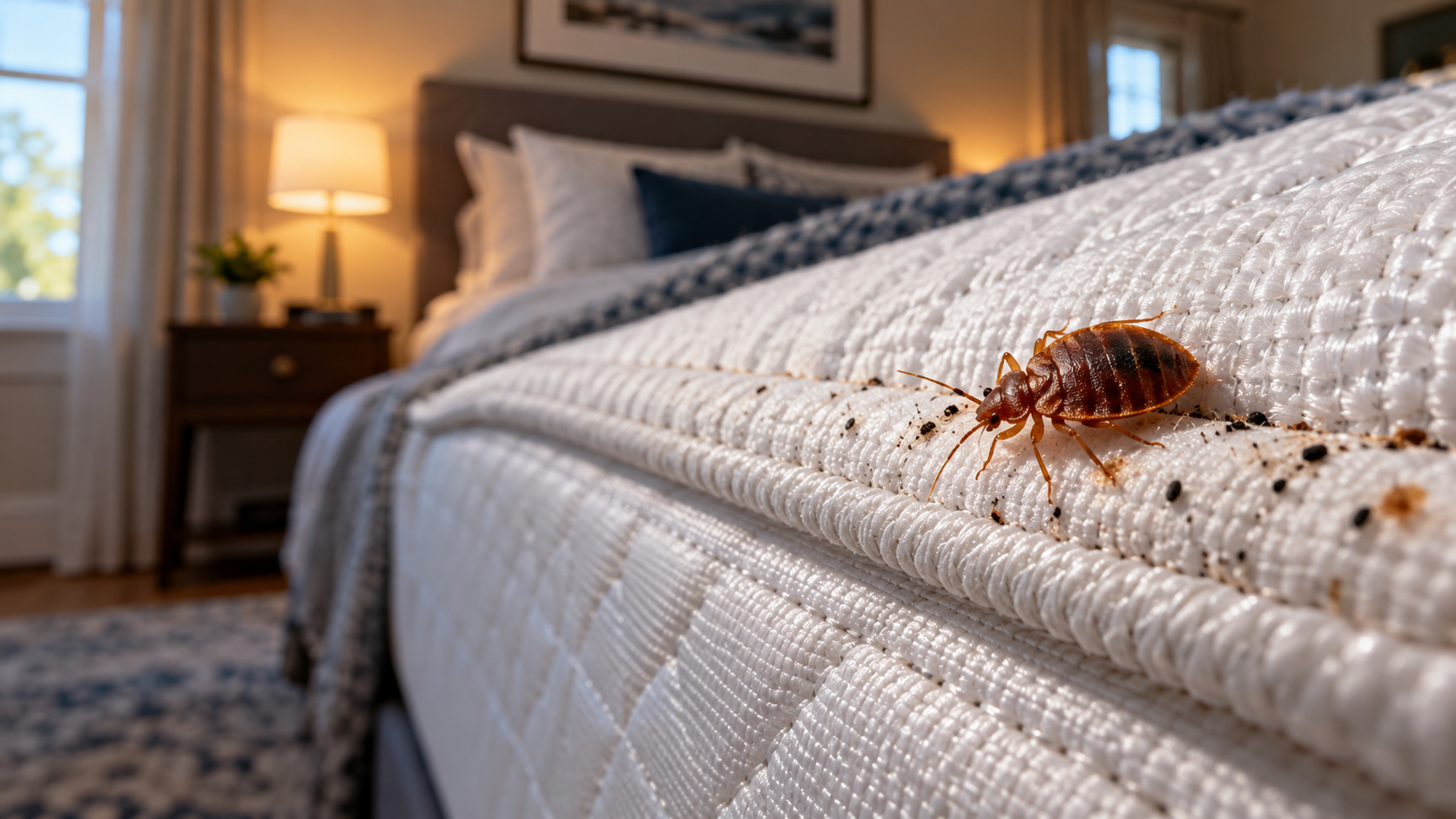
Bed bug treatment can require detailed inspections, preparation, targeted treatment and follow-up. Before hiring a company, ask specifically about its experience with bed bugs and what its treatment protocol includes.
Learn more about bed bug treatment in Greenville and Pitt County.
Cockroaches
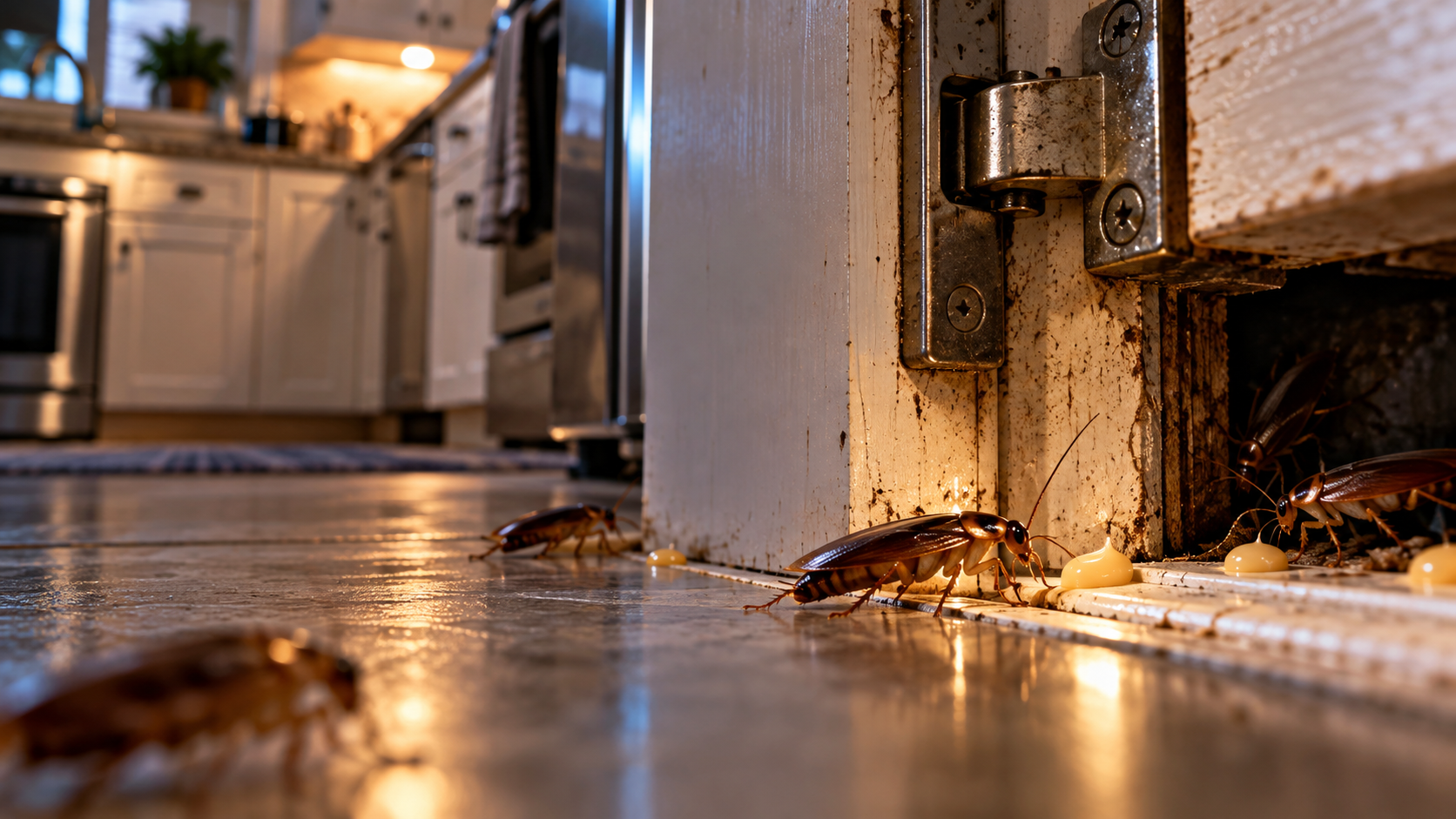
Correct species identification matters with cockroaches. A German cockroach infestation in a kitchen requires a different strategy from occasional large cockroaches entering from crawlspaces or exterior environments.
See our cockroach control services in Greenville, NC.
8. Ask About Follow-Up Before You Sign
Some pest problems can be corrected quickly. Others require monitoring or multiple visits.
Ask before service begins:
- Is follow-up included?
- When should I expect to see improvement?
- What activity may be normal immediately after treatment?
- When should I contact you if pests remain active?
- Is re-treatment included under the agreement?
- What conditions could prevent successful control?
- What responsibilities does the customer have?
Avoid assuming that the word guarantee means unlimited service forever. Read what is actually covered.
9. Read the Service Agreement and Warranty
Take a few minutes to understand any agreement before signing it.
A pest-control agreement should make it reasonably clear:
- Which pest is being treated
- Which areas are included
- The service frequency
- The price
- Whether follow-ups are included
- The length of the agreement
- Cancellation terms, if applicable
- Customer preparation requirements
- Warranty or re-treatment terms
- Any exclusions
This becomes particularly important with termite protection agreements, recurring commercial programs and other ongoing services.
10. Look for Clear Communication, Not High-Pressure Sales Tactics
You should be able to ask questions without feeling pressured into making an immediate decision.
Be cautious when someone:
- Cannot or will not provide licensing information
- Will not explain what pest is being treated
- Refuses to discuss the proposed treatment
- Claims to use a mysterious or secret pesticide formula
- Uses extreme scare tactics to force an immediate sale
- Guarantees that a pesticide has absolutely no risk
- Suggests using a pesticide in a way inconsistent with its label
- Will not provide written terms for a significant treatment
- Focuses entirely on selling before understanding the pest problem
Professional pest control requires trust. Clear answers are part of the service.
11. Check Experience With Your Specific Pest
Years in business can be useful information, but experience with the actual pest problem is even more important.
If you have German cockroaches, ask about German cockroach treatment. If you have termites, ask about termite inspection and treatment. If you operate a restaurant, ask about commercial food-service pest management. If you manage apartments, ask about multi-unit pest problems.
A company that handles general household pests well may not necessarily specialize in every unusual pest situation.
12. Consider Local Knowledge in Greenville and Pitt County
Local experience can be valuable because pest pressure is influenced by climate, housing construction, moisture, landscaping and seasonal conditions.
Greenville and the surrounding Pitt County area have a warm, humid climate and many homes with crawlspaces, wooded surroundings, drainage concerns or moisture conditions that can influence pest activity.
A local pest professional should understand how conditions such as these can contribute to:
- Subterranean termite pressure
- Cockroach activity around damp areas
- Ant activity around foundations and landscaping
- Rodent entry into crawlspaces, garages and attics
- Mosquito breeding around standing water
- Fleas and ticks around yards and animals
- Spiders associated with other insect activity
Local knowledge should complement good pest-control fundamentals—not replace proper identification and inspection.
13. Compare One-Time Pest Control With Ongoing Service
Not every pest problem requires the same schedule.
A one-time treatment may be appropriate in some situations, while properties with recurring pest pressure may benefit from regular monitoring and preventive service.
| Service Type | May Be Appropriate For |
|---|---|
| One-Time Service | Isolated or clearly defined pest issues when ongoing protection is unnecessary |
| Quarterly Pest Control | Many homes seeking seasonal prevention and monitoring |
| Monthly Pest Control | Higher pest pressure, active recurring problems, some rental properties and commercial locations |
| Specialized Program | Termites, bed bugs, rodents and other pests requiring pest-specific treatment |
Your property conditions and pest activity should help determine the service schedule rather than automatically placing every customer on the same program.
See our monthly and quarterly pest control options in Greenville, NC.
14. Reviews Can Help—But Read Them Carefully
Online reviews can provide useful clues about a company’s communication, scheduling, professionalism and customer service, but the star rating alone does not tell the entire story.
Look for recurring themes such as:
- Did the technician explain what was found?
- Did the company arrive when expected?
- Were questions answered?
- Was follow-up provided when needed?
- Did customers understand the treatment plan?
- Were billing and service terms clear?
Do not base an important decision on a single unusually positive or negative review. Look for patterns.
15 Questions to Ask Before Hiring a Pest Control Company
- Are you licensed for pest-control work in North Carolina?
- What is your license number?
- Are you licensed for the type of pest problem I have?
- What pest do you believe is causing the problem?
- Will you inspect before recommending treatment?
- What treatment do you recommend and why?
- What products or methods may be used?
- Are there nonchemical or preventive measures I should consider?
- What preparation is required before service?
- Are there precautions for children, pets or aquariums?
- Is follow-up included?
- What does your warranty or re-treatment policy cover?
- Is the service one-time or recurring?
- What can I do to reduce the chance of the pest returning?
- Will I receive documentation of the service performed?
A Good Pest Control Company Should Help You Prevent the Next Infestation
Killing the pests visible today is only part of long-term pest management.
Depending on the problem, prevention recommendations might include:
- Repairing door sweeps
- Sealing appropriate exterior openings
- Correcting plumbing leaks
- Reducing crawlspace moisture
- Removing standing water
- Improving food storage
- Cleaning grease and food debris
- Moving firewood away from the structure
- Reducing cardboard and clutter
- Trimming vegetation away from exterior walls
- Correcting damaged screens
- Removing rodent food sources
If a company helps you understand why pests are present, you are in a better position to reduce future pest pressure.
Choosing a Pest Control Company in Greenville, NC
For Greenville and Pitt County homeowners, choosing a pest-control service ultimately comes down to a combination of credentials, communication, pest-specific knowledge, inspection, treatment quality and follow-through.
Do not be afraid to compare companies. Ask questions. Verify licensing. Understand what you are purchasing. Read the agreement. Find out whether follow-up is included. And make sure the treatment is based on the pest and conditions found at your property.
The right pest-control professional should be willing to explain the process rather than expecting you to make a decision without understanding it.
Why Consider D & D Pest Control Co.?
D & D Pest Control Co. provides residential and commercial pest-control services throughout Greenville and surrounding Pitt County communities. Our website lists North Carolina Structural Pest Control License #1274 PW.
Our pest-control services include solutions for common household pests as well as specialized services for termites, cockroaches, rodents, bed bugs and other pest problems affecting Eastern North Carolina properties.
We emphasize inspection, pest identification, targeted treatment and practical recommendations based on the conditions found at the property.
- Local service in Greenville and Pitt County
- Residential and commercial pest-control options
- Monthly and quarterly pest-control programs
- Termite inspections and treatment
- Rodent control
- Cockroach treatment
- Bed bug services
- Prevention and property-condition recommendations
We commonly serve Greenville, Winterville, Ayden, Farmville, Grifton and surrounding Pitt County communities.
Frequently Asked Questions About Choosing a Pest Control Company
How do I know whether a pest control company is licensed in North Carolina?
Ask the company for its North Carolina structural pest-control license information and verify the credential through the North Carolina Department of Agriculture & Consumer Services. Also make sure the company’s licensing is appropriate for the work you need, because North Carolina separates structural pest-control licensing into different phases.
Should I choose the cheapest pest control company?
Price should be considered, but it should not be the only factor. Compare what each proposal includes, such as inspection, treatment areas, products or methods, follow-up, prevention recommendations and warranty terms. Two quotes with very different prices may represent very different scopes of work.
Should a pest control company inspect my home before treatment?
For many pest problems, an inspection is an important part of determining what pest is present, where activity is occurring and what conditions may be contributing to it. Some straightforward services may require less extensive inspection than others, but the treatment should still be based on an informed understanding of the problem.
What should a pest control technician tell me before treatment?
You should be able to obtain an understandable explanation of the pest being addressed, the proposed treatment, important preparation instructions, reasonable precautions, expected follow-up and practical steps that may help prevent the problem from returning.
Is quarterly pest control necessary for every Greenville home?
No single service frequency is appropriate for every property. Quarterly service can be useful for many homes with ongoing seasonal pest pressure, while some problems require a one-time service and others may need more frequent monitoring. The recommendation should reflect your property and pest activity.
Should pest control always involve spraying pesticides?
No. Depending on the pest, effective management may involve sanitation, exclusion, moisture correction, trapping, monitoring, baiting or other methods in addition to or instead of a spray application. Integrated Pest Management combines appropriate methods based on the actual problem.
What should I ask about a pest-control warranty?
Ask how long the warranty lasts, which pest it covers, whether re-treatment is included, whether there are additional inspection or service charges, what conditions could void the coverage, and whether the agreement renews. Do not rely on the word “guarantee” without understanding the written terms.
Are termites covered by normal household pest control?
Usually, termite work is handled separately from ordinary general pest-control programs. North Carolina categorizes termites and other wood-destroying organisms under specialized structural pest-control licensing, so ask specifically about termite inspection, treatment and warranty options.
What are warning signs of a questionable pest-control company?
Be cautious of companies that refuse to provide credential information, cannot explain what pest they are treating, use extreme pressure tactics, claim to use secret pesticide formulas, will not discuss reasonable precautions, or make promises that sound too absolute to be credible.
Why does local pest-control experience matter in Greenville?
Local experience can help a company understand Eastern North Carolina pest pressure, seasonal weather, humidity, crawlspaces, drainage conditions and common regional pests. Local knowledge is most valuable when it is combined with accurate pest identification, inspection and sound treatment practices.
Need Pest Control in Greenville or Pitt County?
If you are comparing pest-control companies or need help identifying an active pest problem, D & D Pest Control Co. can explain your service options and recommend a plan based on the pest and property conditions.
D & D Pest Control Co.
North Carolina Structural Pest Control License #1274 PW
Serving Greenville, Winterville, Ayden, Farmville, Grifton and surrounding Pitt County communities.
Office: (252) 523-8255
Manager: (252) 531-0621