
Sometimes, a simple do-it-yourself pest-control step really is appropriate. A fly that wandered through an open door or an occasional spider in the garage does not automatically require professional treatment.
But recurring infestations are different.
When pests are reproducing inside the structure, hiding in inaccessible areas, entering through structural openings, surviving because of moisture or sanitation conditions, or involving specialized pests such as termites and bed bugs, treating only what you can see may leave the underlying problem untouched.
For homeowners in Greenville and Pitt County, North Carolina, the important question is not whether DIY pest control is always good or always bad. The better question is:
Is this a pest problem I can reasonably solve myself, or is there evidence that professional inspection and treatment are needed?
This guide explains the difference.
Does DIY Pest Control Work?
Yes, DIY pest control can work for some minor and clearly identified pest problems.
Basic prevention and maintenance are actually important parts of good pest management. Homeowners can often reduce pest pressure by cleaning food spills, storing food properly, repairing screens, eliminating standing water, correcting minor moisture problems, vacuuming pests, removing webs, installing door sweeps, and sealing appropriate gaps around a structure.
The problem begins when homeowners expect one spray, trap, fogger, bait station, or home remedy to solve every type of infestation.
Pests differ greatly in their biology and behavior.
A treatment that helps with ants may do little for German cockroaches. A mouse caught in a trap does not tell you how rodents entered the building. Killing visible termite swarmers does not eliminate a subterranean termite colony. Spraying adult fleas does not necessarily address all stages of the flea life cycle.
Good pest control starts with identification and investigation—not simply product selection.
Why Some DIY Pest Treatments Fail
Most unsuccessful DIY pest-control attempts can be traced to one or more basic problems:
- The pest was incorrectly identified.
- The homeowner treated the visible pest instead of the infestation.
- The product was placed in the wrong location.
- The source of food, water, or shelter was never corrected.
- Entry points remained open.
- Hidden harborages were never located.
- The treatment did not address the pest’s complete life cycle.
- The pest required specialized equipment or treatment methods.
- Follow-up and monitoring stopped too soon.
- Multiple pesticide products were used without a coordinated plan.
The result can be frustrating: pests seem to disappear for several days, then return.
1. Correct Pest Identification Comes First
One of the biggest differences between casual DIY treatment and professional pest management is identification.
You need to know what pest you are dealing with before deciding how to control it.
Consider cockroaches.
A small German cockroach reproducing behind a refrigerator requires a very different strategy from a large cockroach occasionally entering from outdoors or a crawlspace.
The same principle applies to ants. Different ant species have different nesting habits and feeding behavior, which can affect the effectiveness of baits, exclusion, sanitation, and other treatments.
Mistaking one pest for another can lead to unnecessary pesticide use and wasted money while the actual infestation continues.
Before treating a pest yourself, ask:
- Can I positively identify the pest?
- Do I know where it is living?
- Do I understand how it entered the property?
- Am I seeing one pest or evidence of an infestation?
- Do I understand its life cycle?
- Is my treatment actually labeled for this pest and location?
If you cannot confidently answer those questions, an inspection may save considerable time and frustration.
2. The Pest You See May Be Only a Small Part of the Problem
Many household pests spend much of their time hidden.
They may live or travel:
- Behind appliances
- Inside wall voids
- Under cabinets
- Inside crawlspaces
- Above ceilings
- Inside attics
- Behind baseboards
- Inside upholstered furniture
- Under insulation
- Around plumbing penetrations
- Inside structural wood
- Beneath slabs or soil
That means the insect or rodent you see may represent only the most visible portion of the problem.
Professional pest management focuses on locating activity and understanding why it is occurring rather than simply treating wherever a pest happens to appear.
3. Store-Bought Sprays May Treat Symptoms Instead of Causes
A pesticide can be useful when it is appropriate for the pest, the location, and the treatment strategy.
But spraying visible insects repeatedly may accomplish little if the real problem is:
- A leaking pipe supporting cockroach activity
- A door gap allowing ants inside
- Food debris beneath kitchen equipment
- Rodent openings around utility penetrations
- Standing water supporting mosquitoes
- Heavy crawlspace moisture
- Firewood or debris against the foundation
- A hidden nest or harborage
This is why professional pest management often combines several strategies instead of relying on one pesticide application.
4. Integrated Pest Management Goes Beyond Spraying
Integrated Pest Management, often called IPM, is a practical approach that combines pest identification, inspection, monitoring, prevention, sanitation, exclusion, physical controls, and carefully selected treatments.
An IPM-based approach may include:
- Identifying the pest correctly
- Determining the level of activity
- Locating nests, harborages, or travel routes
- Finding entry points
- Reducing food and water sources
- Correcting moisture problems
- Using traps or monitoring devices
- Applying baits when appropriate
- Using targeted pesticide applications when needed
- Monitoring results
- Adjusting the strategy when necessary
The objective is not simply to apply more pesticide. It is to use the appropriate combination of methods for the pest and property conditions.
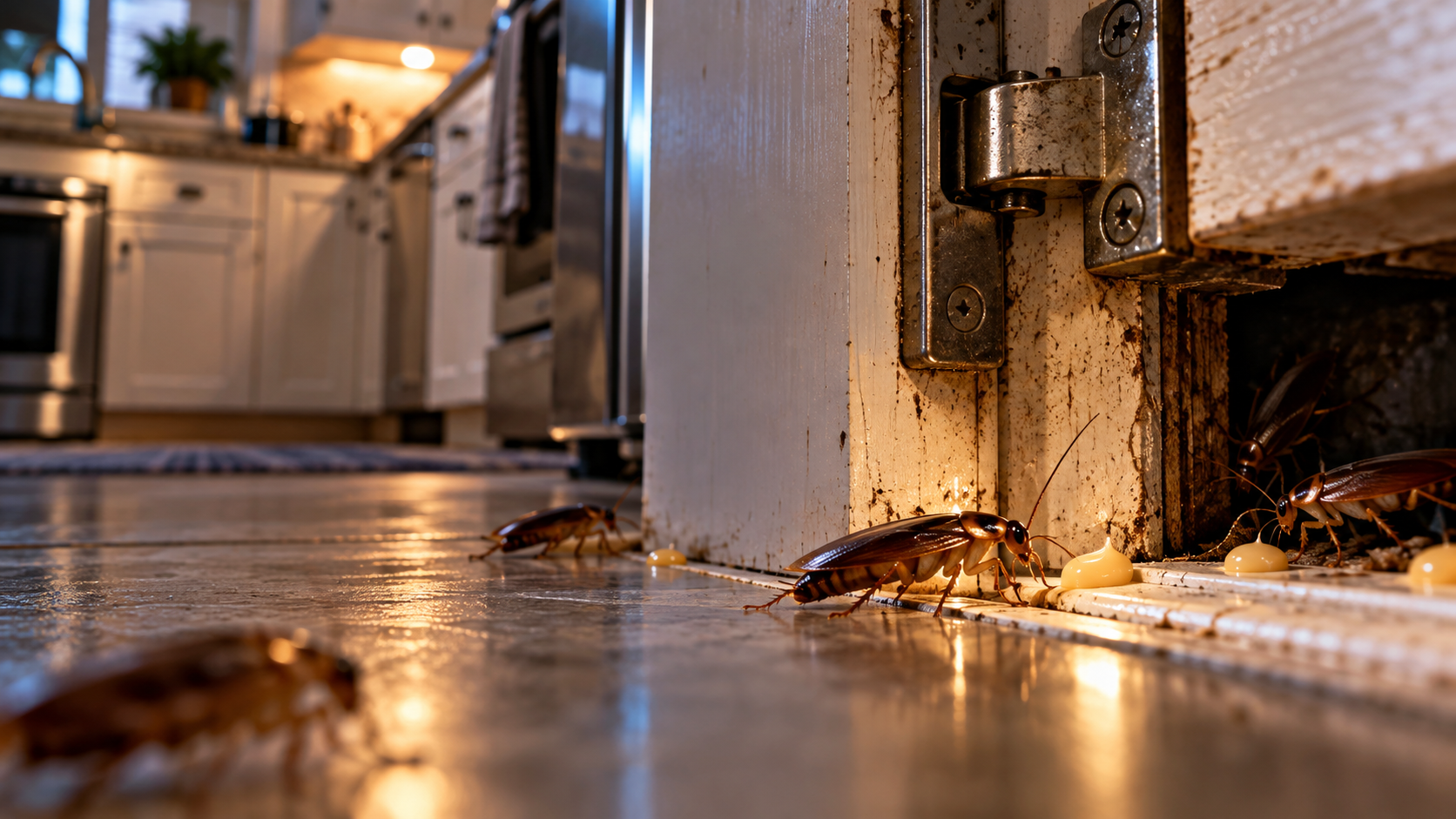
5. German Cockroaches Are a Good Example of Why DIY Treatments Can Struggle
German cockroaches can be particularly difficult to manage because they reproduce indoors and hide in extremely small cracks and protected areas around kitchens, appliances, cabinets, plumbing, and other warm locations.
A homeowner may spray the cockroaches that appear at night but never reach the primary harborages.
Heavy or poorly targeted applications may also interfere with a carefully planned baiting program.
A professional cockroach program may involve:
- Species identification
- Detailed inspection
- Monitoring traps
- Gel or other appropriate baits
- Targeted crack-and-crevice treatment
- Sanitation recommendations
- Moisture correction
- Follow-up inspections
If cockroaches continue appearing after repeated home treatment, learn more about our cockroach treatment services in Greenville, NC.
6. Fleas Require More Than Killing the Adults You Can See
Flea infestations can be frustrating because adult fleas represent only one stage of the life cycle.
Eggs, larvae, and pupae can be distributed through carpeting, pet resting areas, furniture, cracks, shaded outdoor areas, and other protected locations.
That is why a homeowner may treat the house, see temporary improvement, and then notice new fleas appearing days later.
Successful flea management may require:
- Treatment of pets under veterinary guidance
- Frequent vacuuming
- Washing pet bedding
- Identifying pet resting areas
- Targeting appropriate indoor harborages
- Addressing relevant outdoor areas when necessary
- Using pest-control products selected for the flea life cycle
- Following the treatment plan long enough for control to occur
Our Greenville flea-control guide explains why full life-cycle management is important.
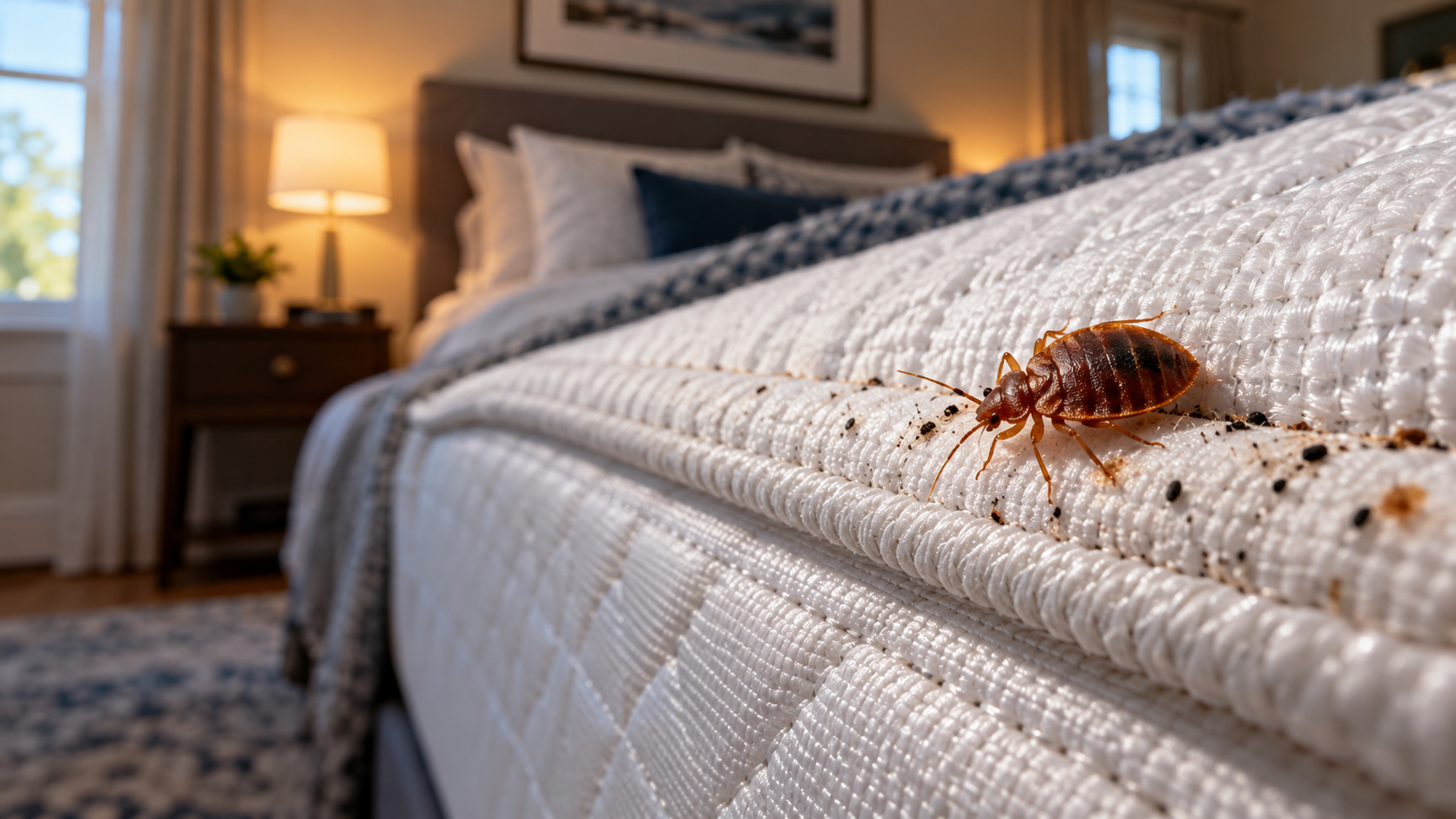
7. Bed Bugs Are Especially Difficult to Treat Without a Plan
Bed bugs are another pest where random DIY spraying can quickly become expensive and frustrating.
They can hide in:
- Mattress seams
- Box springs
- Bed frames
- Headboards
- Baseboards
- Nightstands
- Upholstered furniture
- Cracks and crevices
- Items stored near sleeping areas
Successful control may require inspection, preparation, treatment of multiple harborages, nonchemical techniques, monitoring, and follow-up.
Moving furniture from room to room can also spread the problem.
If bed bugs are suspected, avoid turning the home into a laboratory of unrelated sprays and foggers. Begin with proper identification.
See our bed bug treatment services in Greenville, NC.
8. Rodent Control Requires Finding How They Got Inside
A mouse trap can catch a mouse. That does not necessarily solve a mouse problem.
If rodents continue entering through a damaged vent, garage gap, crawlspace opening, roofline defect, or utility penetration, trapping without exclusion may become an endless cycle.
Signs of rodent activity include:
- Droppings
- Scratching in walls or ceilings
- Gnawed food packages
- Nesting material
- Gnaw marks
- Greasy travel marks
- Burrows
- Unusual odors
A complete rodent-management plan should consider population reduction, monitoring, sanitation, food availability, and structural entry points.
If traps keep catching rodents but the activity continues, visit our rodent control page for Greenville and Pitt County.
9. Termites Are Not a Good Pest for Guesswork
Termites deserve a separate category because the visible evidence may not reveal the full extent or location of the colony.
Subterranean termites typically live in the soil and can reach structural wood through concealed pathways.
Possible termite evidence includes:
- Mud tubes on foundation walls or piers
- Swarmers inside the house
- Discarded wings near windows and doors
- Damaged or hollow-sounding wood
- Wood-to-soil contact
- Moisture-damaged structural materials
Killing visible swarmers does not mean the subterranean colony has been eliminated.
Termite inspection and treatment are specialized areas of structural pest control in North Carolina and require appropriate licensing when performed for hire.
If you suspect termites, start with our termite control and inspection services in Greenville, NC.
10. Professional Equipment Is Only Part of the Difference
People sometimes assume the primary advantage of professional pest control is access to stronger chemicals.
That misses the larger point.
The real advantage is often the combination of:
- Training
- Pest identification
- Inspection experience
- Knowledge of pest behavior
- Proper product selection
- Understanding pesticide labels
- Specialized equipment
- Treatment placement
- Monitoring
- Follow-up
- Recognition of structural and environmental conditions
A highly effective treatment may actually involve less pesticide because it is directed toward the correct location and combined with other control methods.
11. More Pesticide Does Not Mean Better Pest Control
One of the most important principles for homeowners to understand is that using extra pesticide does not automatically improve results.
Pesticide labels contain directions concerning where and how the product may be used. Those instructions matter.
Do not assume that:
- Doubling an application rate will work better
- Combining unrelated products will increase effectiveness
- A product labeled for outdoors can automatically be used indoors
- More frequent treatment is always better
- One pesticide works against every species
A treatment should be selected because it is appropriate for the target pest and application site—not simply because it is readily available.
12. DIY Foggers Are Not a Universal Solution
Total-release foggers, sometimes called bug bombs, can appear convenient because they treat an entire room at once.
But pest harborages are often inside cracks, wall voids, furniture, cabinets, appliances, or other protected spaces where airborne droplets may not provide effective control.
Foggers are not a substitute for correct identification, inspection, targeted treatment, sanitation, exclusion, or follow-up.
They also must be used exactly according to label directions.
13. Crawlspace Moisture Can Keep Pest Problems Coming Back
Greenville and Pitt County homes frequently have crawlspaces, and moisture conditions beneath a house can influence pest activity.
Potential concerns include:
- Plumbing leaks
- Standing water
- Condensation
- Damaged vapor barriers
- Poor drainage
- Wet insulation
- Wood debris
- High humidity
Moisture does not automatically mean a home has a pest infestation, but damp conditions may support cockroaches and other moisture-associated pests and can contribute to conditions favorable for wood-destroying organisms.
If pests repeatedly appear around a crawlspace, treating insects without evaluating moisture may address only part of the problem.
14. Greenville’s Climate Can Support Pest Activity for Much of the Year
Eastern North Carolina does not have the prolonged deep winter conditions experienced in colder parts of the country.
Warm periods, humidity, rainfall, crawlspace conditions, landscaped yards, wooded areas, and heated buildings can allow different pest problems to continue through much of the year.
The exact pest pressure changes by season.
For example:
- Ant activity often increases during warmer periods.
- Mosquito pressure rises with warm weather and standing water.
- Termite swarm activity is seasonal, although colonies remain present beyond swarm season.
- Rodents may become more noticeable when seeking shelter.
- Cockroaches can remain active inside heated structures year-round.
- Flea infestations can persist indoors even when outdoor temperatures cool.
This is one reason a local inspection can be more useful than applying the same DIY treatment every season.
When Is DIY Pest Control Reasonable?
Professional treatment is not necessary for every insect that appears in your house.
A DIY approach may be reasonable when:
- The pest has been positively identified.
- Activity is minor and isolated.
- The source is obvious.
- The problem can be corrected primarily through sanitation or exclusion.
- A labeled consumer product is appropriate for the pest and location.
- You can monitor the situation afterward.
Examples may include:
- Vacuuming an occasional insect indoors
- Removing a spider web
- Installing a damaged door sweep
- Repairing a window screen
- Cleaning food spills attracting ants
- Correcting accessible standing-water containers
- Sealing an appropriate minor exterior gap
DIY prevention is an important part of pest management. The mistake is continuing the same unsuccessful treatment after evidence shows that the problem is larger or more complex.
When Should You Call a Professional Pest Control Company?
Professional help becomes increasingly appropriate when:
- You cannot identify the pest.
- The infestation keeps returning.
- You have repeatedly treated the problem without lasting improvement.
- Pests are reproducing inside the home.
- Activity is occurring inside walls, attics, crawlspaces, or other inaccessible areas.
- You suspect termites.
- You suspect bed bugs.
- You have a significant German cockroach infestation.
- Rodents continue entering after trapping.
- The infestation affects multiple rooms or units.
- A restaurant, rental property, office, or commercial facility is involved.
- The treatment requires specialized knowledge or equipment.
- You are uncomfortable applying pesticides yourself.
DIY Pest Control vs. Professional Pest Control
| Consideration | DIY Pest Control | Professional Pest Control |
|---|---|---|
| Pest Identification | Depends on homeowner knowledge | Inspection and professional identification |
| Minor Occasional Pests | Often appropriate | May not be necessary |
| Hidden Infestations | Can be difficult to locate | Inspection focuses on harborages and activity |
| Termites | Not recommended for guesswork | Specialized inspection and treatment |
| Bed Bugs | Often difficult and time-consuming | Structured inspection and treatment plan |
| Rodents | Traps may control isolated animals | Can combine trapping, monitoring and exclusion |
| Recurring Cockroaches | Consumer products may provide temporary reduction | Species-specific, targeted treatment and follow-up |
| Prevention | Homeowner repairs and sanitation are valuable | Can identify contributing conditions and recommend corrections |
| Monitoring | Homeowner responsibility | Can be incorporated into a service program |
The Real Cost of Repeated DIY Treatment
A store-bought product may initially cost less than professional service. But price should be viewed in the context of the entire problem.
Repeated purchases can add up when:
- The wrong pest is being treated.
- The infestation requires multiple control methods.
- The product never reaches the harborage.
- Reinfestation continues through an entry point.
- The underlying moisture or sanitation problem remains.
- Different products are purchased every few weeks.
The least expensive approach is the one that appropriately solves the problem—not necessarily the product with the lowest price on the shelf.
What Should a Professional Pest Inspection Look For?
The inspection should reflect the pest involved, but a professional may evaluate:
- Evidence of active pests
- Nesting or harborage areas
- Droppings and damage
- Cracks and structural entry points
- Door and garage seals
- Utility penetrations
- Food and water sources
- Sanitation conditions
- Plumbing leaks
- Crawlspace moisture
- Standing water
- Vegetation against the structure
- Wood-to-soil contact
- Accessible attics and crawlspaces
The objective should be to understand both the pest and the conditions contributing to the problem.
Why Licensing Matters in North Carolina
Structural pest control performed for hire in North Carolina is regulated by the North Carolina Department of Agriculture & Consumer Services.
The state separates structural pest-control licensing into specialized phases that include household pest control, wood-destroying organisms, and fumigation.
Hiring a properly credentialed company gives consumers a way to verify that the business operates within North Carolina’s structural pest-control regulatory system.
D & D Pest Control Co. lists North Carolina Structural Pest Control License #1274 PW.
Professional Pest Control in Greenville and Pitt County, NC
D & D Pest Control Co. provides pest-control services for homes and businesses throughout Greenville and surrounding Pitt County communities.
Depending on the pest and property conditions, professional service may include inspection, identification, targeted treatment, monitoring, sanitation recommendations, moisture observations, exclusion recommendations, and follow-up.
Common services include:
- General household pest control
- Ant control
- Cockroach treatment
- Rodent control
- Flea treatment
- Bed bug treatment
- Spider control
- Termite inspection and treatment
- Monthly and quarterly pest-control programs
For ongoing pest-management options, visit our pest control services in Greenville, NC.
Frequently Asked Questions About DIY vs. Professional Pest Control
Is professional pest control better than DIY pest control?
It depends on the pest and severity of the problem. DIY prevention and minor control measures can work well for isolated pests, sanitation issues, and simple exclusion repairs. Professional service becomes more valuable when the pest is difficult to identify, the infestation is established, specialized treatment is required, or repeated DIY attempts have not corrected the problem.
Why do pests keep coming back after I spray?
Spraying visible pests may not reach nests, eggs, larvae, hidden harborages, colonies, or entry points. Food, water, moisture, sanitation conditions, and structural openings may also continue supporting pest activity. Identifying and correcting those underlying factors is often necessary for lasting control.
Can store-bought pest-control products work?
Yes. Consumer pest-control products can be useful when the pest is correctly identified and the product is labeled for the pest and location. Problems arise when the wrong product is selected, directions are not followed, or treatment focuses only on visible insects while the infestation remains hidden.
When should I stop trying DIY pest control?
Consider professional assistance when the infestation continues despite repeated treatment, you cannot confidently identify the pest, activity occurs in inaccessible locations, multiple rooms are affected, or you suspect termites, bed bugs, significant cockroach activity, or a continuing rodent infestation.
Can professional pest control prevent pests from returning?
No pest-control company can prevent every pest from ever entering a property. However, professional inspection, monitoring, exclusion recommendations, sanitation improvements, moisture correction, and targeted treatment can reduce the conditions that support recurring pest problems.
Are professional pest-control products stronger than store-bought products?
The difference is not simply product strength. Professional pest management also involves identification, training, inspection, treatment placement, pest biology, monitoring, equipment, and selecting products appropriate for the specific situation. Proper treatment strategy is often more important than simply using more pesticide.
Can I treat termites myself?
Termite control is a specialized area because subterranean colonies and entry routes may be hidden. Killing visible termites or swarmers does not necessarily eliminate the colony. When termites or possible termite damage are found, a professional termite inspection is a prudent next step.
Why are bed bugs difficult to eliminate with DIY treatments?
Bed bugs hide in small cracks, furniture, mattresses, bed frames, baseboards, and other protected locations. Control may require careful inspection, preparation, multiple techniques, monitoring, and follow-up. Treating only the insects that are visible can leave hidden bugs and eggs behind.
Why do I still have mice after setting traps?
Traps can remove individual rodents, but activity may continue if additional mice are entering through structural openings. Effective rodent management often includes locating entry points, reducing food availability, trapping, sanitation, monitoring, and exclusion.
How do I know whether a pest-control company is licensed in North Carolina?
Ask the company for its structural pest-control license information and verify the credential through the North Carolina Department of Agriculture & Consumer Services. Credentials are especially important for specialized structural pest-control work.
Does professional pest control always mean spraying inside my home?
No. Depending on the pest, professional management may involve baiting, trapping, monitoring, exclusion recommendations, sanitation, moisture correction, exterior treatment, crack-and-crevice applications, or other targeted methods. An Integrated Pest Management approach uses the methods appropriate for the actual problem.
How often should professional pest control be performed?
There is no single schedule that is appropriate for every property. Some pest problems require one targeted service, while homes and businesses with recurring pest pressure may benefit from monthly or quarterly monitoring and treatment. The schedule should reflect the pest, property conditions, and service goals.
Stop Treating the Symptom and Find the Source
DIY pest control has an important place in home maintenance. Cleaning, sealing appropriate gaps, reducing moisture, removing food sources, and dealing with an occasional pest can often be handled without professional treatment.
But when pests keep returning, the problem is often more complicated than the insect or rodent you can see.
Finding the nest, harborage, entry point, moisture source, sanitation problem, or hidden infestation is what turns pest control from a temporary reaction into a management strategy.
If you are dealing with recurring ants, cockroaches, fleas, rodents, bed bugs, termites, spiders, or other pest activity in Greenville or Pitt County, D & D Pest Control Co. can help evaluate the problem and recommend an appropriate next step.
Schedule Pest Control in Greenville, NC
D & D Pest Control Co.
North Carolina Structural Pest Control License #1274 PW
Serving Greenville and surrounding Pitt County, North Carolina communities.
Office: (252) 523-8255
Manager: (252) 531-0621