
A pest infestation is rarely solved simply by spraying the insect or rodent you happen to see. The visible pest may be only a small part of a larger problem involving hidden nesting areas, food sources, moisture, structural openings, crawlspaces, wall voids, landscaping, or conditions around the exterior of the property.
That is why professional pest control in Greenville, North Carolina should begin with understanding the problem—not automatically applying the same treatment to every house.
A qualified pest-control professional typically works through a process that includes inspection, identification, evaluation of contributing conditions, treatment, prevention, monitoring, and follow-up. The exact strategy depends on whether the problem involves ants, cockroaches, rodents, termites, bed bugs, spiders, fleas, mosquitoes, or another pest.
This guide explains how pest-control professionals investigate an infestation, how different treatment methods are selected, what homeowners can expect during service, and why long-term pest management often depends on correcting the conditions that allowed the pests to become established.
Professional Pest Control Starts With Identification—not Spraying
The first question should not be, “What should we spray?”
It should be, “What pest are we dealing with?”
Correct identification matters because pests that appear similar can behave very differently.
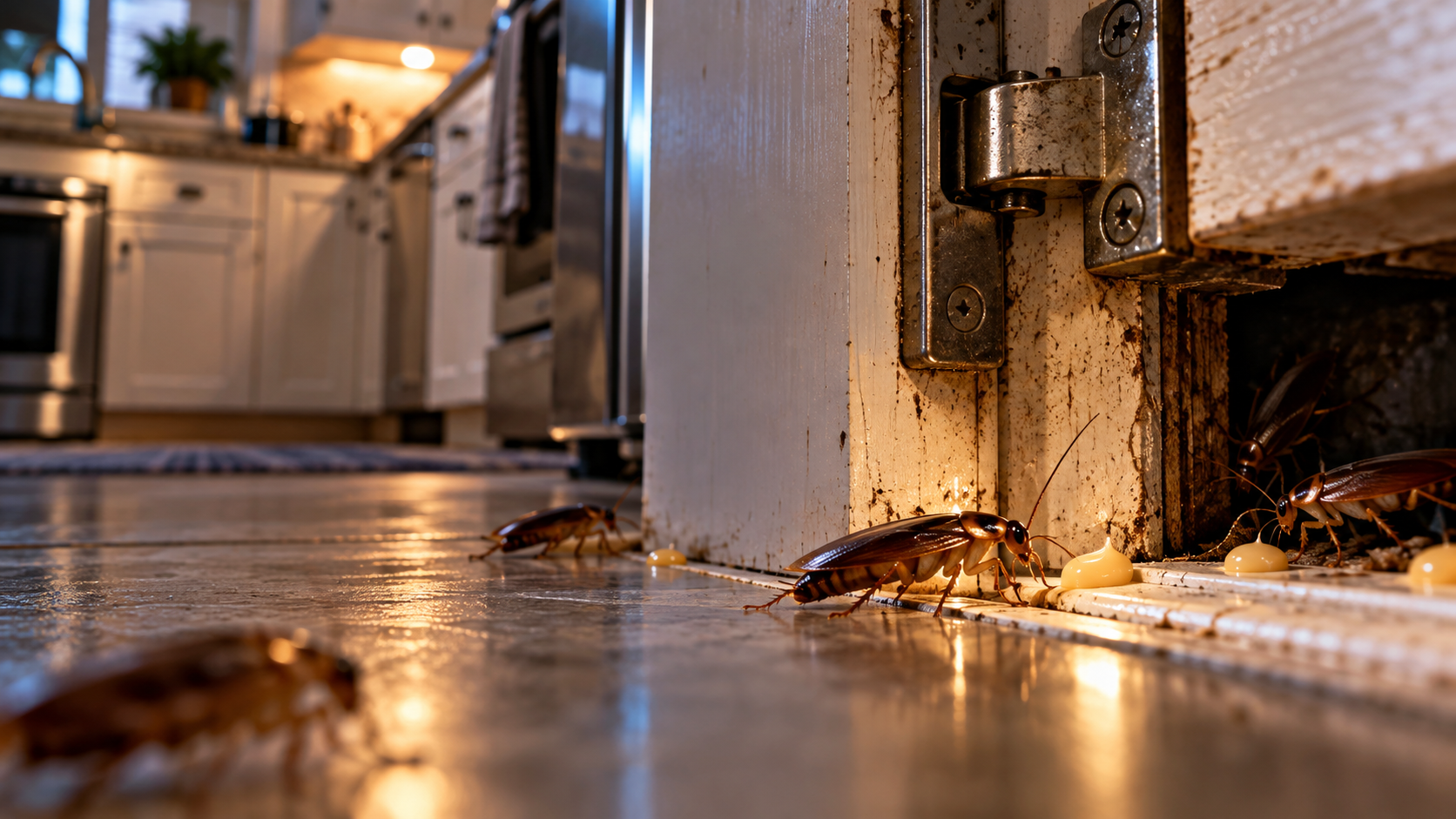
An ant traveling across a kitchen counter may be coming from an outdoor colony, a wall void, moisture-damaged wood, or another concealed location. A large cockroach occasionally entering from a crawlspace requires a different approach from an established German cockroach infestation reproducing behind kitchen equipment.
The same principle applies to rodents, termites, bed bugs, fleas, spiders and other pests.
Professional pest control therefore begins by gathering evidence and determining:
- Which pest is present?
- Where is the activity concentrated?
- Where might the pest be nesting or harboring?
- How might it be entering the structure?
- What food or water sources are available?
- Is moisture contributing to the infestation?
- How extensive does the problem appear to be?
- Is the pest reproducing indoors?
- Are conditions around the property contributing to continued activity?
Only after those questions are considered should an appropriate control strategy be selected.
The Professional Pest-Control Process: From Inspection to Prevention
Although every infestation is different, professional pest management can generally be understood as a series of interconnected steps.
Step 1: Talk With the Property Owner
A good inspection often starts before the technician begins looking around the property.
The homeowner, tenant, property manager or business owner can provide valuable information about what has been happening.
A pest-control professional may ask:
- What have you been seeing?
- Where are you seeing it?
- When did the activity begin?
- Is activity worse during the day or at night?
- Have you already used any pesticide or DIY product?
- Have plumbing leaks or moisture problems occurred?
- Have groceries, furniture, packages or used items recently entered the property?
- Have pets experienced flea activity?
- Have rodents been heard in walls, ceilings or the attic?
- Has the property previously been treated for the same pest?
Those details help narrow down where an inspection should begin.
Step 2: Inspect the Property
The inspection is one of the most important parts of professional pest control.
Depending on the pest and structure, an inspection may include accessible areas such as:
- Kitchens
- Bathrooms
- Laundry rooms
- Cabinets
- Under sinks
- Behind or beneath appliances
- Garages
- Attics
- Crawlspaces
- Utility penetrations
- Foundation walls
- Windows and doors
- Roofline areas
- Porches and decks
- Exterior landscaping
- Garbage areas
- Standing-water locations
The objective is not simply to find a bug. It is to understand the environment in which the pest is surviving.
Step 3: Identify Evidence and Harborage Areas
Pests frequently leave clues even when they are not visible during the inspection.
Depending on the infestation, professionals may look for:
- Droppings
- Egg cases
- Shed skins
- Nesting material
- Gnaw marks
- Grease or rub marks
- Webbing
- Ant trails
- Termite mud tubes
- Discarded wings
- Wood damage
- Fecal spotting
- Odors
- Dead insects
- Entry openings
The location and type of evidence can help determine how the infestation is developing and where treatment or corrective action should be concentrated.
Why Pest Identification Changes the Treatment
There is no universal treatment that is appropriate for every pest problem.
| Pest Problem | Professional Focus May Include |
|---|---|
| Ants | Species identification, trails, colony locations, baiting, exterior pressure, entry points and food sources |
| Cockroaches | Species identification, harborages, sanitation, moisture, monitoring, baiting and targeted crack-and-crevice treatment |
| Rodents | Entry points, droppings, nesting areas, trapping, monitoring, exclusion and food sources |
| Termites | Mud tubes, damaged wood, soil access, crawlspace conditions, moisture and termite-specific treatment |
| Bed Bugs | Sleeping and resting areas, seams, furniture, cracks, clutter, treatment preparation and follow-up |
| Spiders | Webs, insect prey, exterior lighting, entry points and harborage areas |
| Fleas | Pets, carpeting, resting areas, immature stages, exterior sources and follow-up |
This is why identifying the pest before selecting a treatment matters.
Step 4: Find Out Why the Pest Is There
Finding pests tells you what is happening. A professional inspection should also consider why it is happening.
Pests need resources. Depending on the species, those resources may include food, water, shelter, nesting locations or access into the building.
Common Conditions That Can Support Pest Activity
- Plumbing leaks
- Standing water
- Crawlspace moisture
- Food crumbs and grease
- Pet food left accessible
- Improperly stored dry goods
- Garbage residue
- Excessive cardboard
- Clutter
- Wood-to-soil contact
- Heavy vegetation against the structure
- Damaged screens
- Worn door sweeps
- Open utility penetrations
- Gaps around siding or foundations
- Firewood stored close to the house
Removing those conditions can sometimes be as important as the pesticide treatment itself.
Step 5: Build a Treatment Plan
Once the pest, activity areas and contributing conditions have been evaluated, the professional can determine which control methods are appropriate.
The plan should be specific to the pest and the property rather than automatically applying every available method.
Professional pest management may include one or more of the following:
- Monitoring devices
- Baits
- Traps
- Exterior perimeter treatments
- Crack-and-crevice applications
- Void treatments
- Dust formulations in appropriate locations
- Targeted liquid applications
- Rodent stations
- Web removal
- Mechanical removal
- Exclusion recommendations
- Sanitation recommendations
- Moisture correction
- Habitat modification
- Pest-specific specialty treatments
Any pesticide application should be appropriate for the pest and treatment site and performed according to the product label.
What Is Integrated Pest Management?
Integrated Pest Management, or IPM, is a decision-making approach that combines pest identification, monitoring, prevention and appropriate control methods rather than relying exclusively on pesticide applications.
For a Greenville home, an IPM approach could look like this:
- Confirm which pest is present.
- Locate areas where activity is occurring.
- Determine whether treatment is necessary.
- Remove food, water or shelter where practical.
- Correct accessible entry points.
- Use traps, baits or targeted treatment when appropriate.
- Monitor the property afterward.
- Adjust the plan if activity continues.
The important idea is that professional pest management is a process—not simply an application.
How Professionals Approach Common Greenville Pest Problems
Ant Infestations
Ant control begins with identifying the species and determining where the ants are traveling and potentially nesting.
Simply spraying visible worker ants may provide temporary relief without affecting the colony responsible for the activity.
Depending on the ant species and location, a professional strategy may involve:
- Locating trails and entry areas
- Inspecting exterior nesting locations
- Using appropriate baits
- Targeting cracks and crevices
- Reducing food sources
- Correcting moisture conditions
- Treating exterior pressure points when appropriate
Learn more about professional ant control in Greenville, NC.
Cockroach Infestations
Cockroach treatment is another good example of why identification matters.
German cockroaches living and reproducing inside kitchens require a different strategy than larger cockroach species entering from exterior or damp structural areas.
A professional cockroach program may include:
- Inspection behind appliances and cabinets
- Species identification
- Sticky-monitor placement
- Sanitation recommendations
- Moisture correction
- Bait placement
- Targeted crack-and-crevice treatment
- Follow-up monitoring
See our cockroach treatment services in Greenville, North Carolina.
Rodent Infestations
Rodent control should involve more than placing a trap where a mouse was last seen.
The professional should look for how rodents are entering and where they are traveling.
Evidence may include:
- Droppings
- Gnawed materials
- Rub marks
- Nesting material
- Tracks
- Damaged food packages
- Gaps around doors and utilities
A rodent-control strategy may combine trapping, monitoring, exterior stations where appropriate, sanitation and structural exclusion.
Learn more about our rodent control services in Greenville, NC.
Termite Infestations
Termites require an entirely different inspection and treatment approach.
Subterranean termites often remain concealed in soil, crawlspaces, foundation areas and structural wood. A termite inspection may include accessible foundation walls, crawlspace framing, sill plates, band joists, subflooring and other areas where evidence could occur.
Professionals may look for:
- Mud tubes
- Termite swarmers
- Discarded wings
- Damaged or hollowed wood
- Moisture conditions
- Wood-to-soil contact
- Past treatment evidence
Termite control is specialized work and should not be confused with ordinary household pest treatment.
Visit our termite control page for Greenville and Pitt County.
Bed Bug Infestations
Bed bugs also require a specialized approach.
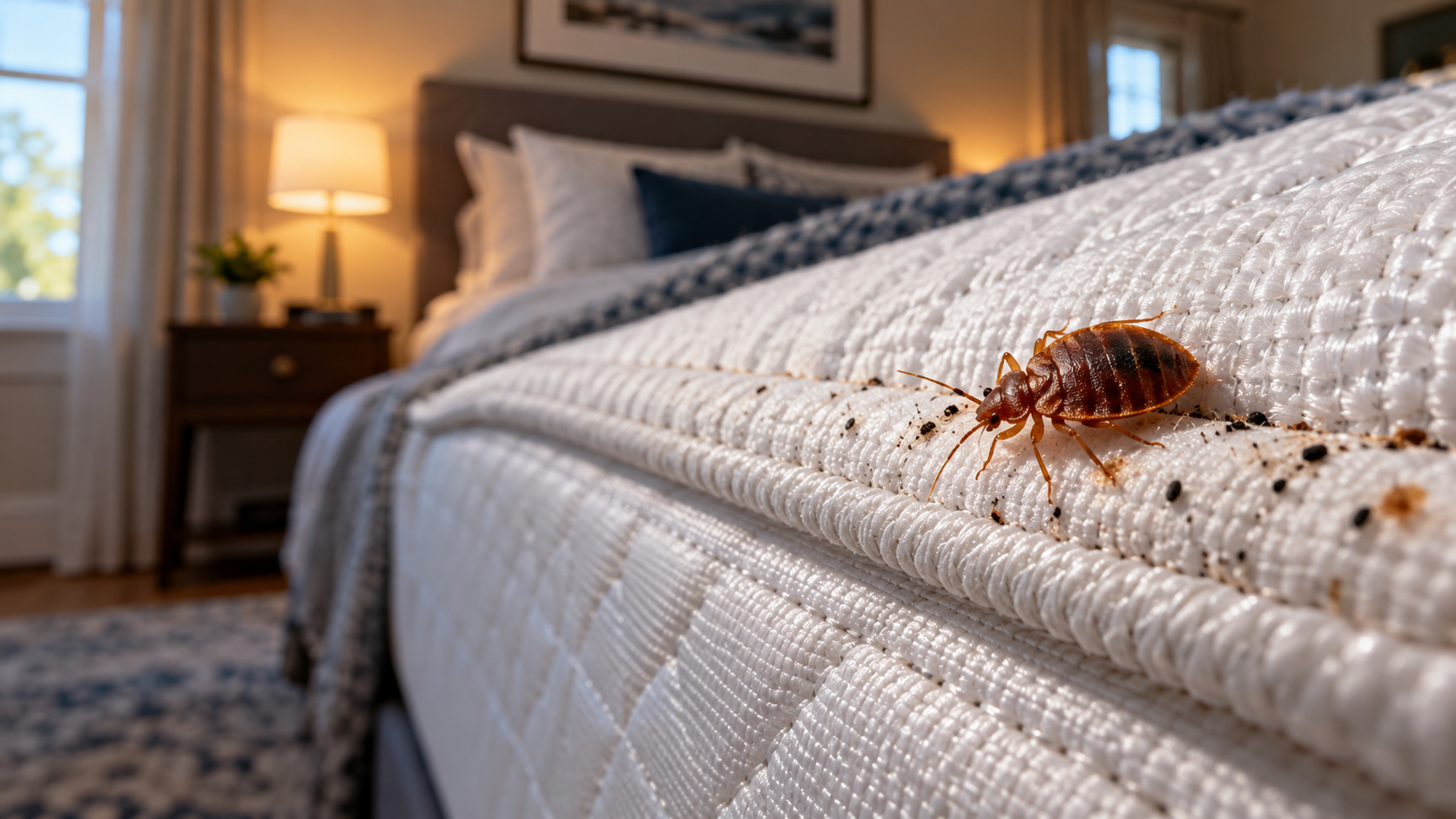
They can hide in mattress seams, bed frames, headboards, upholstered furniture, baseboards and small cracks near resting areas.
Professional management may involve:
- Confirming that bed bugs are actually present
- Inspecting sleeping and resting areas
- Evaluating the extent of the infestation
- Providing preparation instructions
- Targeted treatment of appropriate harborages
- Follow-up inspections or treatments
Because bed bugs can be difficult to eliminate in one step, monitoring and follow-up can be important.
Learn more about bed bug treatment in Greenville, NC.
The Role of Pest Exclusion
Pest exclusion means correcting openings or structural conditions pests can use to enter a building.
Examples may include:
- Replacing damaged door sweeps
- Repairing screening
- Closing appropriate gaps around utilities
- Correcting openings around pipes
- Repairing damaged vents
- Addressing gaps around garage doors
- Correcting structural openings used by rodents
Exclusion is particularly important for rodents and recurring occasional invaders because killing pests already inside does not necessarily stop new ones from entering.
Not every opening should simply be sealed without understanding its purpose, however. Building ventilation, drainage and other structural considerations should be respected.
Why Sanitation Is Part of Pest Control
Sanitation does not mean a pest infestation automatically occurred because a property is “dirty.” Even well-maintained homes can develop pest problems.
However, food and water availability can strongly influence whether certain pests are able to thrive.
Useful corrective steps may include:
- Cleaning grease beneath cooking equipment
- Removing crumbs and food debris
- Storing pantry goods in secure containers
- Keeping pet food inaccessible when not needed
- Cleaning trash containers
- Removing excessive cardboard
- Reducing clutter in pest-prone areas
- Cleaning spills promptly
For cockroaches, ants and rodents especially, reducing accessible food makes other control measures more effective.
Why Moisture Matters in Eastern North Carolina Pest Control
Moisture is another condition professional pest inspectors routinely consider.
Greenville and Pitt County properties may contain crawlspaces, plumbing areas, shaded foundations and other locations where excess moisture can occur.
Depending on the pest, moisture may contribute to favorable harborage or provide an accessible water source.
A professional may look for:
- Plumbing leaks
- Standing water
- Condensation
- Damp crawlspace soil
- Damaged vapor barriers
- Poor drainage
- Moist wood
If crawlspace conditions are contributing to recurring pest problems, see our moisture control services in Greenville, NC.
Interior Pest Control vs. Exterior Pest Control
Homeowners sometimes assume professional pest control means routinely spraying every interior baseboard.
That is not necessarily the best strategy.
For many recurring household pests, professionals may place greater emphasis on preventing pests from reaching the interior in the first place.
Exterior service may focus on:
- Foundation areas
- Doors and windows
- Utility penetrations
- Exterior harborages
- Ant activity
- Spider webs
- Vegetation adjacent to the structure
- Other pest entry zones
Interior treatment may focus on:
- Confirmed activity areas
- Cracks and crevices
- Cabinet voids
- Plumbing penetrations
- Specific harborage areas
- Bait placements
- Monitoring locations
The treatment area and method should reflect the pest and actual conditions found.
Why One Treatment Is Not Always Enough
Homeowners understandably want an infestation gone immediately, but pest biology does not always make instant elimination realistic.
Some pests have:
- Eggs protected from certain treatments
- Hidden nesting locations
- Multiple developmental stages
- Large colonies
- Exterior populations that can re-enter
- Harborages that are difficult to access
For that reason, some infestations require more than one visit.
Follow-up may be necessary to:
- Check monitoring devices
- Evaluate whether activity is decreasing
- Replace or adjust bait
- Remove captured rodents
- Treat newly identified harborages
- Verify that corrective work was completed
- Determine whether the treatment strategy should be changed
The goal is not simply to perform another treatment. The goal is to determine whether the original plan worked.
What Homeowners Can Do Before Pest Control Service
Preparation depends on the pest and treatment method, so always follow the instructions provided for your specific service.
General preparation may include:
- Write down where pests have been observed
- Photograph insects if possible
- Save an intact specimen when practical
- Make important activity areas accessible
- Remove food debris
- Store exposed food
- Identify known plumbing leaks
- Tell the technician about children, pets or aquariums
- Discuss pesticides or DIY products already used
- Follow pest-specific preparation instructions
Do not unnecessarily clean away all evidence before an inspection. Ant trails, droppings, insect remains and other signs can help identify where pests are active.
What Happens After Treatment?
Professional pest management does not necessarily end when the technician leaves.
After service, homeowners should understand:
- What treatment was performed
- What products or control methods were used
- What activity may still be expected
- Whether any treated areas require temporary precautions
- What sanitation or exclusion work is recommended
- When follow-up should occur
- When to call if activity continues
Depending on the pest, some activity immediately after service may not automatically mean a treatment has failed. Your pest professional should explain what to expect for the particular infestation.
Professional Pest Control vs. Repeated DIY Treatments
DIY pest products can be useful for certain limited problems, but repeated treatment without identifying the source can sometimes result in a cycle of temporary control followed by renewed activity.
A professional inspection becomes especially useful when:
- The pest keeps returning
- You cannot identify the pest
- The infestation appears to be spreading
- Activity is occurring inside walls or inaccessible spaces
- Rodents are entering the structure
- German cockroaches are suspected
- Bed bugs are suspected
- Termites or wood damage are present
- Multiple DIY treatments have failed
- The source of the infestation cannot be located
How Pest Control Works in Greenville and Pitt County
Local pest-control work should take the property and regional conditions into account.
Homes and businesses throughout Greenville, Winterville, Ayden, Farmville, Grifton, Bethel, Grimesland and surrounding Pitt County communities can experience different pest pressures depending on moisture, landscaping, neighboring properties, construction type, sanitation, drainage and season.
A crawlspace home with excess moisture may require a different strategy from an apartment with German cockroaches. A restaurant requires a different monitoring approach from a single-family house. A rodent infestation in an attic requires a different plan from ants entering around a kitchen window.
That is why pest management should be built around the pest, the structure and the conditions found at the property.
How D & D Pest Control Co. Approaches Pest Problems
D & D Pest Control Co. provides residential and commercial pest-control services throughout Greenville and surrounding Pitt County communities.
Our Greenville website lists North Carolina Structural Pest Control License #1274 PW and services for ants, cockroaches, spiders, rodents, termites, bed bugs, fleas, mosquitoes and other common pest problems.
Depending on the situation, our pest-control approach may include:
- Pest identification
- Property inspection
- Evaluation of activity areas
- Targeted treatment
- Baiting or trapping when appropriate
- Exterior prevention
- Monitoring
- Sanitation recommendations
- Moisture recommendations
- Exclusion recommendations
- Follow-up based on the pest problem
For ongoing household protection, visit our pest control services in Greenville, NC.
Frequently Asked Questions About Professional Pest Control
What does a pest control professional do during an inspection?
A pest-control professional looks for the pest itself as well as evidence such as droppings, trails, nests, damaged materials, entry points, moisture, food sources and harborages. The inspection helps determine what pest is present, where activity is concentrated and which treatment or prevention methods are appropriate.
Does professional pest control always involve spraying?
No. Professional pest management can include inspection, monitoring, trapping, baiting, exclusion, sanitation, moisture correction, mechanical removal and targeted pesticide treatment. The appropriate combination depends on the pest and conditions found at the property.
Why do pest control professionals need to identify the pest first?
Different pests have different biology, nesting habits and treatment requirements. German cockroaches, outdoor cockroaches, ants, termites, bed bugs and rodents cannot all be controlled with the same strategy. Correct identification helps avoid unnecessary or ineffective treatment.
How long does professional pest control take to work?
It depends on the pest, infestation size, treatment method and property conditions. Some pest activity can decline quickly, while colony insects, rodents, bed bugs and other infestations may require monitoring or additional visits. Your pest professional should explain reasonable expectations for the specific problem.
Why are pests still visible after treatment?
Seeing some pests shortly after service does not automatically indicate treatment failure. Hidden insects may continue emerging, baits may require time to affect a colony, and some pest life stages may remain concealed. Continued or increasing activity should be reported so the situation can be evaluated.
What is Integrated Pest Management?
Integrated Pest Management is an approach that combines pest identification, monitoring, prevention and appropriate control methods. Rather than automatically relying on broad pesticide applications, IPM considers sanitation, exclusion, trapping, habitat changes, targeted treatment and follow-up based on the actual pest problem.
Can moisture contribute to pest infestations?
Yes. Depending on the pest, plumbing leaks, standing water, condensation and damp crawlspace conditions can provide water or favorable harborage. Correcting moisture does not replace pest treatment when an infestation already exists, but it may remove an important condition supporting recurring activity.
Why do rodents require exclusion?
Removing rodents from a structure does not necessarily prevent new rodents from entering. Identifying and correcting appropriate structural entry points is therefore an important part of long-term rodent management. Trapping, monitoring, sanitation and exclusion are often used together.
Do termites require different pest-control treatment?
Yes. Termites are wood-destroying organisms and require specialized inspection and treatment. North Carolina separately regulates wood-destroying organism pest-control work, so termite control should not be treated as ordinary household insect service.
How can I help keep pests from returning?
Recommendations vary by pest but commonly include repairing appropriate entry points, reducing food and water sources, fixing plumbing leaks, controlling crawlspace moisture, improving sanitation, trimming vegetation away from the structure and following any pest-specific recommendations provided after service.
Need Help With a Pest Infestation in Greenville, NC?
If ants, cockroaches, rodents, termites, bed bugs or other pests are showing up repeatedly around your property, the first step is understanding what is causing the problem.
D & D Pest Control Co. provides professional pest-control services for homes and businesses throughout Greenville and surrounding Pitt County communities.
D & D Pest Control Co.
North Carolina Structural Pest Control License #1274 PW
Serving Greenville, Winterville, Ayden, Farmville, Grifton and surrounding Pitt County areas.
Office: (252) 523-8255
Manager: (252) 531-0621