
For homeowners and businesses in Greenville, Pitt County, and surrounding Eastern North Carolina communities, this approach is particularly important. Our warm, humid climate, crawlspace construction, seasonal rainfall, abundant vegetation, and relatively mild winters can create favorable conditions for ants, cockroaches, termites, mosquitoes, rodents, spiders, fleas, and other pests.
A modern pest-management program should therefore answer more than one question. It should determine what pest is present, where it is coming from, what conditions are supporting it, whether treatment is necessary, which control methods are appropriate, and how future activity can be reduced.
This guide explains how Integrated Pest Management works, what homeowners should know about pesticide safety, how targeted treatments differ from unnecessary spraying, and when professional pest control may be appropriate.
What Does “Safe and Effective Pest Management” Really Mean?
No pesticide should be described as completely harmless or completely safe under every circumstance. Pesticides are designed to affect living organisms, which is why correct selection, handling, placement, storage, and application matter.
A better goal is effective pest management that reduces unnecessary exposure while controlling the pest problem appropriately.
The U.S. Environmental Protection Agency describes Integrated Pest Management, commonly called IPM, as an approach that combines information about pest biology and the environment with available control methods. Prevention and lower-risk approaches are considered before more extensive control measures are used.
In practical terms, this means pest control may involve:
- Correct pest identification
- Detailed inspection
- Monitoring pest activity
- Removing food sources
- Correcting water and moisture problems
- Reducing clutter and harborage
- Sealing pest entry points
- Mechanical control such as traps
- Baits or targeted treatments when appropriate
- Carefully selected pesticide applications
- Follow-up inspections and monitoring
The objective is not simply to kill the pest you happen to see. The goal is to understand and manage the conditions allowing the problem to continue.
What Is Integrated Pest Management?
Integrated Pest Management is a decision-making process that uses inspection, identification, prevention, monitoring, physical controls, environmental modifications, and pesticides when appropriate to manage pests effectively while reducing unnecessary risks.
IPM is not the same thing as pesticide-free pest control. Pesticides can be an important part of an IPM program when conditions justify their use. The difference is that pesticide application becomes one tool within a larger strategy rather than the entire strategy.
The Four Basic Principles of IPM
1. Identify the Pest Correctly
Identification is one of the most important steps in pest management.
A large cockroach may require a very different strategy from a German cockroach infestation. Winged ants can be confused with termite swarmers. Different rodent species may use different parts of a structure. Some insects wandering inside are occasional invaders rather than pests reproducing indoors.
Applying the wrong treatment because the pest was incorrectly identified can waste time and money and may create unnecessary pesticide exposure.
2. Inspect and Monitor the Problem
Seeing one pest does not always tell you how serious the problem is—or where it began.
A professional inspection may look for:
- Droppings
- Live and dead insects
- Egg cases
- Nesting material
- Gnaw marks
- Termite mud tubes
- Moisture conditions
- Food sources
- Exterior entry points
- Plumbing penetrations
- Crawlspace conditions
- Wall voids and cracks
- Activity around doors and windows
- Conditions surrounding the foundation
Monitoring after corrective work is equally important. Pest management should be evaluated based on whether activity decreases—not simply whether a product was applied.
3. Prevent the Conditions Pests Need
Pests generally need some combination of food, water, shelter, favorable temperature, and access.
Removing or reducing those resources can make a significant difference.
Examples include:
- Repairing leaking plumbing
- Keeping food in sealed containers
- Cleaning food residue from beneath appliances
- Removing garbage regularly
- Reducing cardboard and clutter
- Correcting crawlspace moisture
- Repairing damaged door sweeps
- Sealing appropriate cracks and penetrations
- Keeping vegetation from contacting the structure
- Eliminating standing water
These measures may not eliminate every pest problem by themselves, but they can reduce the resources pests need to survive and reproduce.
4. Use Appropriate Control Methods
When control is necessary, the treatment should match the pest, location, level of activity, building conditions, and applicable product labeling.
Depending on the situation, control might involve traps, exclusion, sanitation changes, vacuum removal, baiting, dust formulations, insect growth regulators, targeted liquid treatments, termite treatment systems, exterior treatments, or another pest-specific method.
More pesticide does not automatically mean better pest control.
Why Pest Identification Comes Before Treatment
Imagine finding several small insects around a kitchen sink.
Without identification, a homeowner might assume they are ants and begin applying an aerosol insecticide. But if the insects are German cockroaches, the treatment program could require inspection of appliances, cabinets and harborages, sanitation improvements, monitoring, properly placed baits, and other targeted controls.
The same principle applies to termites.
A homeowner may discover winged insects around a window and assume termites are damaging the house. Carpenter ants and other winged insects can sometimes cause confusion. Correct identification can prevent unnecessary treatments while ensuring a real termite problem is not overlooked.
That is why effective pest management starts by asking:
- What exactly is the pest?
- Where is it living?
- How is it getting inside?
- What is supporting the population?
- How widespread is the activity?
- Which control methods are appropriate?
Why Prevention Is a Major Part of Pest Control
The EPA recommends reducing pest access to food, water and shelter as a fundamental part of home pest management.
This approach makes sense because pesticide treatment alone may not correct the reason a pest problem developed.
Consider a Cockroach Problem
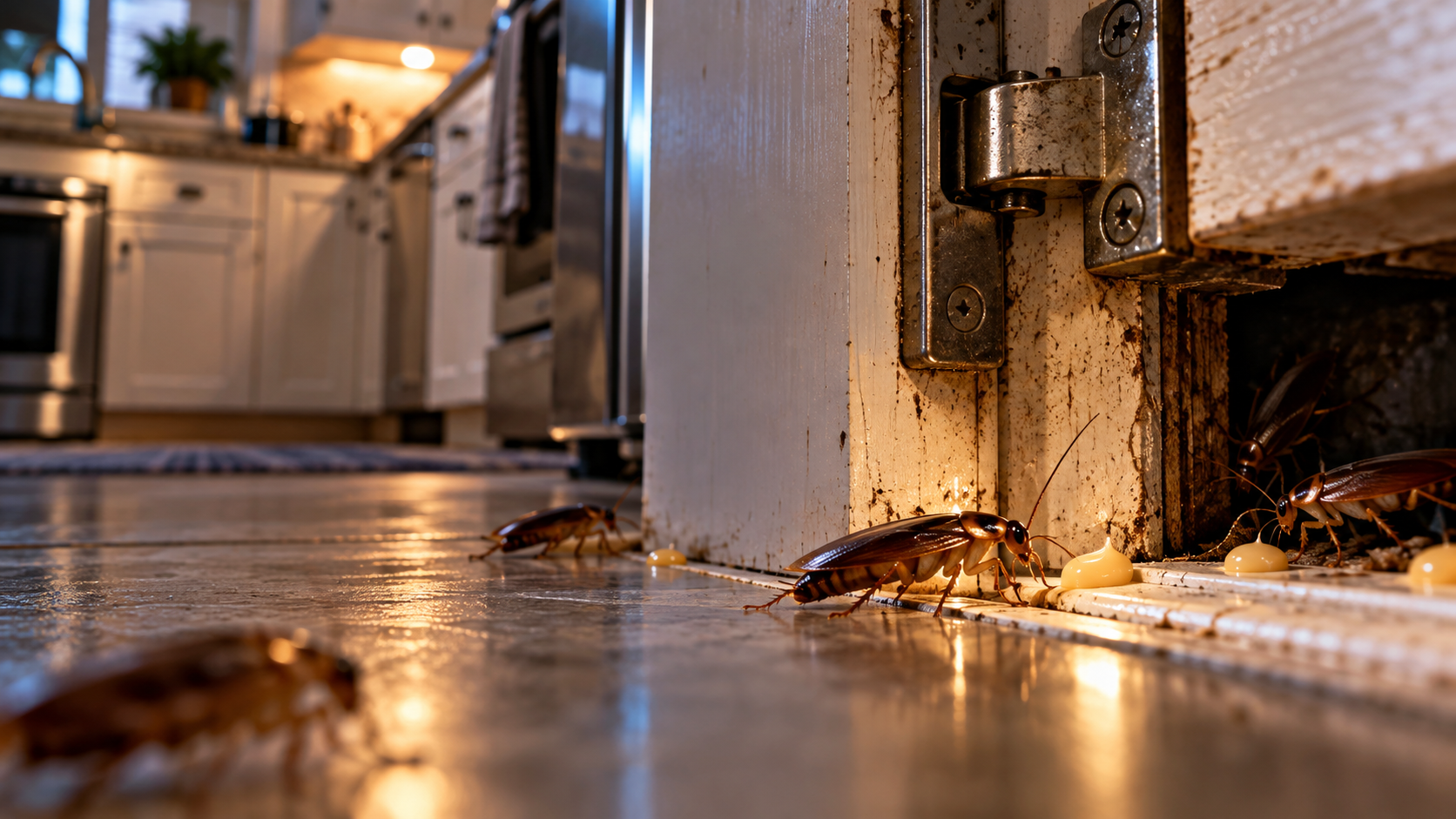
If cockroaches have water from a leaking pipe, food behind appliances, grease accumulation, clutter and numerous harborages, repeatedly treating visible roaches may provide incomplete control.
A more complete strategy may combine sanitation, leak correction, monitoring, targeted bait placement and treatment of actual harborages.
Learn more about our cockroach control services in Greenville, NC.
Consider a Rodent Problem
If mice are entering through an exterior opening, trapping the animals already indoors can be important—but new rodents may continue entering until the access point is identified and appropriately corrected.
Effective rodent management may involve:
- Inspection
- Trapping
- Sanitation
- Food-storage improvements
- Exterior habitat changes
- Entry-point identification
- Structural exclusion where appropriate
- Continued monitoring
Consider a Termite Problem
Subterranean termites require an entirely different approach.
Reducing moisture and correcting wood-to-soil contact can help address conducive conditions, but those measures are not automatically a substitute for professional treatment when an active termite infestation is present.
Visit our termite control services in Greenville and Pitt County for more information.
Pesticide Labels Matter
When pesticides are part of a pest-management program, the product label is critical.
The label explains where the product may be used, which pests it is intended to control, application directions, restrictions, precautionary statements, protective equipment requirements where applicable, storage instructions and disposal requirements.
Using more than the labeled amount does not mean the product will work better.
Likewise, a pesticide labeled only for outdoor use should not be used indoors simply because the homeowner believes the pest is the same.
North Carolina’s Department of Agriculture & Consumer Services specifically advises pesticide users to read and follow label directions and precautions.
For additional consumer guidance, visit the NCDA&CS pesticide safety resource.
Is More Pesticide Better?
No.
This is one of the most important misconceptions homeowners should understand.
Pesticides are designed to be applied according to specific label directions. Increasing the concentration, application amount or frequency beyond what the label permits does not automatically improve control and may increase unnecessary exposure or create other problems.
Effective professional pest control focuses on putting the appropriate control measure in the appropriate place for the pest being managed.
For example, cockroaches hiding in cracks around appliances may respond better to a properly designed baiting and monitoring program than repeated broad spraying of open kitchen surfaces.
What Does Targeted Pest Control Mean?
Targeted pest control means directing the treatment toward areas where the pest lives, travels, nests, feeds or enters the structure rather than treating every accessible surface simply because treatment is possible.
Depending on the pest, targeted locations might include:
- Cracks and crevices
- Wall voids
- Plumbing penetrations
- Areas behind appliances
- Exterior foundation entry points
- Ant trails
- Rodent travel routes
- Termite treatment zones
- Crawlspace areas
- Attic entry points
Targeted application can improve pest-management precision while reducing unnecessary treatment of areas where pests are not active.
Are Natural or Organic Pest-Control Products Automatically Safer?
No pest-control product should be assumed to be harmless simply because it is described as natural, botanical, green or organic.
Natural substances can still cause irritation, toxicity or other unwanted effects depending on the substance, concentration, exposure and method of use.
Rather than judging a product solely by marketing terms, homeowners should consider:
- What pest the product controls
- Where it may legally be used
- Its active ingredient
- Label precautions
- Required application method
- Potential exposure
- Whether a nonchemical method would work
- Whether professional treatment is more appropriate
“Natural” and “synthetic” are not substitutes for reading and following the label.
What About Children and Pets?
Families with children and pets should tell their pest-control professional about household conditions before treatment begins.
Different products and application methods can have different requirements. Depending on the treatment, customers may be instructed to remove pets, cover or remove pet food and water, avoid a treatment area temporarily, allow a product to dry, remove children’s toys, or follow other preparation and re-entry instructions.
Those instructions should come from the applicable pesticide label and the pest-management professional performing the service.
Do not assume that every pest-control product has the same re-entry requirements.
D & D Pest Control Co. applies treatments according to product-label requirements and uses targeted pest-management strategies appropriate to the pest and property conditions.
Indoor Pest Management: Start With the Environment
Indoor pests often reveal something about the environment in which they are living.
Kitchen Areas
Look for:
- Food crumbs
- Grease
- Pet food
- Moisture around plumbing
- Food beneath appliances
- Cardboard storage
- Cracks around cabinets
Bathrooms and Laundry Areas
Inspect for:
- Leaking plumbing
- Condensation
- Gaps around pipes
- Damp cabinetry
- Cockroach or silverfish activity
Garages
Common pest conditions include:
- Worn garage-door seals
- Pet food storage
- Bird seed
- Cardboard boxes
- Clutter
- Gaps around utility penetrations
- Rodent activity
Attics
Attics may provide shelter for rodents, insects and other pests. Inspect accessible areas for droppings, damaged screening, gnawing, nesting material and exterior openings.
Crawlspaces Deserve Special Attention in Eastern North Carolina
Crawlspaces are particularly relevant to pest management in Greenville and Eastern North Carolina.
Moisture, plumbing leaks, damp soil, damaged vapor barriers, wood debris, foundation penetrations and limited air movement can create conditions associated with pest activity.
Depending on the property, crawlspaces may provide habitat or travel areas for:
- Cockroaches
- Spiders
- Rodents
- Crickets
- Occasional invading insects
- Subterranean termites
A good pest inspection should consider both the pest itself and environmental conditions that may be contributing to the problem.
Outdoor Pest Prevention Around Greenville Homes
Exterior pest management can reduce the number of pests that reach the structure in the first place.
Homeowners can help by:
- Keeping gutters functioning properly
- Removing unnecessary standing water
- Keeping exterior garbage containers closed
- Trimming vegetation away from the structure where practical
- Removing unnecessary debris next to the foundation
- Inspecting door and window seals
- Repairing damaged screening
- Addressing exterior moisture problems
- Inspecting utility penetrations
- Avoiding excessive clutter around garages and storage areas
Outdoor conditions vary from property to property, so recommendations should be based on the pests and conditions actually present.
Pest Management in Greenville’s Climate
Greenville and Pitt County experience a climate that can support pest activity throughout much of the year.
Warm temperatures, high humidity, seasonal rainfall, abundant vegetation and relatively mild periods during winter can contribute to persistent pest pressure around homes and businesses.
Common local pest concerns include:
- Ants
- Cockroaches
- Spiders
- Rodents
- Termites
- Mosquitoes
- Fleas
- Ticks
- Seasonal invading insects
The correct approach varies significantly between these pests. That is why a Greenville pest-management program should be based on identification and inspection rather than a one-size-fits-all treatment.
What Should Professional Pest Control Include?
A professional pest-control service should involve more than arriving at a property and automatically spraying the same areas during every visit.
Depending on the service and pest, an effective program may include:
- Inspection — determining where activity exists and what conditions contribute to it.
- Identification — verifying the pest whenever practical.
- Assessment — evaluating the severity and extent of activity.
- Recommendations — identifying sanitation, moisture, exclusion or structural improvements.
- Treatment — selecting appropriate pest-management methods.
- Monitoring — determining whether pest activity is declining.
- Follow-up — adjusting the management strategy when necessary.
Questions to Ask Before Hiring a Pest-Control Company
North Carolina regulates structural pest-control work. Consumers can help make informed decisions by asking questions before service begins.
- Is the company properly licensed for the work being performed?
- What pest do you believe is causing the problem?
- Where is the pest activity located?
- What treatment methods are recommended?
- Will pesticides be used?
- Are there preparation or re-entry instructions?
- What conditions should I correct around the property?
- Will follow-up service be needed?
- What should I expect after treatment?
NCDA&CS regulates the structural pest-control industry in North Carolina. You can learn more through the NCDA&CS Structural Pest Control Consumer Information resource.
DIY Pest Control vs. Professional Pest Management
Some minor pest problems can be handled by homeowners through sanitation, exclusion, traps or appropriately labeled consumer products.
Professional evaluation becomes particularly useful when:
- The pest cannot be identified
- The infestation keeps returning
- Activity is widespread
- German cockroaches are suspected
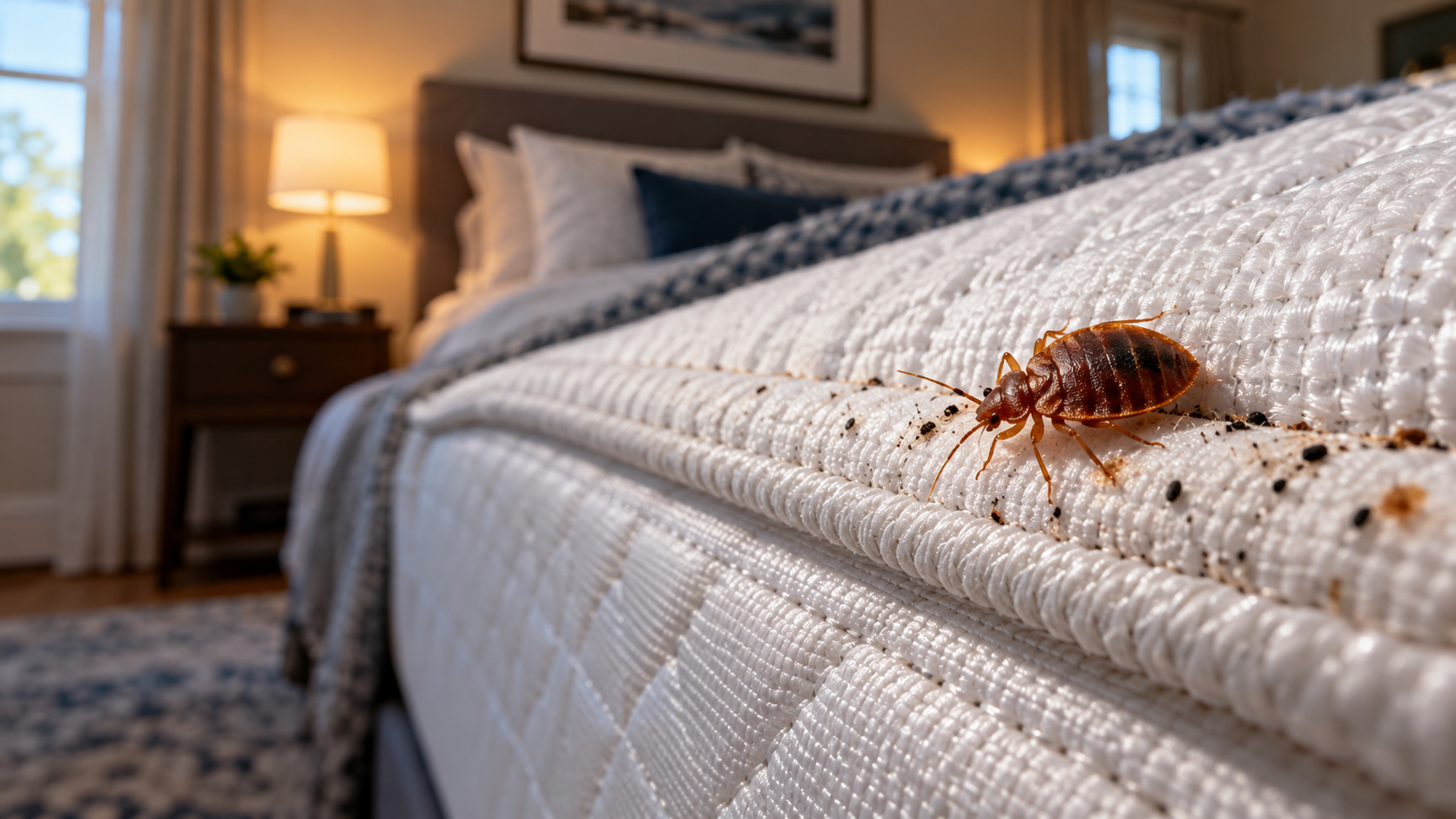
- Bed bugs are suspected
- Termites or other wood-destroying insects are suspected
- Rodents are entering inaccessible areas
- Multiple treatments have failed
- Pesticides would need to be applied in difficult locations
- The property is a restaurant or commercial facility
- Special treatment equipment or professional knowledge is needed
Professional pest management does not eliminate the homeowner’s role. Sanitation, repairs, moisture correction and access to inspection areas can be essential parts of successful treatment.
Common Pest-Control Mistakes to Avoid
Using More Product Than the Label Allows
More is not better. Always follow the pesticide label.
Using Outdoor Products Indoors
A pesticide labeled only for outdoor use should not be brought indoors simply because the same pest is present.
Mixing Products Without Label Authorization
Do not create homemade pesticide mixtures or combine products merely because individual products are commercially available.
Spraying Before Identifying the Pest
Misidentification can result in ineffective treatment and unnecessary pesticide application.
Ignoring Moisture
Leaks and damp conditions can support numerous pest problems.
Ignoring Entry Points
Repeatedly killing pests inside does little to prevent new pests from entering through the same opening.
Expecting One Application to Solve Every Infestation
Different pests have different life cycles. Some infestations require follow-up, monitoring and corrective actions in addition to the initial treatment.
A Practical IPM Checklist for Greenville Homeowners
Walk through your home and property and ask:
- Do I know exactly what pest I am dealing with?
- Where am I seeing the activity?
- Is food accessible?
- Is pet food left out overnight?
- Do I have leaking faucets or plumbing?
- Is there excessive crawlspace moisture?
- Are door sweeps damaged?
- Are screens torn?
- Are there gaps around plumbing or utilities?
- Is cardboard or clutter providing harborage?
- Is vegetation contacting the house?
- Is water standing around the property?
- Have I monitored whether the problem is improving?
This simple process can help distinguish a temporary pest sighting from a condition that needs professional attention.
Safe & Effective Pest Management FAQs
What is the safest way to control pests in my home?
There is no single method that is best for every pest. A responsible approach starts with correct identification, prevention, sanitation, moisture correction, exclusion and monitoring. When pesticide treatment is appropriate, the product and application method should match the pest and location and be used according to the pesticide label.
What does IPM mean in pest control?
IPM stands for Integrated Pest Management. It combines pest identification, monitoring, prevention, sanitation, exclusion, mechanical controls and appropriately selected pesticide treatments when necessary. The objective is effective control while reducing unnecessary risks to people, property and the environment.
Does IPM mean no pesticides are used?
No. IPM is not automatically pesticide-free. Pesticides can be useful and appropriate tools. The difference is that they are considered as part of a larger strategy rather than being the only response to a pest problem.
Is professional pest control safe for children and pets?
Pesticide products have specific label instructions and precautions that vary by product and application method. Tell your pest professional about children, pets, aquariums or other household considerations before treatment and follow all preparation and re-entry instructions provided for the particular service.
Are natural pest-control products safer than conventional pesticides?
Not necessarily. Natural or botanical does not automatically mean harmless. Any pesticide should be evaluated according to its active ingredient, label directions, intended use, application method and potential exposure rather than marketing terminology alone.
Can I use twice as much pesticide to kill pests faster?
No. Using more than the label directs does not mean better control and may increase unnecessary risk. Pesticides should always be mixed, applied, stored and disposed of according to the product label.
Why does my pest-control company ask me to clean before treatment?
Food debris, grease, standing water, clutter and other conditions can provide pests with resources or hiding areas. Correcting these conditions can make a pest-management program more effective and easier to monitor, particularly with cockroach and rodent infestations.
Why do pests keep coming back after I spray them?
The visible pests may only be part of the problem. An untreated nest, hidden harborage, food source, moisture condition or structural entry point may allow pest activity to continue. Repeated spraying without identifying the source can provide temporary results without correcting the underlying problem.
When should I call a professional pest-control company?
Professional help is appropriate when you cannot identify the pest, activity continues despite corrective measures, infestations are extensive, termites or bed bugs are suspected, rodents are entering structural voids, or treatment requires equipment, products or expertise beyond ordinary homeowner pest prevention.
Who regulates pest-control companies in North Carolina?
The North Carolina Department of Agriculture & Consumer Services Structural Pest Control & Pesticides Division regulates structural pest-control activities in the state, including licensing and other industry requirements.
Professional Pest Management in Greenville, NC
D & D Pest Control Co. provides professional pest-control services for homes and businesses throughout Greenville and surrounding Pitt County communities.
Our approach focuses on understanding the pest problem, identifying contributing conditions, selecting appropriate treatment methods, and helping customers understand practical steps that may reduce future pest activity.
Services are available for common Eastern North Carolina pest problems including ants, cockroaches, spiders, rodents, termites, mosquitoes, fleas, and other household pests.
Learn more about our pest control services in Greenville, NC.
Want to learn more about our company? Visit About D & D Pest Control Co.
Schedule Pest Control in Greenville & Pitt County
If pests keep returning, you cannot determine where they are coming from, or you need help choosing an appropriate treatment strategy, contact D & D Pest Control Co.
D & D Pest Control Co.
NC Structural Pest Control License #1274 PW
Serving Greenville and surrounding Pitt County, North Carolina communities.
Office: (252) 523-8255
Call/Text: (252) 531-0621