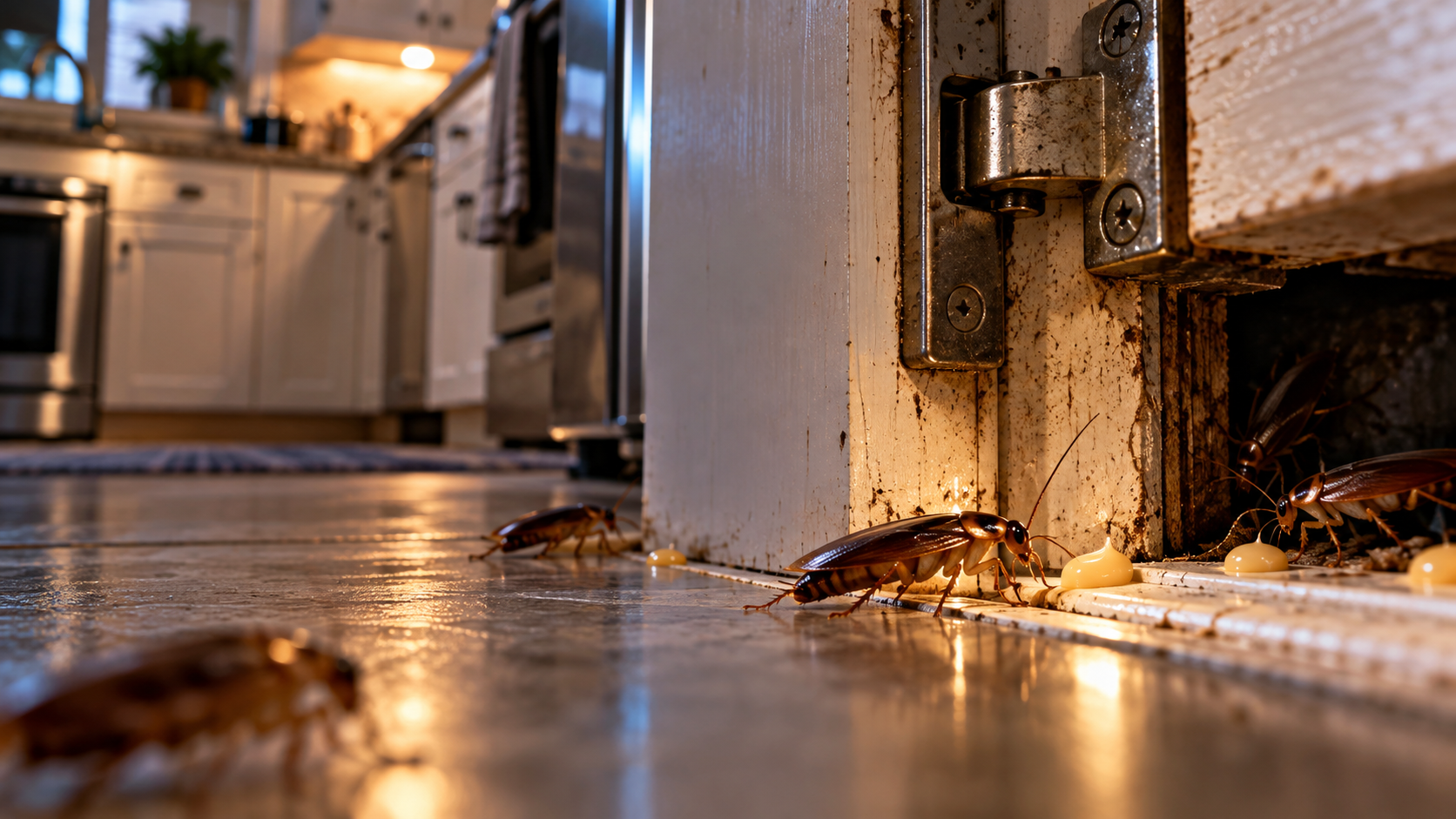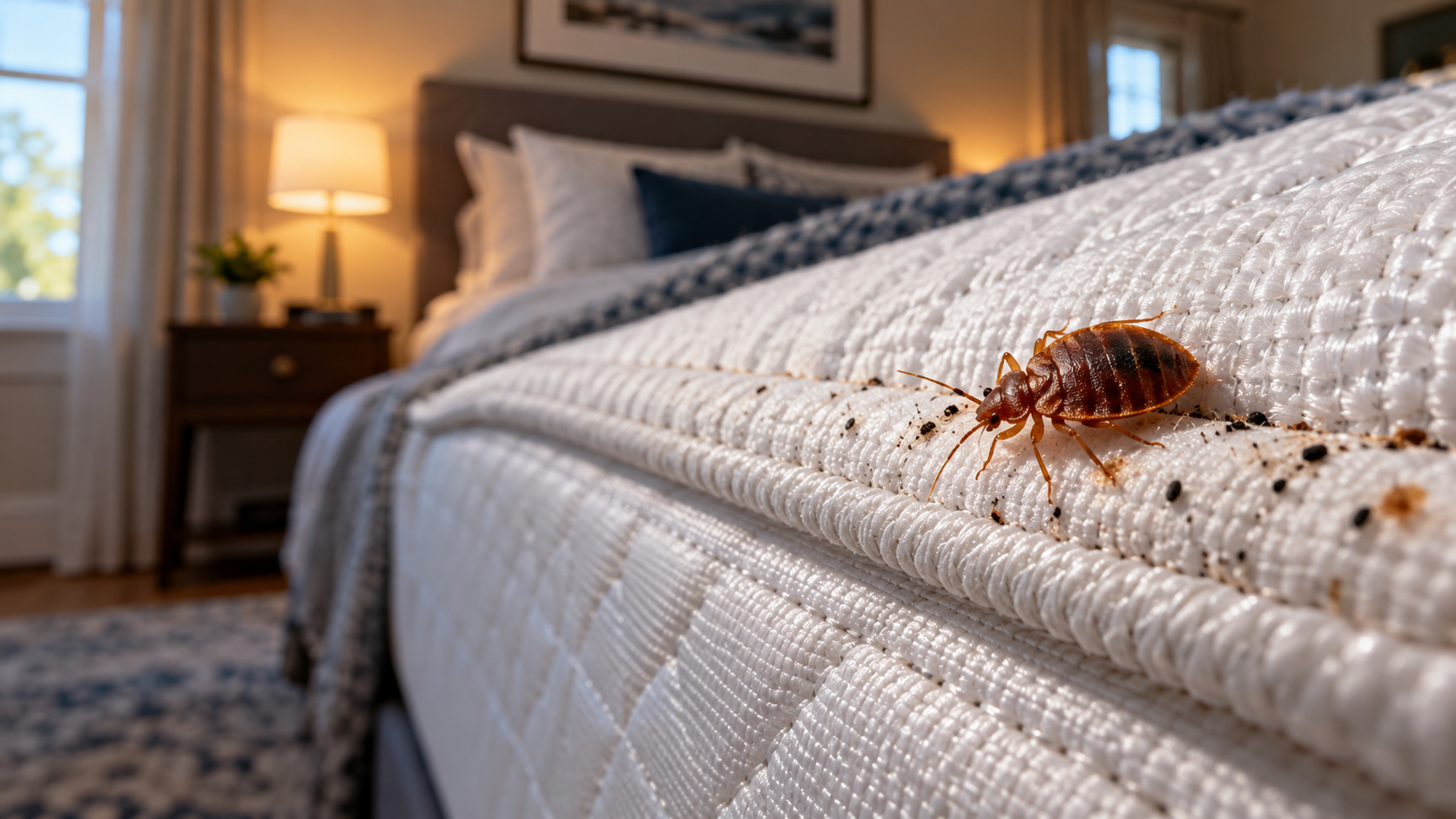

In Greenville and Pitt County, pest pressure can be more than an occasional inconvenience. Cockroaches can establish populations inside kitchens and bathrooms. Mice and rats can contaminate areas with urine and droppings. Termites can remain concealed while feeding on structural materials. Mosquitoes and ticks can bite people and animals. Ants, fleas, spiders, bed bugs, and other pests can create completely different problems that require completely different solutions.
That is where professional pest management becomes important.
Effective pest control is not simply about spraying insects when they appear. Modern professional pest management begins with identification, inspection, prevention, exclusion, sanitation, monitoring, and carefully selected treatment when necessary.
For Greenville homeowners and businesses, the goal should not be to wage war against every living thing around the property. The goal is to keep unwanted pests from becoming established where they can affect people, property, food, comfort, or everyday life.
Pest Control Is Really About Managing the Boundary Between Nature and Your Home
Your home does not exist separately from the environment around it.
Every exterior door, crawlspace vent, plumbing penetration, attic opening, foundation crack, roofline gap, utility entrance, garage door, window, and drainage area creates a potential interaction between the structure and the natural world.
Pests generally enter buildings because they are looking for one or more basic resources:
- Food
- Water
- Shelter
- Warmth or protection from weather
- Nesting or breeding locations
- Access to another part of the structure
This is why simply killing the pest you can see may not solve the actual problem.
If ants are repeatedly entering through a wall opening, spraying the visible trail does not necessarily address the colony. If mice are entering through an opening around a utility line, trapping one mouse does not prevent another from entering. If cockroaches have access to food, moisture, and protected harborages behind appliances, a surface spray alone may leave the conditions supporting the infestation unchanged.
Professional pest control looks beyond the individual insect or rodent and asks a more important question:
Why is this pest here?
What Professional Pest Control Actually Does
A professional pest-control program should be based on evidence rather than guesswork. The exact process depends on the pest, property, severity of activity, construction type, and environmental conditions, but several principles apply to almost every situation.
1. Correctly Identify the Pest
Identification comes first because different pests require different solutions.
An ant treatment is not a cockroach treatment. A German cockroach problem is different from an occasional large outdoor cockroach wandering indoors. Termite swarmers can be mistaken for flying ants. Flea problems require a different strategy than bed bugs. Mice and rats have different behavior, entry points, and control considerations.
Misidentification can result in wasted treatments, unnecessary pesticide use, recurring infestations, and frustration.
A trained pest professional looks at the insect or animal itself along with evidence such as:
- Droppings
- Egg cases
- Mud tubes
- Gnaw marks
- Webbing
- Nesting material
- Damage patterns
- Harborage locations
- Entry points
- Conditions surrounding the activity
Correct identification provides the foundation for everything that follows.
2. Find the Source Instead of Treating Only the Symptom
The pest you notice may only be the visible part of a much larger problem.
Seeing a cockroach in the kitchen does not tell you where it is harboring. Seeing a mouse does not identify how it entered. Finding termite damage does not show the full extent of hidden activity.
Professional inspection helps determine where pests are traveling, feeding, nesting, breeding, or entering the structure.
That may mean inspecting:
- Kitchens and bathrooms
- Under sinks
- Behind refrigerators and appliances
- Utility rooms
- Garages
- Attics
- Crawlspaces
- Foundation walls
- Plumbing penetrations
- Exterior doors and windows
- Rooflines and soffits
- Vegetation around the structure
- Areas with standing water or excess moisture
3. Reduce the Conditions Helping Pests Survive
Food, water, shelter, clutter, structural openings, and moisture often influence whether a pest problem becomes established or keeps returning.
Depending on the situation, recommendations may include:
- Repairing plumbing leaks
- Reducing standing water
- Improving food storage
- Keeping garbage containers closed
- Cleaning food residue from difficult-to-reach areas
- Reducing cardboard and clutter
- Repairing damaged door sweeps
- Sealing appropriate cracks and penetrations
- Correcting crawlspace moisture conditions
- Removing pest harborage around the structure
- Trimming vegetation where appropriate
These steps are not merely housekeeping suggestions. They can be important components of long-term pest management.
4. Select a Treatment Appropriate for the Pest
Not every pest problem requires the same product, equipment, formulation, placement, or treatment strategy.
Depending on the situation, professional pest management may involve:
- Baits
- Traps
- Mechanical removal
- Exclusion
- Crack-and-crevice applications
- Exterior perimeter treatments
- Monitoring devices
- Insect growth regulators where appropriate
- Termite treatment systems
- Targeted mosquito management
- Other pesticide or non-pesticide methods permitted for the pest and treatment site
When pesticides are used, they should be selected for the pest and treatment site and applied according to the product label.
5. Monitor the Results
Pest management does not always end when the technician leaves.
Monitoring can help determine whether activity has stopped, declined, shifted to another area, or indicates that an entry point or environmental condition still needs attention.
This is particularly important for persistent problems such as German cockroaches, rodents, termites, bed bugs, and certain commercial pest situations.
What Is Integrated Pest Management?
Integrated Pest Management, commonly called IPM, is a systematic approach to pest control that combines inspection, identification, prevention, monitoring, physical or mechanical controls, environmental changes, and targeted pesticide use when appropriate.
The important word is integrated.
No single technique is expected to solve every pest problem.
An IPM approach may begin by identifying the pest and determining where it is coming from. The technician can then evaluate whether sanitation, moisture correction, exclusion, trapping, habitat modification, pesticide treatment, or a combination of methods offers the most appropriate solution.
This approach can reduce unnecessary treatment while focusing resources where they are most useful.
For homeowners, it also changes pest control from a simple question of “What can I spray?” to a much more useful question:
“What is allowing this pest problem to exist, and how do we interrupt that process?”
Learn more about our professional pest control services in Greenville, NC.
Why Pest Management Can Be a Health Issue
Not every pest presents the same health concern, and simply finding an insect does not mean someone is going to become sick.
However, certain pest infestations can create legitimate health-related concerns. The risk depends on the pest, exposure, infestation level, location, and individual sensitivity.
Cockroaches and Indoor Allergens
Cockroaches are more than an unpleasant sight.
German cockroaches can produce allergens found in their feces, saliva, egg material, and shed exoskeletons. Heavy infestations can increase allergen levels inside the environment, which is particularly important for people who are sensitive to cockroach allergens or have asthma.
Cockroaches can also mechanically pick up microorganisms as they travel through contaminated areas and then move across other surfaces.
For established indoor cockroach infestations, effective control generally involves much more than repeatedly spraying visible insects. Inspection, sanitation, monitoring, baiting or other targeted treatment, moisture correction, and follow-up may all play a role.
Learn more about cockroach control in Greenville, North Carolina.
Rodents and Contamination
Mice and rats can contaminate areas with urine, droppings, saliva, nesting materials, and food debris.
Rodents may also gnaw on stored products, building materials, and other items as they travel through structures.
Signs of rodent activity can include:
- Droppings
- Scratching or movement inside walls and ceilings
- Gnawed food packaging
- Gnaw marks
- Shredded nesting material
- Greasy rub marks
- Unusual odors
Rodent control should normally include locating and correcting entry points in addition to trapping or other appropriate population-control measures.
Homeowners should also use proper precautions when cleaning rodent-contaminated areas rather than casually sweeping or vacuuming dry droppings.
See our rodent control services in Greenville and Pitt County.
Mosquitoes and Ticks
Mosquitoes and ticks are different from most structural pests because the primary concern involves biting and potential exposure to pathogens transmitted by certain species.
Mosquito management around a home begins with finding and reducing breeding locations wherever practical.
Homeowners should regularly inspect for water accumulating in places such as:
- Buckets
- Plant saucers
- Children’s toys
- Clogged gutters
- Birdbaths
- Tarps
- Discarded containers
- Low areas where water remains
Vegetation management, personal protection, habitat reduction, and appropriately selected mosquito-control measures can work together as part of a broader strategy.
Read about our mosquito control services in Greenville, NC.
Pest Control Also Helps Protect the Structure Itself
Health and comfort are only part of the story. Some pests can physically damage a building or its contents.
Subterranean Termites
Eastern subterranean termites are an important structural pest throughout North Carolina.
They live primarily in soil and can reach wooden components of a structure through concealed routes and protective mud tubes. Because termite activity may remain hidden, significant feeding can occur before a homeowner recognizes a problem.
Potential warning signs include:
- Mud tubes on foundation walls or piers
- Termite swarmers indoors
- Discarded wings near windows or doors
- Soft or damaged wood
- Wood that sounds hollow when tapped
- Visible galleries or soil material inside damaged wood
Moisture can also contribute to conditions favorable for subterranean termite activity. Plumbing leaks, drainage problems, damp crawlspaces, wood-to-soil contact, and moisture-damaged materials deserve attention.
Termite management is one situation where professional inspection is particularly important because treatment requirements can depend heavily on construction details and where activity is located.
Learn more about termite control in Greenville and Pitt County.
Rodent Gnawing and Property Damage
Rodents have continuously growing incisors and routinely gnaw materials in their environment.
Activity may damage stored products, insulation, cardboard, plastic, wood, and other materials. Discovering gnawing should trigger an inspection for active rodents and possible entry points rather than simply repairing the visible damage.
Carpenter Ants and Moisture-Damaged Wood
Carpenter ants do not consume wood like termites. They excavate wood to create nesting galleries.
Activity can sometimes be associated with damp or moisture-damaged wood, making it important to investigate both the ants and the underlying structural conditions.
Correct identification matters because carpenter-ant management is very different from termite management.
See our ant control services for Greenville, NC.
Why Eastern North Carolina Creates Persistent Pest Pressure
Greenville and surrounding Pitt County communities experience environmental conditions that can support pest activity for much of the year.
Homes in our region may have crawlspaces, wooded property edges, vegetation close to structures, drainage challenges, periods of heavy rainfall, high moisture, outbuildings, garages, and numerous utility penetrations.
These conditions do not automatically mean that a home will have pests. They do, however, create opportunities that should be considered during inspection.
A damp crawlspace, for example, may contribute to conditions favorable to moisture-associated insects. Standing water around a property can contribute to mosquito breeding. Openings around plumbing or utilities may become pest entry points. Mulch, debris, vegetation, or stored materials near foundations can create protected areas where pests can remain close to a building.
Local pest control is most effective when treatment reflects the actual property rather than following the same routine everywhere.
The Hidden Importance of Crawlspaces
Crawlspaces deserve particular attention in many Eastern North Carolina homes because homeowners may rarely enter them even though important plumbing, framing, insulation, ductwork, foundation components, and pest pathways may be located there.
A crawlspace inspection may uncover:
- Termite mud tubes
- Rodent activity
- Cockroach activity
- Spiders and other insects
- Standing water
- Plumbing leakage
- Condensation
- Damaged vapor barriers
- Wood-to-soil contact
- Pest access around pipes and utilities
Correcting pest problems without addressing significant moisture or access conditions can sometimes leave the structure vulnerable to recurring activity.
Professional Pest Control Does Not Mean Spraying Everywhere
One of the biggest misconceptions about professional pest control is that more pesticide automatically means better pest control.
It does not.
The right treatment is the one that matches the pest, the infestation, the location, and the conditions.
Sometimes exclusion is the most important step. Sometimes sanitation is critical. Sometimes bait placement is appropriate. In other cases, trapping, monitoring, moisture correction, exterior treatment, targeted crack-and-crevice applications, or specialized termite procedures may be necessary.
Responsible pest management uses pesticides purposefully rather than simply applying them everywhere pests might possibly travel.
Pesticide Safety: The Label Matters
Pesticides are designed to affect living organisms, which is why proper selection and application matter.
Professional treatments should be performed according to the pesticide label and applicable laws and regulations. The label identifies important information such as where the product may be used, target pests, application requirements, precautions, and other safety directions.
Homeowners should never assume that using more product makes a treatment more effective.
Likewise, an outdoor pesticide should never be brought indoors unless its labeling specifically permits that use.
Before treatment, tell your pest-control professional about any questions or concerns involving:
- Children
- Pets
- Aquariums
- Sensitive individuals
- Food preparation areas
- Gardens
- Pollinator areas
- Other special property conditions
Your technician can provide instructions relevant to the specific treatment being performed.
Why DIY Pest Control Sometimes Fails
Do-it-yourself pest control can be appropriate for some minor problems, particularly when identification is clear and the homeowner follows product directions carefully.
However, recurring or established infestations often fail to respond because the visible pest is being treated while the source remains untouched.
Common DIY Problems Include:
- Treating before identifying the pest
- Applying products to the wrong location
- Ignoring entry points
- Ignoring plumbing or moisture problems
- Leaving food and harborage available
- Using multiple products without understanding how they interact with the control strategy
- Stopping treatment before the pest’s life cycle has been interrupted
- Failing to monitor the infestation
- Using products contrary to label directions
A recurring pest problem is often evidence that something important has not yet been identified or corrected.
What a Professional Pest Inspection Should Look For
A useful pest inspection is more than a quick walk through the house.
Depending on your concern, a professional may evaluate:
- The pest itself: What species or group is causing the problem?
- Activity: Where are pests currently active?
- Harborage: Where are they hiding, nesting, or breeding?
- Entry: How are they reaching the structure?
- Food: What food sources are available?
- Water: Are leaks, condensation, or standing water involved?
- Moisture: Are crawlspace or structural moisture conditions contributing?
- Construction: Are building features creating concealed pest pathways?
- Exterior pressure: What conditions immediately outside the building may contribute?
- Previous treatment: What has already been attempted and with what result?
This information helps turn pest control from trial and error into a deliberate management plan.
Seven Things Greenville Homeowners Can Do to Reduce Pest Problems
1. Eliminate Accessible Food
Store pantry goods and pet food securely, clean food spills, remove garbage regularly, and pay attention to crumbs and grease beneath appliances.
2. Repair Water Leaks
Inspect plumbing under sinks, around toilets, washing machines, water heaters, crawlspaces, and other accessible areas.
3. Inspect Doors and Windows
Replace damaged screens, door sweeps, and weatherstripping where needed.
4. Examine Utility Penetrations
Look around plumbing, electrical lines, HVAC components, cable entries, and other penetrations for gaps that could provide pest access.
5. Reduce Clutter
Cardboard, paper, unused containers, and crowded storage areas create hiding places and make inspection more difficult.
6. Manage Exterior Conditions
Keep vegetation appropriately maintained, reduce unnecessary debris against the building, manage garbage containers, and correct standing-water sources.
7. Pay Attention to Early Warning Signs
Do not ignore recurring droppings, mud tubes, insect sightings, gnaw marks, unusual odors, shed skins, egg cases, or unexplained damage.
Early identification is usually easier than dealing with an infestation after it becomes well established.
When Is It Time to Call a Professional?
Consider professional pest-control service when:
- You cannot identify the pest
- Activity keeps returning after DIY treatment
- You suspect termites
- You suspect bed bugs
- German cockroaches are established indoors
- Rodents are entering living areas, walls, attics, or crawlspaces
- You cannot determine where pests are entering
- The infestation involves inaccessible areas
- The problem affects a restaurant, rental, office, or commercial property
- You need specialized equipment or treatment
- You are concerned about applying pesticides yourself
Professional Pest Control in Greenville & Pitt County, NC
D & D Pest Control Co. provides professional pest-control services for homes and businesses throughout Greenville and surrounding Pitt County communities.
Our approach focuses on identifying the pest, inspecting the conditions surrounding the infestation, selecting an appropriate treatment strategy, and helping customers understand practical steps that can reduce future pest pressure.
Services available through our Greenville-area pest-control program include:
- General household pest control
- Ant control
- Cockroach treatment
- Rodent control
- Termite inspections and treatment
- Mosquito control
- Flea and tick control
- Spider control
- Bed bug treatment
- Commercial pest control
- Seasonal pest management
D & D Pest Control Co. is licensed through the North Carolina structural pest-control program under License #1274 PW.
Frequently Asked Questions About Professional Pest Control
Is professional pest control safer than spraying pests myself?
Professional pest management offers the advantage of pest identification, training, appropriate product selection, targeted application, and knowledge of pesticide labels and treatment techniques. Professional service does not mean that every situation requires pesticides. An Integrated Pest Management approach may combine exclusion, sanitation, moisture correction, trapping, monitoring, and targeted pesticide treatment when appropriate.
Are professional pest-control treatments safe for children and pets?
No pesticide should simply be described as completely harmless. Safety depends on the specific product, where and how it is applied, and compliance with the product label. Tell the technician about children, pets, aquariums, or other concerns before treatment. Follow any preparation, exposure-prevention, or re-entry directions provided for the specific service.
Why do pests keep coming back after I spray them?
Recurring activity often means that the source of the problem has not been corrected. A colony, nest, breeding site, entry point, moisture source, food source, or concealed harborage may still exist. Professional pest management attempts to identify those underlying factors rather than concentrating only on the pests currently visible.
What is Integrated Pest Management?
Integrated Pest Management, or IPM, combines knowledge of pest biology with monitoring, prevention, sanitation, exclusion, mechanical control, environmental changes, and carefully selected pesticide treatment where necessary. The objective is effective management using methods appropriate to the particular pest and property rather than depending on routine spraying alone.
How often should a Greenville home receive pest control?
There is no single schedule appropriate for every property. Service frequency depends on the pest, surrounding environment, construction, moisture conditions, sanitation, previous activity, and homeowner goals. Some situations require a one-time targeted treatment, while properties with continuing pest pressure may benefit from a recurring program. D & D Pest Control Co. offers both monthly and quarterly service options depending on the situation.
Why is pest identification so important?
Different pest species behave differently and require different management techniques. Treating the wrong pest can waste time and product while allowing the original infestation to continue. Correct identification helps determine where to inspect, what conditions to correct, which control methods are appropriate, and how results should be monitored.
Can moisture cause pest problems?
Moisture can contribute to pest problems by providing water or creating favorable harborage conditions. Plumbing leaks, standing water, crawlspace dampness, poor drainage, condensation, and moisture-damaged wood deserve attention when investigating recurring pest activity. Moisture is particularly important when evaluating termites, certain cockroaches, ants, mosquitoes, and other moisture-associated pests.
Do I need professional pest control if I only see one insect?
Not necessarily. A single insect may simply be an occasional invader. What matters is the species, location, evidence of reproduction, frequency of sightings, and surrounding conditions. One termite swarmer indoors may deserve more attention than one outdoor beetle that wandered through an open door. Identification helps determine the appropriate response.
What should I do if I find rodent droppings?
First determine whether rodent activity may still be present and look for possible entry points. Avoid casually sweeping or vacuuming dry rodent droppings because contaminated particles can become airborne. Follow current CDC guidance for properly wetting, disinfecting, and removing rodent waste, and consider professional help when an infestation is extensive or rodents have entered inaccessible areas.
Can professional pest control prevent every future pest?
No responsible pest-control program can guarantee that nature will never send another insect or rodent onto a property. Professional pest management is designed to reduce pest pressure, control infestations, correct contributing conditions where possible, and establish monitoring or preventive measures appropriate for the property.
The Best Pest Control Starts Before the Next Infestation
The relationship between homes and nature will always exist. Greenville’s houses, businesses, yards, crawlspaces, trees, drainage systems, and surrounding landscapes are all part of a larger environment inhabited by insects, rodents, wildlife, and people.
The objective of professional pest control is not to eliminate nature.
It is to create a better boundary between nature and the places where people live and work.
That means identifying the pest before treating it. Finding entry points instead of repeatedly treating symptoms. Removing food, water, shelter, and harborage where practical. Monitoring results. Using pesticides purposefully and according to their labels. And recognizing when a problem requires specialized training, equipment, or professional treatment.
That combination of science, prevention, inspection, and targeted control is what turns pest control into pest management.
Need Professional Pest Control in Greenville, NC?
If ants, cockroaches, rodents, termites, mosquitoes, spiders, fleas, bed bugs, or other pests are becoming a problem around your home or business, D & D Pest Control Co. can help determine what is happening and recommend an appropriate course of action.
D & D Pest Control Co.
Professional Pest Control in Greenville & Pitt County, North Carolina
NC Structural Pest Control License #1274 PW
Call/Text: (252) 523-8255
Request Pest Control Service in Greenville, NC
For ongoing protection, learn more about our monthly and quarterly pest-control programs in Greenville and Pitt County.