
Ants trailing across a kitchen counter, cockroaches hiding near plumbing, mice moving through a crawlspace, spiders building webs around exterior lights, mosquitoes multiplying after rain, and termites working behind the scenes may appear to be completely different problems. In reality, many pest problems begin with the same basic conditions: access, food, water, shelter and suitable harborage.
This Pest Control 101 guide explains how homeowners can build a practical pest-prevention strategy for homes in Greenville, Winterville, Ayden, Farmville, Grifton and surrounding Pitt County communities.
The goal is not simply to spray insects when they appear. Good pest management begins by answering four questions: What pest is present? Why is it here? How is it getting inside? What needs to change to keep the problem from returning?
What Is Pest Control?
Pest control is the process of identifying, preventing, managing and, when necessary, eliminating organisms that are creating an unacceptable problem in or around a structure.
Modern pest management should involve more than routine pesticide application. A well-designed approach combines inspection, identification, sanitation, exclusion, moisture management, monitoring, physical controls and properly selected treatments when they are needed.
This approach is commonly called Integrated Pest Management, or IPM.
For a homeowner, the concept is straightforward: do not treat every pest problem exactly the same way. Determine what is causing the problem first, then use the most appropriate combination of corrective and control measures.
The Five Things That Allow Pest Problems to Develop
Most pest problems around homes can be traced to one or more basic conditions. Removing those conditions can make a property far less attractive to insects and rodents.
1. Food
Pests do not need a full meal sitting on the kitchen floor. Small amounts of food may be enough to support activity.
Potential food sources include:
- Crumbs underneath appliances
- Grease around cooking equipment
- Pet food left accessible
- Open pantry products
- Garbage and recycling residue
- Bird seed and animal feed
- Fruit left exposed
- Food spills inside cabinets
- Organic debris outside the home
Good sanitation does not guarantee that pests will never enter a house, but reducing available food makes the environment less supportive of an infestation and can improve the effectiveness of a pest-control program.
2. Water and Moisture
Water can be just as important as food.
Leaking plumbing, condensation, standing water, clogged gutters, damp crawlspaces, poorly drained areas and pet water can all contribute to pest activity.
Greenville and Eastern North Carolina homes may also experience crawlspace moisture and seasonal humidity problems. These conditions deserve attention because moisture can support cockroaches and other pests while creating conditions that make some areas of a structure more attractive to wood-destroying organisms.
If your home has persistent crawlspace dampness, see our crawlspace moisture control information for Greenville, NC.
3. Shelter
Pests survive by finding protected places where they can rest, nest, reproduce or avoid disturbance.
Common harborage areas include:
- Cardboard boxes
- Cluttered garages
- Crawlspaces
- Attics
- Wall voids
- Cabinet voids
- Areas underneath appliances
- Woodpiles
- Dense landscaping
- Leaf litter
- Storage sheds
- Debris alongside foundations
Reducing clutter and unnecessary harborage makes inspection easier and removes some of the protected spaces pests depend upon.
4. Entry Points
A pest cannot become an indoor problem unless it finds a way inside or is carried into the building.
Inspect potential entry points such as:
- Exterior doors
- Garage doors
- Window frames
- Utility penetrations
- Plumbing openings
- Foundation gaps
- Damaged vents
- Soffits and fascia
- Roofline openings
- Torn screens
- Areas where additions or different building materials meet
Exclusion is one of the most valuable parts of long-term pest prevention because it addresses how pests are entering rather than repeatedly treating the pests after they get inside.
5. Time
Small pest problems can become much more difficult when they are allowed to continue unnoticed.
One cockroach sighting does not always tell you how much activity exists behind cabinets or appliances. A few rodent droppings may indicate animals are traveling through hidden areas. Termite activity may remain concealed inside or beneath structural components.
Early investigation can help determine whether you are seeing an isolated pest or evidence of an established problem.
Common Household Pests in Greenville, North Carolina
Eastern North Carolina’s climate and housing conditions can support a wide range of pests. The exact species and level of activity vary by property, season, weather and surrounding environment.
| Pest | Common Signs | Important Prevention Focus |
|---|---|---|
| Ants | Trails, workers around food or plumbing, outdoor nesting activity | Food control, moisture correction, entry-point inspection and species identification |
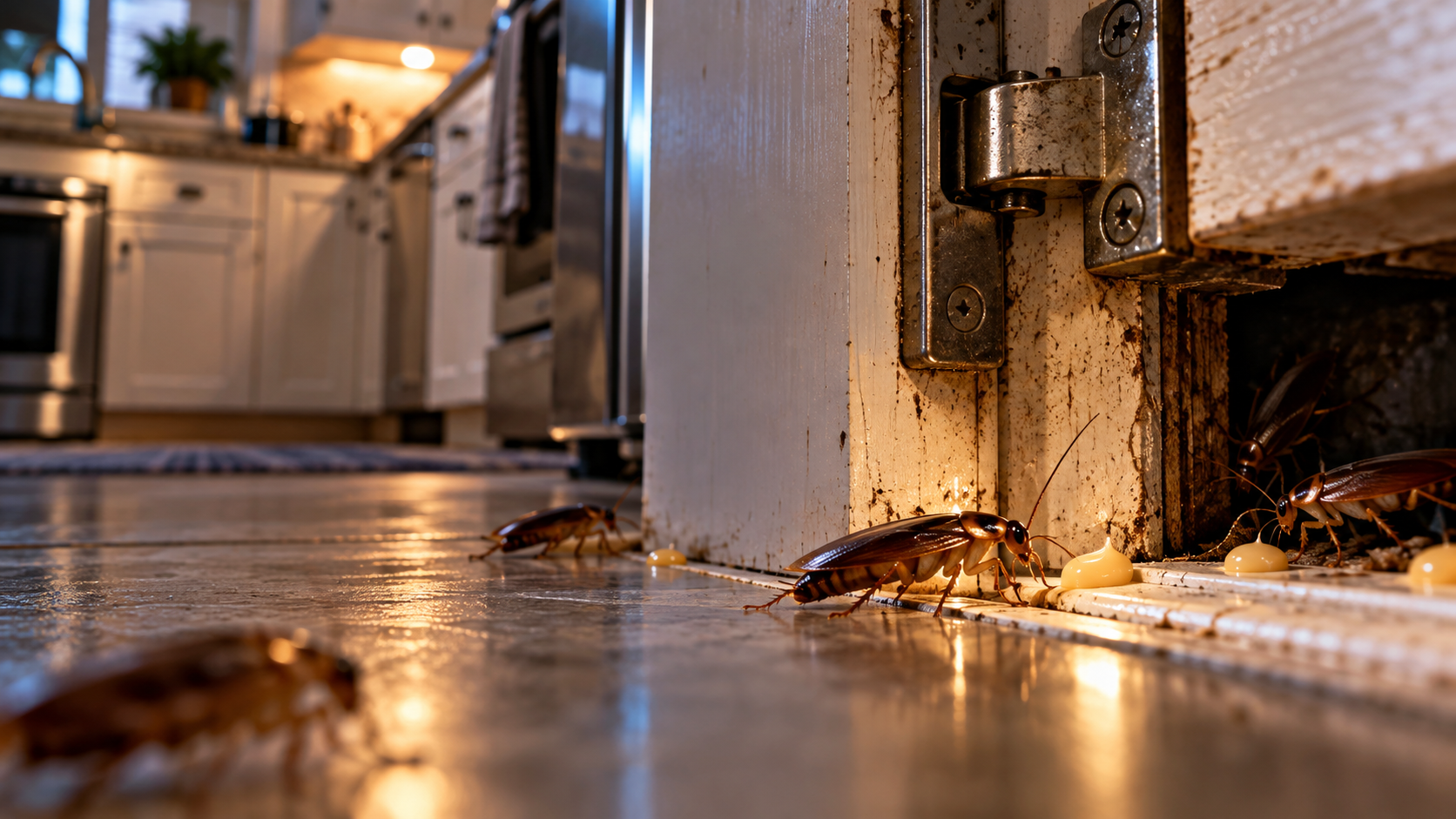
| Cockroaches | Live roaches, droppings, egg cases, activity around kitchens and plumbing | Sanitation, moisture control, monitoring and targeted treatment |
| Rodents | Droppings, gnaw marks, scratching, nesting material | Exclusion, sanitation, trapping and monitoring |
| Spiders | Webs, egg sacs and recurring spiders indoors or around exterior lights | Reduce insect prey, remove webs and improve exclusion |
| Termites | Mud tubes, swarmers, discarded wings or damaged wood | Inspection, moisture correction and professional termite management |
| Mosquitoes | Heavy outdoor biting activity and standing-water breeding sources | Standing-water reduction and targeted outdoor management |
| Fleas | Bites, pet scratching and adult fleas indoors | Break the life cycle and coordinate environmental and pet treatment |
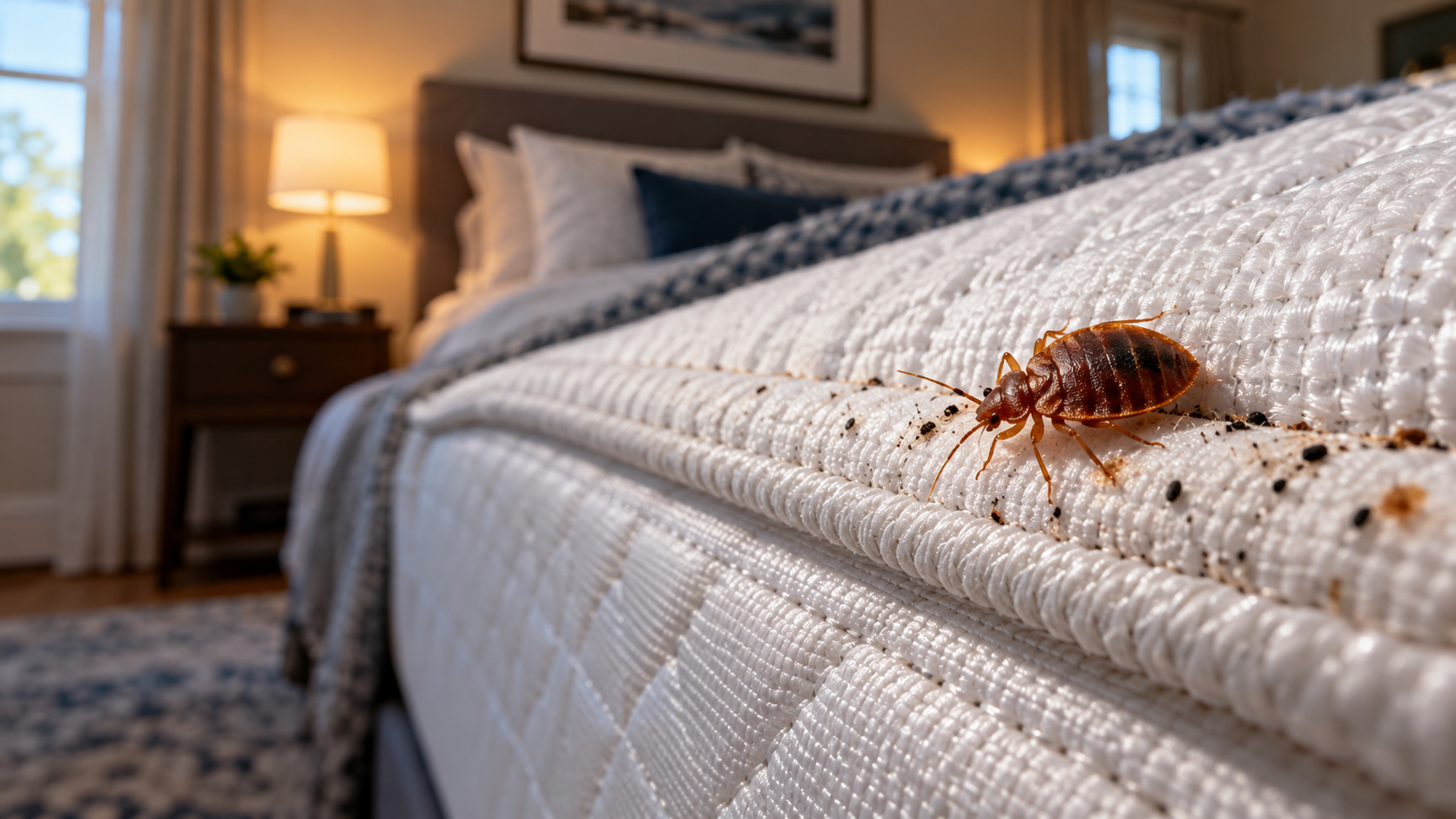
| Bed Bugs | Live insects, spotting, shed skins or evidence near resting areas | Early identification, inspection and focused treatment |
Ants: Follow the Trail Before Reaching for the Spray
Ants are among the most frequently encountered household pests. A line of ants moving across a countertop is usually made up of workers searching for food or water and communicating with other members of the colony.
The mistake homeowners often make is focusing only on the workers they can see.
Successful ant management starts with identification because different ant species can have different nesting habits and may respond differently to control methods.
How to Reduce Ant Problems
- Clean food residue from counters and floors
- Store sweets, pet food and dry goods securely
- Repair plumbing leaks
- Seal appropriate exterior gaps
- Trim vegetation away from the structure
- Inspect where ant trails are entering
- Avoid relying exclusively on killing visible workers
For persistent ant activity, visit our ant control page for Greenville, NC.
Cockroaches: Identification Changes the Treatment Strategy
Not every cockroach problem is the same.
German cockroaches are strongly associated with indoor environments and may concentrate around kitchens, appliances, cabinets and locations where warmth, moisture and food are available. Larger cockroach species may be associated with different indoor and outdoor environments.
This distinction matters because repeatedly spraying an occasional large outdoor cockroach is very different from managing an established German cockroach infestation.
Signs Worth Investigating
- Roaches active during the day
- Repeated activity around appliances
- Droppings in cabinet corners
- Egg cases
- Activity around sinks or plumbing
- Roaches around coffee makers, refrigerators or dishwashers
- Recurring activity after DIY treatment
A professional program may use inspection, monitoring, sanitation recommendations, baiting, crack-and-crevice treatment or other methods appropriate to the species and site.
Learn more about cockroach control in Greenville and Pitt County.
Rodents: Control the Animals and the Entry Points
Mice and rats are not simply an indoor treatment problem. If rodents can continue entering the structure, trapping animals without correcting access points may only address part of the problem.
Mice can nest in walls, storage areas, garages, crawlspaces, furniture and other protected areas. Homeowners may hear activity before they ever see an animal.
Common Rodent Warning Signs
- Droppings
- Scratching inside walls or ceilings
- Gnawed food containers
- Chewing on stored materials
- Shredded nesting material
- Grease or rub marks
- Unusual odors
- Burrowing around structures
A comprehensive rodent plan can involve inspection, exclusion, sanitation, trapping or other appropriate control methods and follow-up monitoring.
See our rodent control services in Greenville, NC if you are finding signs of rats or mice.
Spiders: Sometimes the Pest Problem Is Their Food Supply
Most spiders found around North Carolina homes are beneficial predators of insects. Their presence becomes a concern when spiders repeatedly enter living areas, webs accumulate around structures or a potentially medically significant species is suspected.
Large numbers of spiders can also indicate that the surrounding environment is supplying plenty of insect prey.
Practical Spider Prevention
- Remove unnecessary webs
- Reduce clutter
- Seal accessible entry points
- Trim vegetation away from siding
- Keep firewood away from the structure where practical
- Evaluate exterior lighting that attracts flying insects
- Address other insect problems that may provide food for spiders
For recurring activity, learn about our Greenville spider control services.
Termites: A Different Kind of Pest Problem
Termites should not be approached like ants, spiders or occasional household insects. Subterranean termites live primarily below ground and can enter structures from the soil while remaining hidden for long periods.
North Carolina properties should be evaluated for both termite activity and conditions that may make termite inspection more difficult or increase the risk of concealed activity.
Potential Termite Warning Signs
- Mud tubes on foundations or crawlspace components
- Winged termite swarmers
- Discarded wings around doors or windows
- Damaged or hollowed wood
- Wood-to-soil contact
- Persistent crawlspace moisture
- Areas where the foundation is concealed by soil, mulch or vegetation
Termite identification and treatment are areas where professional evaluation is particularly important.
Visit our termite control page for Greenville and Pitt County for information about inspections and treatment options.
Mosquitoes: Prevention Begins With Water
Mosquito control is different from controlling insects inside a home because the surrounding property often plays a large role.
Containers that hold water can become potential breeding sites. After rain, walk around your property and inspect:
- Buckets
- Flowerpot saucers
- Tarps
- Clogged gutters
- Children’s outdoor toys
- Discarded containers
- Bird baths
- Areas where water remains trapped
Removing unnecessary standing water is an important part of reducing mosquito breeding opportunities around a property.
If outdoor mosquito pressure remains high, see our mosquito control services in Greenville, NC.
Fleas: Why Treating Only the Adult Fleas Can Fail
A flea infestation involves more than the adult fleas seen jumping on pets or people.
Different developmental stages may be present in carpeting, pet-resting locations, furniture, cracks and other protected areas. That is why successful management typically requires attention to the flea life cycle rather than relying on a quick treatment directed only at visible adults.
Pet owners should also coordinate appropriate flea prevention or treatment for their animals with a veterinarian.
For established infestations, visit our flea control page for Greenville, NC.
Bed Bugs: Cleanliness Is Not the Issue
Bed bugs can occur in clean or cluttered homes. They are hitchhiking pests that can be transported in luggage, furniture, bags and personal belongings.
Common hiding locations include mattress seams, bed frames, headboards, upholstered furniture and cracks near areas where people sleep or rest.
If you suspect bed bugs, avoid moving potentially infested furniture throughout the property because relocating items can make the problem more difficult to contain.
Visit our bed bug treatment page for Greenville and Pitt County for additional information.
Pest Prevention Starts Outside the House
Many indoor pest problems begin outdoors. A homeowner who focuses exclusively on baseboards and interior spraying may overlook the conditions that allow pests to reach the house in the first place.
Inspect the Foundation
Look for openings, damaged vents, utility penetrations and other accessible gaps. Also keep enough of the foundation visible to make inspection easier.
Check Doors and Windows
Repair deteriorated weatherstripping, damaged screens and worn door sweeps where appropriate.
Manage Landscaping
Keep shrubs, vines and tree limbs from creating unnecessary contact with the building. Heavy vegetation immediately against a structure can also make inspection more difficult.
Move Firewood and Debris
Wood, leaves, lumber, unused building materials and clutter stored directly beside a structure can provide shelter for insects, spiders and rodents.
Manage Water Around the Structure
Keep gutters functioning, investigate drainage problems and correct sources of standing water where practical.
Do Not Ignore the Crawlspace
For many Eastern North Carolina homes, the crawlspace is one of the most important areas to include in a pest-prevention inspection.
Crawlspaces can provide protected travel or harborage areas for rodents, spiders, cockroaches and other pests. They are also important locations for termite inspections and moisture evaluation.
Things to Look For in a Crawlspace
- Standing water
- Plumbing leaks
- Excessive dampness
- Damaged or displaced vapor barriers
- Rodent droppings
- Nesting material
- Gnawing
- Spider webs
- Cockroach activity
- Termite mud tubes
- Damaged wood
- Utility penetrations that may provide pest access
Never enter a crawlspace if conditions appear unsafe. Some areas are better inspected by qualified professionals.
Kitchen and Pantry Pest Prevention
The kitchen provides several things pests need in one relatively small area: food, warmth, water and protected cracks or voids.
A simple kitchen prevention routine includes:
- Store dry foods in secure containers.
- Clean spills and crumbs promptly.
- Inspect underneath movable appliances when practical.
- Do not leave pet food accessible unnecessarily.
- Keep garbage containers clean and covered.
- Repair dripping faucets and plumbing leaks.
- Reduce excessive cardboard accumulation.
- Inspect grocery bags, packages and boxes when pest activity is a concern.
For cockroach or ant infestations, sanitation helps, but sanitation alone may not eliminate an established colony or infestation.
Garage, Attic and Storage-Area Pest Prevention
Areas that people visit infrequently can allow pest activity to continue unnoticed.
Periodically inspect garages, attics, closets, sheds and storage rooms for:
- Droppings
- Damaged cardboard
- Gnawed materials
- Insect remains
- Webs
- Nesting material
- Moisture
- Damaged screens or vents
- Daylight visible around exterior doors
Plastic storage containers with secure lids can be easier to inspect and less attractive as harborage than large accumulations of cardboard boxes.
What Integrated Pest Management Looks Like at Home
Integrated Pest Management is not one specific product or treatment. It is a decision-making process.
Step 1: Inspect
Determine where activity is occurring and identify environmental or structural conditions that may be contributing to it.
Step 2: Identify the Pest
Correct identification matters. An ant colony, German cockroach infestation, termite problem and occasional outdoor insect require very different responses.
Step 3: Remove Contributing Conditions
Correct food, moisture, sanitation, clutter, vegetation or harborage problems where practical.
Step 4: Prevent Entry
Seal appropriate openings, repair damaged screens, improve door seals and address other structural access points.
Step 5: Choose the Appropriate Control Method
Depending on the pest, management may include physical removal, traps, monitoring devices, baits, exclusion or appropriately selected pesticide applications.
Step 6: Monitor the Results
Successful pest management includes checking whether activity has actually decreased and whether new evidence is appearing.
This process helps focus treatment where it is needed instead of automatically applying pesticides throughout a property without first understanding the problem.
DIY Pest Control: What Homeowners Can Reasonably Do
Many prevention measures are well suited for homeowners.
You can often:
- Improve sanitation
- Store food properly
- Reduce clutter
- Repair leaking plumbing
- Remove standing water
- Replace weatherstripping
- Repair window screens
- Vacuum insects and spider webs
- Use appropriate traps
- Monitor for recurring activity
- Trim vegetation away from the structure
If you choose to use a pesticide yourself, read the entire product label before use. Use the product only for pests and locations allowed by the label, follow the directions and precautions, and never assume that applying more product will produce better results.
Common Pest-Control Mistakes to Avoid
Spraying Before Identifying the Pest
Treating an unidentified insect can waste time and may interfere with a more appropriate management strategy.
Using Outdoor Products Indoors
Products should only be used in locations permitted by their labels.
Applying More Than the Label Allows
More pesticide is not automatically more effective. Product labels contain legally required use directions.
Ignoring Moisture
If leaking plumbing, standing water or crawlspace dampness is helping support a pest problem, pesticide application alone may not address the underlying condition.
Ignoring Entry Points
Killing rodents or insects without investigating how they are entering may lead to recurring problems.
Moving an Infestation
Moving infested furniture or boxes from one room to another can spread pests such as bed bugs or cockroaches.
Expecting One Method to Solve Every Pest Problem
Different pests have different biology and behavior. Effective pest control should reflect those differences.
When Should You Call a Pest Control Professional?
Professional pest control may be appropriate when the problem exceeds what can reasonably be handled through basic sanitation, exclusion or physical removal.
Consider professional assistance when:
- You cannot identify the pest
- The infestation repeatedly returns
- You suspect termites
- You suspect bed bugs
- German cockroaches are established indoors
- You repeatedly find rodent droppings or hear rodent activity
- Pests are entering inaccessible wall voids, attics or crawlspaces
- DIY treatment has not corrected the problem
- You need commercial or rental-property pest management
- The pest requires equipment or products best handled by a licensed professional
A pest-management professional should evaluate the type of pest, extent of activity, possible entry points, environmental conditions and appropriate control options rather than simply treating whatever insect happens to be visible.
Questions to Ask Before Hiring a Pest Control Company
A good pest-control relationship begins with clear communication.
Consider asking:
- Are you licensed to perform pest control in North Carolina?
- What pest do you believe is causing the problem?
- Where is the pest likely living or entering?
- What conditions around my property may be contributing to the problem?
- What treatment methods do you recommend?
- What preparation is required before service?
- Are follow-up visits necessary?
- What should I expect after treatment?
- What preventive changes can I make?
A good explanation should help you understand both the immediate treatment and the longer-term prevention strategy.
Pest Prevention for Greenville and Pitt County Properties
Homes and businesses throughout Greenville and surrounding Pitt County communities can experience changing pest pressure throughout the year. Warm conditions, rainfall, crawlspace moisture, vegetation and food availability can all influence when and where pests appear.
Because every property is different, effective pest control should be based on what is actually happening at the location rather than relying on one standard treatment for every building.
D & D Pest Control Co. provides pest management for homes, rentals and businesses in Greenville and surrounding communities including Winterville, Ayden, Farmville, Grifton and other parts of Pitt County.
For information about ongoing pest-management programs, visit our pest control services in Greenville, NC.
Frequently Asked Questions About Pest Control in Greenville, NC
What attracts pests to a house?
Pests are generally attracted to resources they need to survive, including food, water, shelter and protected nesting or harborage areas. Crumbs, pet food, garbage, leaking plumbing, standing water, clutter, damp crawlspaces, vegetation and structural gaps can all contribute to pest problems. Effective prevention involves identifying which resources are supporting the specific pest rather than assuming every infestation has the same cause.
What is the best way to prevent pests from entering my home?
Start with exclusion and property maintenance. Inspect door sweeps, window screens, utility penetrations, vents, exterior gaps and garage doors. Keep vegetation from contacting the structure, reduce clutter near the foundation, repair moisture problems and maintain good sanitation. Because rodents and insects use different types of openings, the best exclusion method depends on the pest and the construction of the building.
How often should I inspect my home for pests?
Homeowners can perform simple visual checks throughout the year, especially after seasonal weather changes or when cleaning garages, attics and storage areas. Crawlspaces and foundations also deserve periodic attention. Properties with previous pest problems, heavy vegetation, moisture concerns, rental turnover or other risk factors may benefit from more frequent professional monitoring.
Does a clean house guarantee that I will not have pests?
No. Sanitation is an important part of pest prevention, but pests can enter well-maintained properties. Bed bugs may be transported in belongings, termites enter from soil, rodents exploit structural openings and outdoor insects may wander inside. Cleanliness reduces some food and harborage sources, but pest management also requires exclusion, moisture control, inspection and correct identification.
Why do pests keep coming back after I spray them?
A pesticide may kill the individuals you see without correcting the source of the infestation. Ant colonies may remain outside or inside wall voids, cockroaches may survive in protected harborages and rodents may continue entering through structural openings. Recurring activity is a sign to investigate the pest’s food, water, shelter, breeding areas and entry points rather than repeatedly treating visible pests alone.
Can crawlspace moisture contribute to pest problems?
Yes. Damp crawlspaces can create conditions that support some insects and can make concealed areas of a home more attractive to pests. Moisture is also important when evaluating conditions conducive to subterranean termites. Plumbing leaks, standing water, drainage problems, condensation and damaged vapor barriers should be investigated rather than treating moisture-related pest activity in isolation.
Should I use bug bombs or total-release foggers for household pests?
Foggers are not an appropriate solution for every pest and may fail to reach insects hiding inside cracks, cabinets, appliances or structural voids. They also require strict adherence to label instructions and safety precautions. Correct pest identification should come first. For established cockroach, bed bug or other difficult infestations, a targeted treatment program is generally more useful than indiscriminate pesticide application.
How do I know whether I have termites or ants?
Winged ants and termite swarmers can look similar from a distance, but there are differences in body shape, antennae and wings. Because termites can cause concealed structural damage, homeowners who discover suspected swarmers, mud tubes or damaged wood should have the insects and structure properly evaluated rather than relying solely on an online photograph.
Is professional pest control better than DIY pest control?
It depends on the pest and severity of the problem. Homeowners can perform many important preventive steps such as sanitation, moisture correction, standing-water reduction, basic exclusion and monitoring. Professional help becomes especially valuable for termites, bed bugs, established cockroach infestations, recurring rodent problems, inaccessible activity or situations where the pest cannot be confidently identified.
What is Integrated Pest Management?
Integrated Pest Management, commonly called IPM, is an approach that combines pest identification, monitoring, prevention and appropriate control methods. Instead of relying exclusively on routine pesticide spraying, IPM considers sanitation, exclusion, moisture, habitat changes, traps, physical controls and targeted pesticide use when warranted. The objective is to manage the pest while addressing the conditions that allowed the problem to develop.
What pests are commonly treated by pest-control companies in Greenville, NC?
Common service needs in the Greenville area include ants, cockroaches, spiders, rodents, termites, mosquitoes, fleas, bed bugs and seasonal invading insects. The correct treatment varies considerably by pest, so identification and inspection should occur before deciding how a problem should be managed.
When should I schedule a professional pest inspection?
Consider an inspection when pest activity repeatedly returns, you find unexplained droppings or damage, hear scratching in hidden areas, see termite swarmers or mud tubes, suspect bed bugs or German cockroaches, or cannot determine where pests are entering. An inspection is particularly useful when you want to identify the cause of the problem rather than continuing to treat symptoms.
Need Help Identifying or Controlling a Pest in Greenville, NC?
If you are dealing with ants, cockroaches, rodents, spiders, termites, mosquitoes, fleas, bed bugs or another recurring pest problem, D & D Pest Control Co. can help determine what is happening and recommend an appropriate next step.
Our pest-control approach focuses on inspection, pest identification, contributing conditions, targeted treatment and prevention recommendations for homes and businesses throughout Greenville and surrounding Pitt County communities.
D & D Pest Control Co.
North Carolina Structural Pest Control License #1274 PW
Greenville, North Carolina
Office: (252) 523-8255
Looking for additional Eastern North Carolina pest-control information? Visit D & D Pest Control Co..