Professional exterminators rely on more than insecticide sprays. Effective pest management combines inspection, species identification, an understanding of pest behavior, specialized equipment, targeted pesticide applications, sanitation improvements, and ongoing monitoring.
At D & D Pest Control Co., we provide residential and commercial pest control services designed to address the conditions contributing to infestations throughout Greenville and Eastern North Carolina.
This guide explains how pest control professionals identify and treat infestations, the common household pests they encounter, the different types of pesticides used in professional treatments, the equipment technicians rely on, and practical steps property owners can take to protect their homes.
Why Professional Pest Control Matters in Eastern North Carolina
Eastern North Carolina’s humid climate, seasonal rainfall, relatively mild winters, and varied residential construction create conditions that can support numerous pest species.
In Greenville and Pitt County, pests may find shelter in crawlspaces, attics, basements, kitchens, wall voids, landscape beds, storage buildings, and other protected locations.
Some infestations begin when pests enter through small structural openings. Others develop because of plumbing leaks, accumulated moisture, accessible food, poor sanitation, or materials brought into a building.
Common contributing conditions include:
- Excessive moisture beneath homes and inside crawlspaces.
- Leaking plumbing fixtures and condensation around pipes.
- Unsealed openings around doors, windows, vents, and utility lines.
- Wood debris and wood-to-soil contact near foundations.
- Food crumbs, grease, garbage, and improperly stored food.
- Overgrown landscaping and vegetation contacting exterior walls.
- Cluttered storage areas that provide hiding places.
- Infested furniture, moving boxes, luggage, and delivered materials.
Because different pests require different control methods, an effective treatment begins with determining which pest is present, how it entered the property, and what conditions are allowing it to survive.
How Pest Control Experts Tackle an Infestation
Step 1: Thorough Property Inspection
Professional pest control begins with a careful evaluation of the property. Treating insects without understanding the infestation can result in temporary relief while the underlying problem remains.
Depending on the pest involved, an inspection may cover:
- Interior kitchens, bathrooms, laundry rooms, and storage spaces.
- Cabinets, appliances, plumbing openings, and concealed cracks.
- Accessible crawlspaces, foundations, and structural wood.
- Attics and roofline entry points.
- Garages, sheds, and exterior storage areas.
- Landscape beds, drainage areas, and foundation perimeters.
- Possible nesting areas, breeding sources, and pest travel routes.
The inspector looks for live pests, droppings, nesting materials, mud tubes, damaged wood, shed insect skins, egg cases, gnaw marks, moisture problems, and other relevant evidence.
Inspection findings help determine whether a pesticide application is needed and which treatment methods are appropriate.
Step 2: Accurate Pest Identification
Correct identification is essential because not all pests respond to the same treatments.
For example, German cockroaches living inside kitchen cabinets require a different approach from American cockroaches entering through damp crawlspaces or exterior openings.
Likewise, carpenter ants and subterranean termites may both be associated with damaged wood, but their biology, nesting behavior, and treatment requirements are very different.
Professional identification helps prevent unnecessary pesticide applications and allows technicians to focus on the actual pest.
Step 3: Developing a Customized Pest Management Plan
Once the infestation has been evaluated, the next step is selecting an appropriate management strategy.
Depending on the situation, a treatment plan may include:
- Targeted liquid insecticide treatments.
- Gel baits, granular baits, or bait stations.
- Insect growth regulators.
- Professional insecticidal dust formulations.
- Rodent trapping and exclusion recommendations.
- Termite soil treatments or termite baiting systems.
- Removal of food, moisture, and shelter sources.
- Mechanical pest removal and physical barriers.
- Follow-up inspections and monitoring.
The goal is not simply to eliminate visible pests. It is to reduce the infestation, address contributing conditions, and make the property less attractive to future pest activity.
Step 4: Targeted Treatment and Application
Professional pesticide applications are selected according to the pest species, infestation location, property conditions, product registration, and label requirements.
Treatment locations may include approved cracks and crevices, accessible voids, exterior foundation areas, pest harborages, or other labeled treatment sites.
Technicians must consider food preparation areas, occupied rooms, children, pets, sensitive materials, water sources, and any label-specific restrictions.
Applying larger amounts of pesticide does not automatically produce better results. Accurate placement, proper product selection, and following label instructions are fundamental parts of responsible pest control.
Step 5: Monitoring and Follow-Up
Some pests can be controlled with a limited treatment, while others require monitoring or multiple visits.
German cockroaches, bed bugs, rodents, and subterranean termites may require follow-up activities because of their hiding behavior, reproduction, colony structure, or the possibility of continuing entry from surrounding areas.
Monitoring can include sticky traps, bait stations, visual inspections, activity records, and observations from the property owner.
Follow-up information helps determine whether activity is declining and whether the original management plan needs adjustment.
Facts About Common Pests Found in Greenville, North Carolina
Understanding the biology and behavior of common household pests helps explain why some infestations are difficult to control.
1. German Cockroaches
Scientific name: Blattella germanica
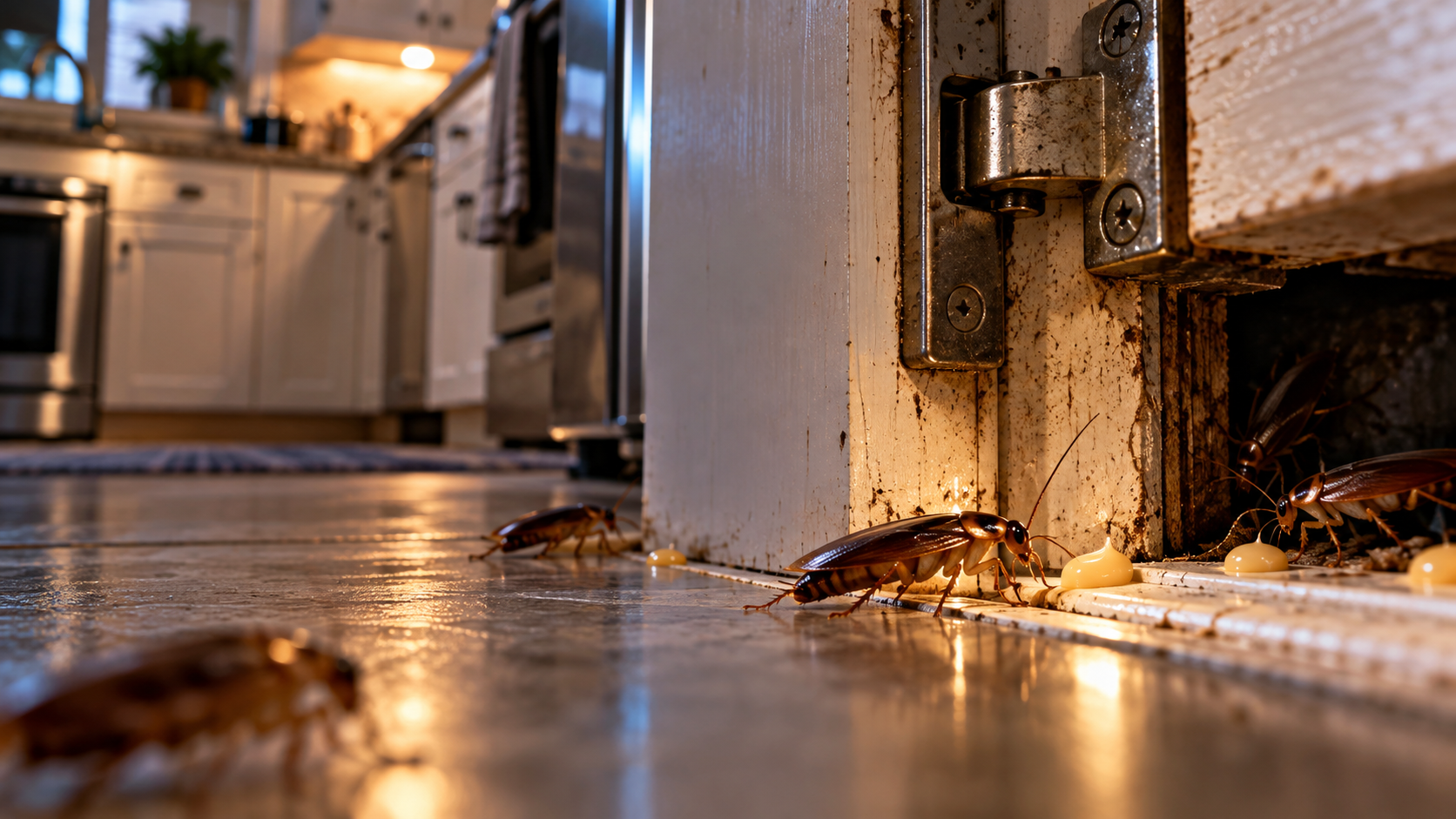
German cockroaches are among the most troublesome indoor pests in homes, apartments, restaurants, and commercial kitchens.
These small, light-brown cockroaches typically have two dark stripes behind their heads. They prefer warm locations near food and moisture, including kitchens, bathrooms, appliances, and cabinets.
Important facts:
- German cockroaches reproduce rapidly under favorable indoor conditions.
- They commonly hide in narrow cracks near appliances and plumbing.
- Egg cases may contain dozens of developing cockroaches.
- Droppings, shed skins, and body fragments may contribute to indoor allergens.
- Some populations have developed resistance to certain insecticides.
Professional control frequently involves sanitation, monitoring, targeted gel baits, insect growth regulators, and selected crack-and-crevice treatments.
Learn more about our professional cockroach treatment services in Greenville, NC.
2. American Cockroaches
Scientific name: Periplaneta americana
American cockroaches are significantly larger than German cockroaches and are sometimes called palmetto bugs or water bugs.
They are commonly associated with damp locations such as crawlspaces, drainage systems, utility areas, and protected outdoor environments.
Important facts:
- Adults can grow to approximately 1.5 inches or longer.
- They may enter buildings through structural openings and plumbing-related pathways.
- Moisture reduction and exclusion are important prevention strategies.
- Control may involve exterior treatments, targeted indoor applications, and correcting favorable conditions.
A single large cockroach indoors does not necessarily mean an established indoor breeding population exists, but repeated sightings deserve investigation.
3. Subterranean Termites
Common regional species: Eastern subterranean termites, including Reticulitermes flavipes.
Subterranean termites are important wood-destroying pests in Eastern North Carolina.
They live in colonies associated with the soil and feed on cellulose-containing materials, including wood.
Important facts:
- Termites can damage structural wood while remaining concealed.
- Workers often travel through underground tunnels and protective mud tubes.
- Moisture problems and wood-to-soil contact can contribute to termite risk.
- Swarming termites may be mistaken for flying ants.
- Professional termite management may involve liquid termiticides, termite baiting systems, and ongoing inspections.
Termite infestations deserve special attention because damage may remain hidden until structural materials have already been affected.
Explore our termite treatment and inspection services in Greenville, NC.
4. Ants
Ants are among the most frequently encountered household pests.
Common ant problems may involve odorous house ants, pavement ants, carpenter ants, fire ants, and other regional species.
Important facts:
- Ant colonies can contain large numbers of workers.
- Workers frequently follow established trails between food sources and nesting areas.
- Different ant species have different food preferences.
- Some ants nest outdoors and repeatedly enter buildings to forage.
- Carpenter ants excavate wood for nesting but do not consume it as termites do.
Professional ant control may combine species-specific baits, targeted insecticide treatments, vegetation management, and exclusion.
Successful treatment depends on locating or affecting the colony rather than only killing workers visible along a trail.
5. Bed Bugs
Scientific name: Cimex lectularius
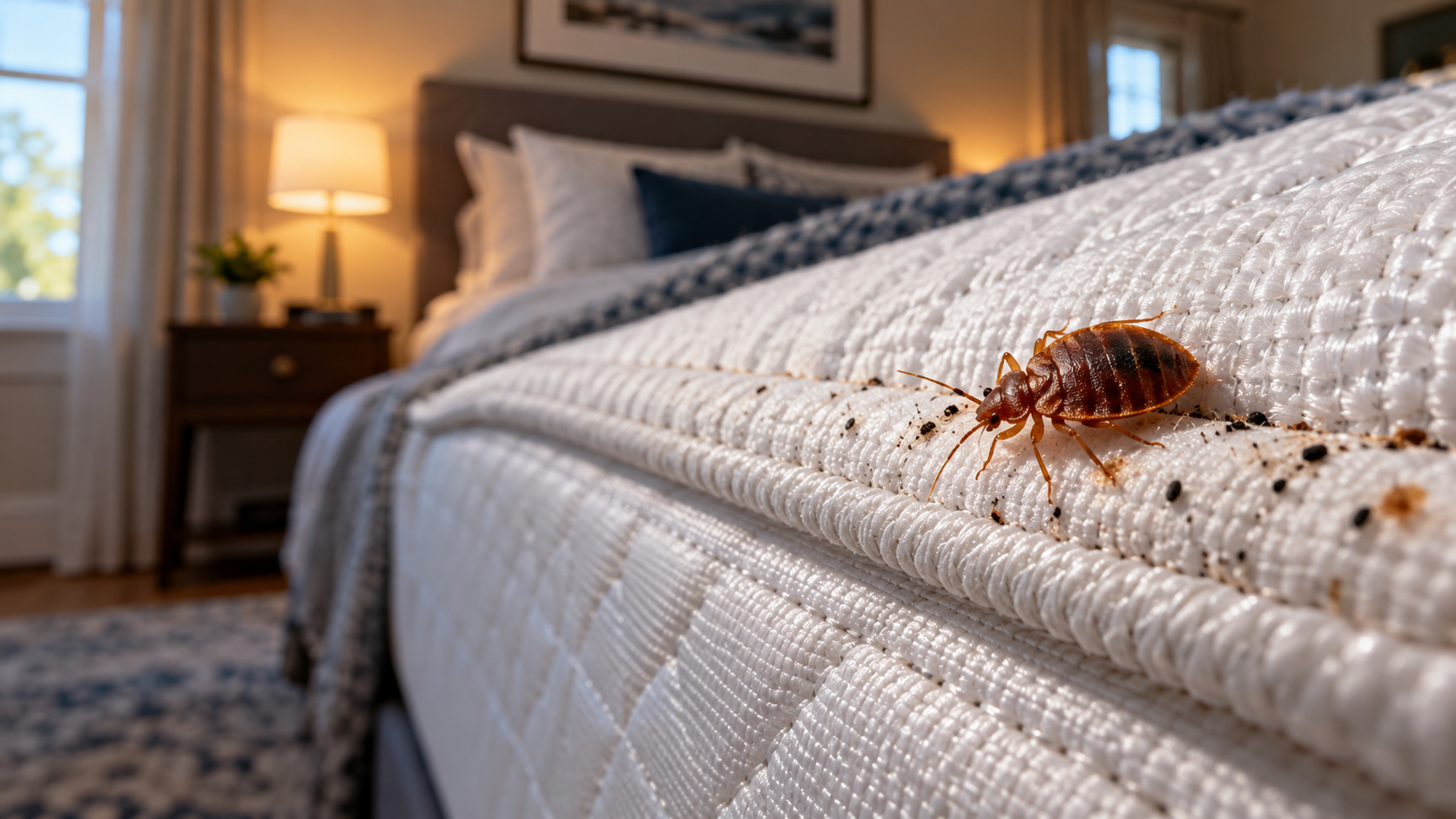
Bed bugs are small, wingless insects that feed on blood and often remain hidden near beds, upholstered furniture, and resting areas.
Important facts:
- Bed bugs can infest clean and well-maintained properties.
- They can be transported through luggage, furniture, and personal belongings.
- Common evidence includes live insects, shed skins, eggs, and dark fecal spotting.
- Bed bug bites alone cannot reliably confirm an infestation.
- Successful management may require multiple treatments and follow-up inspections.
Depending on the situation, professional methods may include targeted insecticides, appropriate dust formulations, vacuuming, heat treatment, and monitoring.
Learn more about our bed bug control services in Greenville, North Carolina.
6. Rats and Mice
Rodents may enter homes and businesses looking for food, warmth, and shelter.
Common structural rodents include house mice, Norway rats, and roof rats.
Important facts:
- Rodents can contaminate stored food and food preparation areas.
- Gnawing may damage insulation, packaging, and electrical materials.
- Mice can enter through surprisingly small openings.
- Droppings, rub marks, gnaw marks, and nesting material are important warning signs.
- Trapping and exclusion are central components of many professional rodent control programs.
Rodent management should address the openings that allow animals to enter, not simply remove animals already inside.
Learn how our Greenville rodent control services address rats, mice, and structural entry points.
7. Fleas and Ticks
Fleas and ticks can create problems for residents, pets, and outdoor spaces.
Fleas develop through egg, larval, pupal, and adult stages. Treating only the adult fleas may leave immature life stages behind.
Ticks are arachnids rather than insects and can transmit certain pathogens to people and animals.
Important facts:
- Flea eggs may accumulate in carpeting, bedding, and other protected locations.
- Adult fleas commonly feed on mammals.
- Ticks often wait on vegetation for passing hosts.
- Pet treatment, household cleaning, habitat management, and targeted applications may all be relevant.
- Outdoor pest reduction cannot guarantee a tick-free or flea-free property.
Integrated management is particularly important when pets or wildlife contribute to repeated pest activity.
8. Mosquitoes
Mosquitoes are common seasonal pests in Greenville and surrounding Eastern North Carolina communities.
Many mosquito species require standing water for their immature stages to develop.
Important facts:
- Some mosquitoes can develop in relatively small amounts of standing water.
- Clogged gutters, containers, birdbaths, and neglected water features can support breeding.
- Adult mosquitoes may shelter in shaded vegetation.
- Some mosquito species can transmit diseases.
- Source reduction is an essential part of mosquito management.
Professional mosquito programs may involve habitat reduction, approved larvicides, and targeted adult mosquito treatments where appropriate.
9. Spiders
Most spiders are beneficial predators that feed on insects and other arthropods.
However, spider activity inside homes can become a nuisance, particularly where insect prey is plentiful.
Important facts:
- Spiders may enter through gaps around doors, windows, and foundations.
- Exterior lighting can attract insects that, in turn, attract spiders.
- Removing webs and reducing prey insects can help discourage spider activity.
- Not every spider poses a significant medical concern.
- Correct identification is important before determining whether treatment is warranted.
10. Wasps, Hornets, and Fire Ants
Stinging pests can create particular concerns around entrances, playgrounds, patios, lawns, and outdoor work areas.
Yellowjackets, paper wasps, hornets, and imported fire ants differ in nesting behavior and defensive responses.
Important facts:
- Some wasps nest beneath rooflines, inside wall voids, or in the ground.
- Fire ants build colonies in soil and may establish visible mounds.
- Disturbing an active nest can provoke defensive behavior.
- Stings may cause serious allergic reactions in susceptible individuals.
- Treatment should match the species and nesting location.
Active nests near frequently used areas may warrant professional evaluation rather than homeowner attempts to disturb or remove them.
Different Types of Pesticides Used by Professional Pest Control Experts
One of the most common questions homeowners ask is, “What chemicals do professional exterminators use?”
The answer depends on the pest, location, infestation severity, and treatment objectives.
The word pesticide refers to substances used to prevent, destroy, repel, or otherwise manage pests. Insecticides, rodenticides, termiticides, and insect growth regulators are among the product categories relevant to structural pest control.
Pesticides can also be classified by active ingredient, mode of action, or formulation, such as liquids, gels, granules, dusts, and baits.
According to the U.S. Environmental Protection Agency’s guide to pesticide ingredients, different pesticide categories are designed to control specific types of pests or interfere with particular biological processes.
1. Liquid Residual Insecticides
Residual insecticides are formulated to provide pest control on approved treated surfaces for a period determined by the product, application conditions, and environmental exposure.
They may be used for certain ants, cockroaches, spiders, and other crawling insects.
Common insecticide groups and active ingredients encountered in professional structural pest management include:
- Pyrethroids: Examples include bifenthrin, deltamethrin, lambda-cyhalothrin, and cyfluthrin. These compounds primarily affect the nervous system of susceptible insects.
- Phenylpyrazoles: Fipronil is an example used in certain registered termite and general pest control products.
- Neonicotinoids: Imidacloprid and dinotefuran are examples used in selected professional pest control formulations.
These ingredients are not interchangeable. Product labels determine approved pests, application sites, use restrictions, and required precautions.
Residual treatments may be appropriate for selected exterior perimeters, labeled cracks and crevices, or other approved locations. Broad spraying is not necessarily the best approach for every infestation.
2. Non-Repellent Insecticides
Non-repellent insecticides are designed so target pests do not readily detect and avoid the treated area.
Products containing certain active ingredients, including fipronil, may be used in appropriately labeled termite or ant treatments.
Some non-repellent products can contribute to control beyond insects directly exposed at the initial treatment site, depending on the pest and product mechanism.
However, colony-wide elimination is not guaranteed, and results depend on proper application and actual pest behavior.
3. Gel Baits and Bait Formulations
Professional insect baits combine an attractive food or other carrier with a pesticide active ingredient.
Gel baits are commonly associated with German cockroach management and certain ant control programs.
Examples of active ingredients used in some professional insect baits include:
- Indoxacarb.
- Fipronil.
- Abamectin.
- Hydramethylnon.
- Dinotefuran.
The suitability of each ingredient depends on the formulation and registered use.
Why experts use baits: Baits can target pests in protected locations without relying entirely on exposed surface treatments. Successful placement depends on identifying pest travel routes, harborages, competing food sources, and contamination risks.
For cockroaches, grease buildup, accessible food, and competing attractants can reduce the effectiveness of a baiting program.
4. Insect Growth Regulators (IGRs)
Insect growth regulators interfere with insect development, reproduction, or maturation.
Rather than relying exclusively on immediate adult insect mortality, an IGR may help disrupt the life cycle of susceptible pests.
Examples include:
- Hydroprene.
- Pyriproxyfen.
- Methoprene.
- Novaluron.
Different IGRs work through different biological mechanisms and are not approved for all pest species or locations.
IGRs may be useful in selected cockroach, flea, and other insect management programs.
They are often combined with sanitation, monitoring, and other compatible control methods.
5. Insecticidal Dusts
Professional insecticidal dusts are useful in certain protected cracks, crevices, voids, and other labeled treatment sites that may be difficult to reach with liquid formulations.
Examples of dust ingredients include:
- Boric acid.
- Silica-based desiccant materials.
- Amorphous silica gel.
- Other registered insecticidal dust formulations.
Desiccant dusts can damage or interfere with an insect’s protective outer layer, promoting water loss.
Dusts must be applied according to their labels. Excessive dust application can increase exposure risks and may interfere with pest movement or treatment effectiveness.
Dust products are not interchangeable with ordinary household powders.
6. Termiticides and Termite Baits
Professional termite management may rely on liquid soil treatments, termite bait stations, or a combination of methods when appropriate.
Liquid termiticides are designed to create treated zones where subterranean termites may travel between the soil and a structure.
Fipronil-based termiticides, including certain Termidor products, are examples of professional termite treatment materials.
Other termiticide active ingredients are used in different registered products.
Termite bait systems typically contain slow-acting active ingredients selected to affect termite development or colony activity.
Professional termite treatment selection depends on:
- Foundation construction.
- Soil access and conditions.
- Known termite activity.
- Previous treatment history.
- Drainage and moisture conditions.
- Label and regulatory requirements.
Learn more about our Greenville termite control options, including inspection-based treatment recommendations.
7. Rodenticides
Rodenticides are pesticides formulated to control rodents.
Two broad categories include anticoagulant rodenticides and non-anticoagulant rodenticides.
Depending on the active ingredient, rodenticides may interfere with blood clotting or affect other essential biological processes.
Rodenticide selection and placement require special attention because of potential risks to people, pets, wildlife, and non-target animals.
Professional rodent programs may use tamper-resistant bait stations where permitted, but trapping, exclusion, and sanitation are often essential components of the overall strategy.
Rodenticides should never be placed casually in areas accessible to children, pets, or wildlife.
8. Botanical and Biopesticide Products
Some pest management products contain ingredients derived from plants, microorganisms, minerals, or other natural materials.
Examples include certain botanical insecticides, microbial pesticides, and other EPA-recognized biopesticides.
These products may offer useful alternatives in particular situations, but natural origin does not automatically mean a pesticide is harmless or appropriate for every application.
The EPA explains the categories of these products in its biopesticide information guide.
9. Aerosols, Flushing Agents, and Space Treatments
Professional pest control also includes certain aerosol and space-treatment formulations.
Depending on the labeled product, aerosols may be used for targeted crack-and-crevice applications, pest flushing, or other specific treatment purposes.
Some equipment disperses fine droplets into designated treatment areas.
However, fogging and space treatments are not universal solutions. They may fail to reach protected harborages or adequately address eggs and immature stages.
For German cockroaches in particular, indiscriminate fogging is generally not a substitute for monitoring, sanitation, and effective baiting.
Important: Structural fumigation involves specialized fumigant gases, licensing, and safety requirements. Fumigation is not the same process as ordinary aerosol or fogging treatments.
Professional Pest Control Equipment: Tools Experts Use
Effective pest control requires more than selecting the proper product. Technicians also need tools that help locate pest activity, deliver treatment accurately, protect occupants, and evaluate results.
1. Handheld and Backpack Sprayers
Handheld compression sprayers and professional backpack sprayers are commonly used for appropriate liquid pesticide applications.
These tools may have adjustable nozzles, pressure-control features, and equipment configurations suited to different treatment sites.
They allow technicians to direct applications toward approved locations rather than relying on uncontrolled pesticide distribution.
2. Power Sprayers
Power sprayers may be used for certain exterior pest management applications where the product label and site conditions permit.
They can help deliver treatment across larger approved areas, such as selected exterior perimeter or landscape treatment sites.
Pressure, droplet size, equipment calibration, weather, and treatment location all affect responsible use.
3. Professional Dust Applicators
Dust applicators include bulb dusters, hand-operated dusters, and specialized equipment designed to deliver measured quantities of insecticidal dust.
These tools help treat eligible cracks, crevices, and protected voids according to product labeling.
Proper dust placement is important because applying too much material can increase risk without improving results.
4. Gel Bait Applicators
Gel bait guns and precision application devices allow technicians to place small quantities of bait in selected locations.
These tools are especially relevant to certain cockroach and ant management programs.
Precise placement helps direct bait toward pest harborages while reducing unnecessary exposure to other surfaces.
5. Bait Stations and Monitoring Devices
Professional pest management programs use various types of stations and monitoring devices, including:
- Rodent bait stations.
- Mechanical rodent traps.
- Termite monitoring and bait stations.
- Insect glue boards.
- Cockroach monitoring traps.
- Selected fly monitoring devices.
Monitoring equipment helps identify pest activity, determine likely travel routes, and evaluate whether control measures are working.
6. Inspection Flashlights, Mirrors, and Borescopes
High-output flashlights, inspection mirrors, and borescopes can help technicians inspect locations that are difficult to see directly.
Examples include spaces behind appliances, wall cavities accessible through existing openings, and narrow structural areas.
These tools can improve the accuracy of an inspection without requiring unnecessary disturbance of building materials.
7. Moisture Meters and Inspection Instruments
Moisture plays an important role in many pest infestations, especially subterranean termite activity and certain cockroach problems.
Moisture meters and other inspection instruments may help identify damp building materials or conditions requiring further investigation.
Elevated moisture readings do not prove a pest infestation exists, but they can indicate areas worth examining more closely.
8. Commercial Vacuum Equipment
Specialized vacuum equipment may be useful for removing certain insects, accessible debris, and pest-related material as part of an appropriate management program.
For bed bugs, physical removal can complement other measures, although vacuuming alone generally does not resolve an established infestation.
Equipment selection, filtration, containment, and disposal procedures should match the pest and contamination concerns.
9. Thermal Treatment and Temperature Monitoring Equipment
Some professional bed bug programs use specialized heating equipment and temperature-monitoring instruments.
Successful heat treatment depends on achieving and maintaining effective temperatures in the locations where bed bugs are hiding.
Heat treatment requires specialized training, temperature verification, and precautions to protect occupants and temperature-sensitive materials.
Not every pest control company offers every treatment technology, and heat is not appropriate for every property or infestation.
10. Termite Treatment Equipment
Professional termite control can require specialized equipment based on foundation construction and the approved treatment method.
Equipment may include:
- Professional termiticide application systems.
- Soil-treatment equipment.
- Drilling equipment for certain approved treatment locations.
- Termite bait installation tools.
- Foundation and crawlspace inspection equipment.
- Application measurement and calibration instruments.
Termite treatment should be planned around the actual structure, access limitations, and product-label instructions.
11. Personal Protective Equipment (PPE)
Professional pest control technicians use personal protective equipment according to the requirements of the pesticide label and the work being performed.
Depending on the application, this may include:
- Chemical-resistant gloves.
- Protective eyewear.
- Appropriate protective clothing.
- Respiratory protection when required.
- Protective footwear and other task-specific equipment.
Proper equipment maintenance, product handling, calibration, and training are essential components of professional service.
What Is Integrated Pest Management (IPM)?
Integrated Pest Management, commonly called IPM, is a systematic approach that combines pest monitoring, prevention, nonchemical measures, and carefully selected pesticide treatments when necessary.
Instead of treating every pest problem with the same pesticide, IPM evaluates the species, environmental conditions, infestation level, available control methods, and potential risks.
According to the EPA’s Integrated Pest Management principles, effective pest management uses knowledge of pest biology and available control methods to reduce problems while considering risks to people, property, and the environment.
Four Important Components of IPM
- Identification and monitoring: Determine what pest is present and where activity occurs.
- Prevention: Eliminate favorable conditions such as accessible food, moisture, nesting areas, and structural openings.
- Targeted control: Select effective management methods based on the specific infestation and potential risks.
- Evaluation: Monitor the results and modify the plan when necessary.
IPM does not prohibit pesticides. It encourages using them thoughtfully as part of a broader strategy rather than treating chemical applications as the only solution.
Professional Pest Control vs. Do-It-Yourself Treatments
Store-bought pest control products can sometimes be useful for small, well-identified pest problems. However, more established infestations may require professional assistance.
Consider these differences:
| Pest Control Factor | DIY Approach | Professional Approach |
|---|---|---|
| Pest identification | Often based on homeowner observations. | Uses inspection and pest identification methods. |
| Treatment selection | Limited to products and tools available to the consumer. | Can include appropriate professional products and specialized methods. |
| Application equipment | Usually basic household equipment. | May use calibrated sprayers, dusters, bait tools, and monitoring devices. |
| Hidden activity | May be difficult to locate. | Inspection focuses on harborages, entry points, and contributing conditions. |
| Follow-up | Often based on continued sightings. | Can include scheduled monitoring and treatment adjustments. |
| Prevention | Varies with homeowner knowledge and resources. | Can include pest-specific sanitation, exclusion, and structural recommendations. |
A professional evaluation is especially worth considering when termites, recurring German cockroaches, rodents inside structural spaces, bed bugs, or persistent infestations are suspected.
How to Help Prevent Pest Infestations Around Your Home
Many prevention steps involve routine home maintenance rather than pesticide applications.
Keep Food Sources Under Control
- Store pantry foods in sealed containers.
- Clean crumbs and spills promptly.
- Remove grease buildup around cooking equipment.
- Store pet food appropriately.
- Keep garbage containers covered and regularly emptied.
Reduce Moisture Problems
- Repair leaking pipes and plumbing fixtures.
- Investigate persistent dampness beneath sinks.
- Keep gutters and downspouts functioning.
- Correct drainage conditions that allow water to collect near foundations.
- Have recurring crawlspace moisture problems evaluated.
Seal Pest Entry Points
- Inspect weatherstripping around exterior doors.
- Check openings around utility penetrations.
- Repair damaged window and ventilation screens.
- Evaluate garage door seals.
- Seal accessible structural gaps with appropriate materials.
Maintain Landscaping
- Trim vegetation that contacts the home.
- Reduce unnecessary clutter around foundations.
- Store firewood away from direct contact with the structure.
- Remove unnecessary wood debris from crawlspaces and yard areas.
- Eliminate standing water from containers and other preventable breeding locations.
Practice Seasonal Pest Prevention
In spring, pay attention to termite swarmers, ants, and emerging outdoor insect activity.
During summer, monitor mosquitoes, fleas, ticks, flies, and stinging insects.
In fall and winter, inspect potential rodent entry points and monitor indoor pests that can remain active year-round.
Greenville’s seasonal conditions do not create the same pest pressure at every property, so prevention should reflect the structure and surrounding environment.
Why Rental Properties and Commercial Buildings Need Special Attention
Pest management can become more complicated in apartments, duplexes, student housing, restaurants, and commercial properties.
Shared walls, frequent occupant turnover, deliveries, food storage, waste handling, and changing sanitation practices may influence pest activity.
Property managers can benefit from documented pest reports, routine inspections, prompt maintenance, and clear procedures for responding to sightings.
Restaurants should pay particular attention to moisture beneath equipment, grease buildup, food debris, delivery cartons, floor drains, and exterior entry points.
For more detailed guidance, review our restaurant pest control and sanitation guide for Greenville, NC.
What Homeowners Should Know About Pesticide Safety
Professional pest control should prioritize effective treatment while managing unnecessary exposure.
No pesticide should be described as completely safe or free of risk.
Federal and North Carolina requirements govern pesticide use, and specific product labels establish legally binding application directions.
Before treatment, property owners should ask which areas will be treated, what preparations are necessary, whether people or pets need to leave particular areas, and when normal access can resume.
Important safety practices include:
- Using registered pesticides only for approved purposes.
- Following product labeling and applicable regulations.
- Keeping people and animals away from treatment areas as required.
- Protecting food, food-contact surfaces, and sensitive materials.
- Preventing unauthorized access to rodent bait and treatment materials.
- Following all product-specific ventilation and re-entry requirements.
- Storing, transporting, and disposing of pesticides responsibly.
NC State Extension offers consumer guidance on selecting professional pest control services in North Carolina, including information about structural pest control licensing.
Frequently Asked Questions About Professional Pest Control
What do professional exterminators use that homeowners cannot buy?
Professionals may have access to restricted-use or professional-market pesticide products, specialized formulations, application tools, and monitoring equipment. However, professional-only branding does not automatically make a pesticide more effective than every consumer product. Accurate pest identification, treatment selection, application, and follow-up are often more important than product availability alone.
How long does professional pest control take to work?
Results depend on the pest species, treatment method, infestation severity, and environmental conditions. Some treatments affect exposed insects relatively quickly, while baiting, growth regulators, and termite management may require additional time. Established infestations can require multiple visits and monitoring.
Is professional pest control safe for children and pets?
Professional applications are intended to manage pests while controlling exposure through approved methods and label precautions. All pesticides have potential hazards, so families should follow the specific preparation, restricted-entry, and re-entry instructions provided for the treatment. Inform the pest control professional about children, pets, aquariums, and sensitive circumstances before service.
Do exterminators spray every room in the house?
Not necessarily. Many modern pest management programs emphasize targeted applications in locations associated with the pest. Gel baits, traps, monitoring devices, exclusion, and sanitation may be more appropriate than widespread spraying for certain infestations.
Why do cockroaches return after treatment?
Continued activity may be related to surviving insects, hidden egg cases, available food and moisture, untreated harborages, resistance, or reintroduction from nearby locations. Follow-up inspections and an integrated treatment plan can help determine why activity continues.
Can pest control eliminate termites permanently?
Termite treatments can control existing activity and provide protection according to the treatment method and product labeling. However, no treatment should be interpreted as a permanent guarantee against every future termite infestation. Monitoring, maintenance, and inspections remain important.
Is pest control necessary during winter in Greenville, NC?
Some outdoor pests become less active during colder weather, but German cockroaches, bed bugs, rodents, and other pests may remain active inside heated buildings. Winter can also be a useful time to address exclusion and sanitation problems.
How often should a home receive professional pest control?
The appropriate frequency depends on the property, pest history, nearby environmental conditions, and service objectives. Some properties benefit from periodic preventive service, while others need treatment only when a particular problem develops.
Are natural or organic pesticides always safer?
No. Natural ingredients can still cause irritation, toxicity, or other adverse effects. Products should be evaluated based on their registered uses, hazards, exposure potential, and effectiveness rather than relying on the terms “natural” or “organic” alone.
When should I call a pest control professional?
Consider professional assistance when pests continue returning, the species cannot be identified, the infestation involves inaccessible spaces, termites or structural rodents are suspected, or the treatment requires specialized equipment. Early evaluation can help clarify the problem before unnecessary treatments are attempted.
Why Choose D & D Pest Control Co. for Greenville Pest Control?
Protecting a property requires understanding the pest, the structure, and the conditions that allow an infestation to develop.
D & D Pest Control Co. has served Eastern North Carolina since 1994, offering professional residential and commercial pest control services.
Our service capabilities include:
- General household pest control.
- German and American cockroach management.
- Ant and spider control.
- Rodent control and prevention recommendations.
- Bed bug inspections and treatments.
- Termite inspections and control.
- Wood-destroying insect inspections.
- Selected mosquito, flea, tick, and stinging insect services.
- Commercial and restaurant pest management.
- Crawlspace moisture-related evaluations and services.
We are a veteran-owned company operating under North Carolina Structural Pest Control License #1274 PW.
Our approach emphasizes evaluating the property, identifying the pest, recommending appropriate treatment options, and helping customers understand preventive measures that may reduce future activity.
Professional Pest Control in Greenville, Winterville, Ayden, and Pitt County
D & D Pest Control Co. serves homeowners, landlords, property managers, restaurants, and businesses throughout Greenville and surrounding Pitt County communities.
Our Greenville-area coverage includes Winterville, Ayden, Grifton, Farmville, Simpson, Bethel, Grimesland, and nearby communities within our service area.
Whether your concern involves a recurring cockroach infestation, rodents entering an attic, bed bugs in a rental property, or suspicious termite activity beneath a home, identifying the cause is the first step toward choosing an effective solution.
Guard Your Home: Schedule Professional Pest Control in Greenville, NC
Unwanted pests can take advantage of small openings, excess moisture, accessible food, and hidden structural spaces. Addressing these conditions early can help limit recurring activity and protect your property.
D & D Pest Control Co. provides professional pest inspection, treatment, and prevention services for residential and commercial properties throughout Greenville, Pitt County, and surrounding Eastern North Carolina communities.
Contact us to discuss the pests you are seeing, request an evaluation, and learn which treatment options may be appropriate for your home or business.
Call or Text: (252) 523-8255
Additional Contact: (252) 531-0621
Website: Greenville NC Pest Control
Main Company Website: D & D Pest Control Co.
North Carolina Structural Pest Control License: #1274 PW
Professional Pest Control • Termite Inspections • Residential & Commercial Pest Management • Serving Eastern North Carolina Since 1994